Last Updated: March 2026 | Reading Time: 10 minutes | ~2,100 words
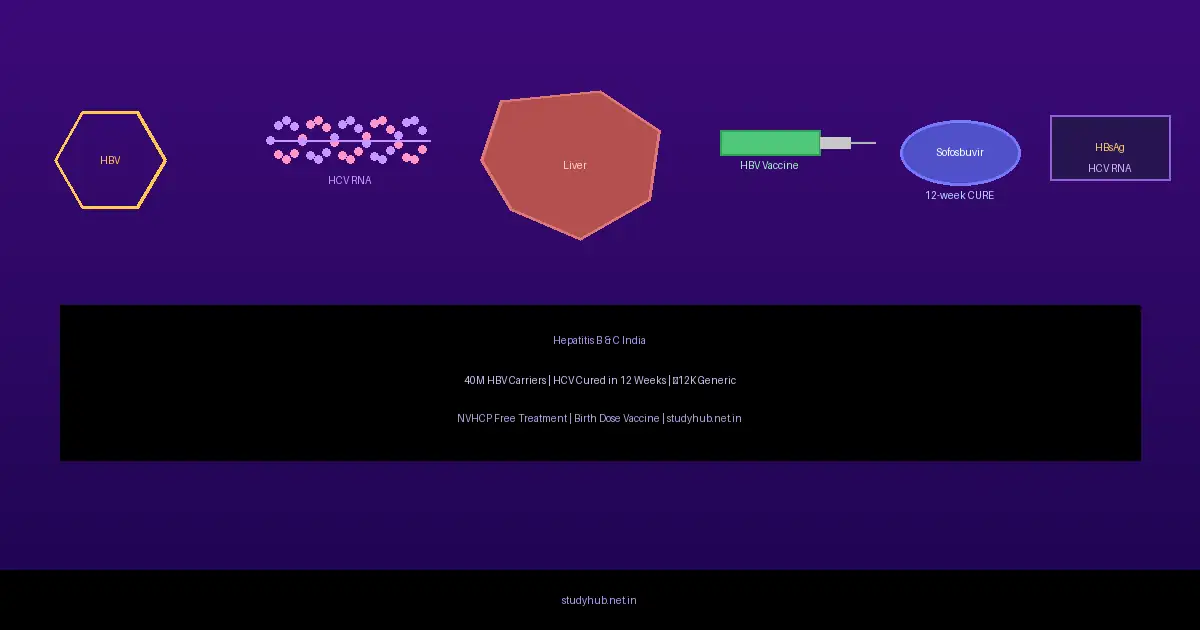
India carries one of the world’s heaviest burdens of viral hepatitis. An estimated 40 million Indians are chronically infected with Hepatitis B virus (HBV) — the third largest HBV-endemic country globally — while 6–12 million Indians have chronic Hepatitis C virus (HCV) infection. Together, these viruses are the leading preventable cause of liver cirrhosis and hepatocellular carcinoma (HCC — liver cancer) in India. The extraordinary news: Hepatitis B has a safe, effective, lifelong vaccine. Hepatitis C is now curable in 95%+ of patients with a 12-week course of direct-acting antivirals (DAAs) — sofosbuvir-based regimens costing as little as ₹8,000–15,000 in India (vs USD 80,000 in the USA). Despite this, millions of Indians with both conditions are undiagnosed, untreated, progressing silently to cirrhosis and liver cancer. This guide provides the essential framework for understanding, preventing, diagnosing, and treating India’s viral hepatitis burden.
Hepatitis B vs Hepatitis C — Key Comparisons
| Feature | Hepatitis B (HBV) | Hepatitis C (HCV) |
|---|---|---|
| Virus type | DNA virus; Hepadnaviridae family; 8 genotypes (A–H); Genotype D most common in India | RNA virus; Flaviviridae family; 6 major genotypes; Genotype 1 predominant worldwide; Genotype 3 most common in India (50–60% of Indian cases) |
| Transmission routes | Perinatal/vertical (mother to newborn at delivery — most common India): 40–90% transmission if HBeAg+ mother without intervention; Sexual (unprotected — lower risk than HIV but significant); Blood-to-blood (transfusion now rare in India; needle sharing; unsafe injections); household contact (sharing razors, toothbrushes) | Blood-to-blood transmission predominantly: Needle sharing (IV drug use — major route); Unsterilised medical/dental equipment (reuse in informal settings India); Blood transfusion pre-1992 (no HCV screening before then — large India infected cohort from transfusions 1970s–1990s); Tattoos/piercings with unsterile equipment; Sexual transmission (low risk — 1–3%; higher in HIV+ individuals); Perinatal (5%) — less efficient than HBV |
| Vaccine available? | YES — highly effective 3-dose recombinant vaccine (95%+ protection); part of Universal Immunisation Programme (UIP) India since 2011; given as birth dose + 6 and 14 weeks under Pentavalent vaccine | NO — HCV mutates rapidly (quasispecies), preventing effective vaccine development despite decades of effort |
| Chronicity rate | Adults: 5–10% progress to chronic; Perinatal infection: 90% → chronic (the key driver of India’s HBV burden — most infections acquired at birth go uncleared); Children 1–5 years: 25–30% | Acute HCV: 75–85% progress to chronic (the vast majority of infections become chronic — most acute infections are asymptomatic and unrecognised until chronic stage) |
| Curative treatment? | NOT curable — HBV integrates into hepatocyte DNA (cccDNA); antivirals (tenofovir, entecavir) suppress viral replication and prevent progression but do not eliminate virus; functional cure (HBsAg loss) occurs in ~3–5%/year on long-term therapy | CURABLE — direct-acting antivirals (DAAs) achieve Sustained Virological Response (SVR = cure) in 95–99% patients in 8–12 weeks; among the most remarkable therapeutic advances in modern medicine |
| Cancer risk | Chronic HBV even with normal liver enzymes and no cirrhosis: significant HCC risk; HBV-associated HCC can develop WITHOUT cirrhosis (unlike most other liver diseases); requires lifelong HCC surveillance (6-monthly AFP + ultrasound) | HCC almost always via cirrhosis; HCV cure (SVR) reduces but does not eliminate HCC risk if cirrhosis already established — surveillance must continue post-cure in cirrhotic patients |
| Key blood tests | HBsAg (surface antigen — positive = infected); anti-HBs (antibody — positive = immune, either vaccinated or recovered); HBeAg (e antigen — marker of high replication/infectivity); HBV DNA (viral load — quantitative); ALT/AST (liver inflammation); fibroscan (liver stiffness) | Anti-HCV antibody (screening — if positive, confirms exposure); HCV RNA PCR (confirmatory — active infection; viral load); HCV genotype (determines treatment choice); ALT/AST; fibroscan/FIB-4 score (fibrosis assessment) |
HBV Treatment — When to Start and What to Use
| Category | Treatment Decision | Drug of Choice | India Cost |
|---|---|---|---|
| Chronic HBV with HBV DNA >2,000 IU/mL AND elevated ALT AND/OR significant fibrosis (F2+) | TREAT — antiviral therapy indicated to suppress viral replication and prevent progression to cirrhosis/HCC | Tenofovir disoproxil fumarate (TDF) 300mg daily — preferred first-line (high barrier to resistance — no documented resistance in clinical use); OR Entecavir 0.5mg daily (equal first-line efficacy; more nephrotoxicity-sparing). Tenofovir alafenamide (TAF) 25mg daily — preferred in renal disease or osteoporosis (less renal toxicity than TDF) | TDF generic (Jan Aushadhi): ₹50–80/month; TDF branded (Tenvir, Ricovir): ₹200–500/month; Entecavir generic: ₹200–400/month; TAF (Vemlidy): ₹1,500–3,000/month. TDF via Jan Aushadhi generic is affordable for most Indians and clinically equivalent to expensive brands |
| HBV-related cirrhosis (compensated or decompensated) | ALWAYS treat regardless of ALT or HBV DNA level — viral suppression slows cirrhosis progression; in decompensated cirrhosis: urgent treatment + liver transplant evaluation | TDF or Entecavir — as above; avoid Interferon-based regimens in decompensated cirrhosis (may precipitate liver failure) | Same as above; priority access available via National Viral Hepatitis Control Programme (NVHCP) India |
| HBsAg+ pregnant women (HBeAg+ or HBV DNA >200,000 IU/mL) | TDF from 28 weeks gestation to prevent perinatal transmission; birth dose HBV vaccine + HBIG to newborn within 12 hours; complete 3-dose newborn HBV vaccination | TDF (safe in pregnancy — extensive data); complete birth dose vaccination for all newborns | Critical India intervention: birth dose vaccine (UIP — free); TDF for high-viraemic mothers (NVHCP support available) |
| HBV carriers with normal ALT and low HBV DNA (<2,000 IU/mL) | Monitor 6-monthly — HBV DNA, ALT; fibroscan every 1–2 years; do NOT treat (drugs will not help these patients and have side effects); HCC surveillance annually if cirrhosis excluded; vaccinate all household contacts | No antiviral required; Lifestyle: avoid alcohol completely (synergistic liver damage); avoid hepatotoxic drugs (paracetamol >2g/day, NSAIDs in liver disease); hepatitis A vaccine recommended (superinfection risk) | Monitoring cost: HBV DNA PCR ₹1,500–3,000; fibroscan ₹3,000–5,000 (available at tertiary hospitals) |
Frequently Asked Questions
Can Hepatitis C really be cured in 12 weeks?
The development of direct-acting antivirals (DAAs) for Hepatitis C represents one of the most transformative advances in the history of medicine — taking a disease with 50% cure rates (using toxic interferon injections over 48 weeks) to 95–99% cure rates in 8–12 weeks of well-tolerated oral tablets: The sofosbuvir revolution in India: Sofosbuvir was developed by Gilead Sciences (USA) and initially priced at USD 1,000/tablet (USD 84,000 per course) — entirely unaffordable in India. The Indian government negotiated compulsory licensing and Cipla, Natco, Zydus, and others produce generic sofosbuvir at: Sofosbuvir 400mg: ₹100–200/tablet; Sofosbuvir/velpatasvir (Sofosvel, Velasof) 400/100mg fixed-dose combination: ₹12,000–18,000 for 12-week course; Sofosbuvir/daclatasvir: ₹8,000–12,000 for 12-week course (particularly Genotype 3 — most common India). This represents a 99.5% price reduction from the US originator price — one of the most dramatic examples of generic manufacturing impact on global health. How DAAs work: DAAs target HCV-specific enzymes with high specificity: NS5B polymerase inhibitors (sofosbuvir): block HCV RNA replication; NS5A inhibitors (velpatasvir, daclatasvir): block viral assembly and secretion; NS3/4A protease inhibitors (grazoprevir, glecaprevir): block viral protein processing. Pangenotypic regimens (work regardless of HCV genotype): Sofosbuvir/velpatasvir (SOF/VEL): 12 weeks; 95–99% SVR; now preferred India; glecaprevir/pibrentasvir (G/P): 8 weeks non-cirrhotic; 12 weeks compensated cirrhotic; excellent SVR. What SVR (cure) means: Sustained virological response = undetectable HCV RNA 12 weeks after completing treatment (SVR12); SVR is accepted as functional cure — HCV is eliminated from the body; liver inflammation resolves; fibrosis regression occurs (even significant fibrosis can partially reverse after SVR); cirrhosis-related mortality falls 50–70% after SVR. Important caveat: SVR in patients with established cirrhosis does NOT eliminate HCC risk (HCC surveillance must continue 6-monthly post-cure in cirrhotics). NVHCP (National Viral Hepatitis Control Programme): India’s government programme (launched 2018, Ministry of Health): provides HCV testing (anti-HCV + HCV RNA) and treatment (sofosbuvir-based DAA) free of cost at designated government medical colleges, district hospitals, and primary health centres in some states; largest free HCV treatment programme globally by number of patients enrolled; NVHCP target: eliminate hepatitis as a public health threat by 2030 (WHO target); approximately 1 million patients treated under NVHCP by 2024.
Who should be tested for Hepatitis B and C in India?
Given that both HBV and HCV infections are largely asymptomatic until advanced disease, population-based screening is essential to detect infections in the window when treatment prevents cirrhosis and cancer: Who should be tested for HBV (HBsAg test): All pregnant women (standard antenatal care — HBsAg positive at delivery → birth dose vaccine + HBIG for newborn); All adults with ALT elevation on routine blood tests (any unexplained liver enzyme elevation = test for HBV, HCV, and other liver diseases); High-risk groups: healthcare workers (needlestick risk), sex workers, men who have sex with men, people who inject drugs, prisoners; Household contacts and sexual partners of confirmed HBV carriers; Patients starting immunosuppressive therapy (including biologic agents for RA, IBD, psoriasis — HBV can reactivate catastrophically with immunosuppression); Patients with diabetes (higher HBV prevalence — shared glucose monitoring equipment in non-sterile settings); Blood/organ donors; Anyone with symptoms of liver disease (jaundice, ascites, fatigue). Who should be tested for HCV (anti-HCV antibody): All adults over 18 at least once (WHO and AASLD universal screening recommendation — India NVHCP policy); Blood transfusion recipients before 1992 (pre-HCV screening era — a substantial cohort in India who received transfusions during surgery, childbirth, or illness in this era); People who have ever injected drugs; Hemodialysis patients (highest HCV prevalence of any medical setting — direct blood-to-blood route through equipment); Healthcare workers; HIV-positive individuals; Prisoners; Unexplained liver disease; Abnormal liver enzymes. The India testing access problem: HBsAg rapid test: available at most government PHCs (free under UIP and NVHCP); cost at private labs ₹200–500; combined HBsAg + anti-HCV rapid test available as a single patient-friendly test. HCV RNA PCR (confirmation of active HCV): ₹1,500–3,000; available at NVHCP centres free; required before commencing DAA treatment. Point-of-care HCV RNA (GeneXpert): available at some NVHCP centres — enables same-day test-and-treat protocols significantly reducing loss-to-follow-up.
How can Hepatitis B transmission be prevented in India?
HBV is preventable — before exposure through vaccination, and after exposure through post-exposure prophylaxis. India’s HBV vaccination programme has been one of its most impactful public health interventions: Universal infant vaccination — India’s HBV immunisation programme: Birth dose (within 24 hours of birth): single HBV vaccine injection; the birth dose is critical — it must be given before the newborn is exposed to maternal blood/secretions containing HBV (if HBsAg+ mother); birth dose vaccination + HBIG (Hepatitis B Immunoglobulin) reduces vertical transmission from 90% to <5%; under-five mortality was dramatically reduced by HBV vaccination preventing HBV-related liver disease; India’s UIP includes HBV as part of Pentavalent (DPT-HBV-Hib) vaccine at 6, 10, 14 weeks; birth dose (OPV + HBV) is also given at birth under UIP. Birth dose coverage in India: improving but still 60–75% in many states (varies enormously — Tamil Nadu, Kerala >85%; UP, Bihar <60%); improving birth dose coverage is the highest-priority HBV prevention action in India. Catch-up vaccination for unvaccinated adults: 3-dose series (0, 1, 6 months) provides durable protection in ≥95% of immunocompetent adults; India cost: ₹200–400/dose (Enivac HB, Shanvac-B, Recombivax) = ₹600–1,200 total for 3-dose series; free under NVHCP for high-risk groups; all unvaccinated healthcare workers must receive HBV vaccination (occupational health requirement); check anti-HBs after vaccination — level ≥10 mIU/mL = protective; non-responders (5%) require additional doses or investigation. Post-exposure prophylaxis (PEP) for needlestick/sexual HBV exposure: Within 12–24 hours of exposure: HBIG 0.06 mL/kg IM + HBV vaccine first dose (if unvaccinated); complete 3-dose vaccination. Known HBsAg-negative and anti-HBs ≥10 (immunity confirmed) = no PEP needed. Preventing HBV spread beyond vaccination: Safe injection practices: India’s informal medical sector — village-level injections with reused needles — is a major ongoing HBV transmission route; single-use auto-disable syringes now mandatory in government health facilities; safe blood transfusion (NACO NAT testing programme for blood banks). Barber shop safety: razors are shared in many Indian barbershops without sterilisation — a genuinely important HBV transmission route often dismissed; single-use razors or sterilised equipment is essential.
What monitoring do Hepatitis B patients need long-term?
Chronic HBV requires lifelong management and monitoring even in patients not currently on antiviral therapy — because the virus persists in hepatocytes and complications (cirrhosis, liver cancer) can develop silently: Monitoring schedule for HBV patients NOT on antivirals (inactive carrier or immune-tolerant phase): 6-monthly: ALT/AST (liver inflammation markers); HBV DNA (viral load); Physical examination for liver complications. Annually: HBeAg/anti-HBe (phase assessment); fibroscan or FIB-4 score (fibrosis assessment). Every 6 months HCC surveillance: Abdominal ultrasound + AFP (alpha-fetoprotein); WHO and AASLD guidelines: HCC surveillance mandatory for all HBsAg+ patients, regardless of cirrhosis status, for life (because HBV-related HCC can develop without cirrhosis — unique among liver diseases); this surveillance catches HCC at early stage (BCLC stage 0/A) when curative treatment (resection, radiofrequency ablation, transplant) is feasible vs late-stage HCC diagnosis (almost universally fatal within months). Why HCC surveillance matters so much in India: India has approximately 20,000–25,000 new HCC cases annually (likely undercount given ascertainment bias); HBV accounts for 50–70% of all India HCC; 70–80% of India HCC patients present at advanced (incurable) stage — largely due to lack of surveillance; a 6-monthly ultrasound + AFP (cost: ₹500–1,500 at government hospitals) can detect HCC at early stage; the cost-benefit ratio of surveillance in HBsAg+ patients is strongly favourable. Lifestyle guidance for all HBV patients: Alcohol: ZERO tolerance — alcohol is synergistically hepatotoxic with HBV and dramatically accelerates cirrhosis; even moderate alcohol consumption in HBV carriers significantly increases HCC risk; complete abstinence is the medically correct recommendation. Paracetamol: maximum 1–2g/day; avoid in decompensated liver disease. NSAIDs: avoid in significant fibrosis or cirrhosis (worsens portal hypertension and precipitates renal failure). Hepatitis A vaccination: HBsAg+ patients who are anti-HAV negative should receive HAV vaccine — superinfection with HAV on chronic HBV dramatically worsens prognosis. Diet: balanced diet maintained; protein-restricted diet only if hepatic encephalopathy (NOT routinely required in cirrhosis without encephalopathy — protein restriction in stable cirrhosis is harmful).
What to Read Next
- Liver Cirrhosis — The End-Stage Consequence of Untreated Hepatitis B and C: Varices, Ascites, and Transplant
- Fatty Liver — NAFLD + HBV or HCV Coinfection Accelerates Fibrosis and Cancer Risk Dramatically
- Tuberculosis — TB and HBV/HCV Coinfection: Rifampicin-Based TB Regimens Can Reactivate HBV; Pre-Treatment Screening Required
- Diabetes — HBV Transmission Risk from Shared Glucometers and Lancets in Household Settings
- Cancer — Hepatocellular Carcinoma (HCC): 70% India Liver Cancer is HBV-Related; Surveillance Detects Curative-Stage Disease
6–12 million Indians are walking around with Hepatitis C — a virus that is attacking their livers every day, progressing silently toward cirrhosis and cancer. 95% of them could be cured in 12 weeks for ₹12,000 — or free under NVHCP. But they are undiagnosed. They have never been tested. The test costs ₹200. The cure, when it comes too late, is a liver transplant or a palliative death from liver failure. We have the cheapest, most effective cure in the history of viral diseases sitting in generic pharmacy shelves across India. We need to find the patients first.
About This Guide: Written by the StudyHub Health Editorial Team (studyhub.net.in) based on AASLD/EASL Hepatitis B and C Guidelines 2023, WHO Hepatitis Strategy 2030, and National Viral Hepatitis Control Programme (NVHCP) India protocols. Last updated: March 2026.
💉 HCV Cure Fact: Hepatitis C is curable in 12 weeks. Generic sofosbuvir/velpatasvir costs ₹12,000–18,000 in India (or FREE under NVHCP at government hospitals). If you received a blood transfusion before 1992, or have unexplained liver enzyme elevation — get tested for HCV today (test: ₹300).
🔬 HBV Carrier Surveillance: Being HBsAg+ without symptoms or elevated ALT does NOT mean you are safe from liver cancer. HBV-related HCC can develop without cirrhosis. Every HBsAg+ patient needs a 6-monthly ultrasound + AFP blood test — for life. This surveillance saves lives by catching cancer while it is still resectable.
⚕️ Medical Disclaimer: This article provides general educational information about viral hepatitis. HBV and HCV testing, antiviral treatment initiation, HCC surveillance, and birth dose vaccination decisions require qualified hepatologist or gastroenterologist assessment. Do not self-medicate antiviral drugs.