Last Updated: March 2026 | Reading Time: 8 minutes | ~1,900 words
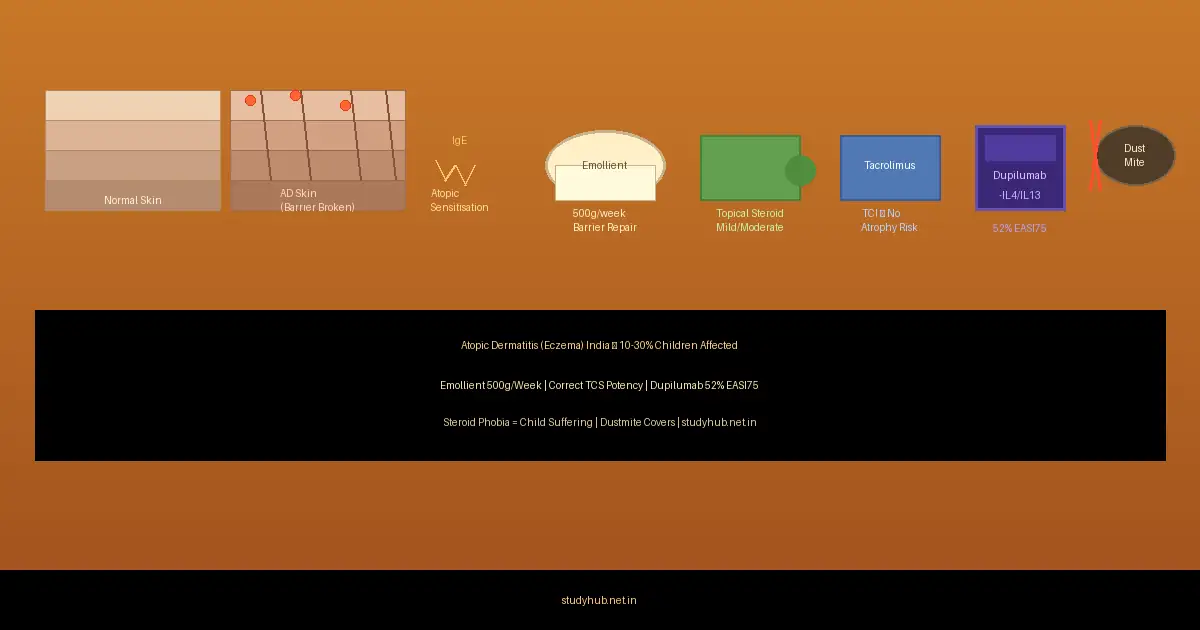
Atopic dermatitis (AD) — commonly called eczema — is the most common chronic inflammatory skin disease globally, affecting approximately 10–30% of children and 2–10% of adults in India. It is characterised by intensely itchy, dry, inflamed skin — often in characteristic flexural distributions (elbow creases, behind knees, neck, wrists, ankles). AD is not simply dry skin or an allergy. It is a complex immune disorder involving: skin barrier dysfunction (filaggrin mutations and other barrier protein defects → increased transepidermal water loss → allergen and microbial penetration); Th2-skewed immune dysregulation (excess IL-4, IL-13 driving IgE production → atopic inflammation). India has unique AD challenges: hot humid climate promotes sweating (a major trigger); water quality (hard water, chlorinated municipal water), widespread use of harsh soaps/detergents, and dustmite allergen burden all exacerbate AD. AD is part of the “atopic march” — many Indian children with AD develop allergic rhinitis and asthma as they age — making early effective treatment important not only for skin but for allergy prevention.
AD Treatment Ladder — Step-Up Approach
| Step | SCORAD Severity | Treatment | Key Points | India Cost |
|---|---|---|---|---|
| Step 1 — All patients (baseline) | All severity (mild/moderate/severe) | Emollients/moisturisers + trigger avoidance education | Emollient therapy is the foundation of ALL AD management — hydrates skin, restores barrier, reduces flares; apply immediately after bathing (soak and smear — bath then emollient within 3 minutes to lock moisture); quantity matters: adults need 250–500g/week; children 150–250g/week; cream vs ointment: ointments (petroleum jelly/white soft paraffin) superior barrier repair; creams better tolerated in hot Indian climate; avoid soap (SLS — sodium lauryl sulphate — strips barrier); replace with soap-substitute (aqueous cream, emulsifying ointment, syndet bars — Dove, Cetaphil); trigger avoidance: sweat/heat (lightweight cotton — avoid synthetic), dust mites (mattress cover, regular washing), harsh detergents | White soft paraffin 500g: ₹50–80; Cetaphil cream 250g: ₹350; CeraVe moisturising cream: ₹800; aqueous cream 500g: ₹60–100 (government hospital) |
| Step 2 — Flare control | Mild–moderate (SCORAD <50) | Topical corticosteroid (TCS) for active lesions + emollient baseline | Potency: match TCS strength to body site and severity — face/flexures/genitals: mild TCS (hydrocortisone 1%, clobetasone butyrate 0.05%); body: moderate TCS (betamethasone valerate 0.05%, mometasone furoate 0.1%); briefly/palms/scalp: potent TCS (betamethasone dipropionate 0.05%); India tragedy: family/patient fear of steroids → under-treatment → persistent severe AD → unnecessary suffering; and opposite: use of potent TCS on face long-term → skin atrophy, telangiectasia, striae, perioral dermatitis, glaucoma from eye-area application; apply once-daily TCS to active lesions for 7–14 days then step down; topical steroid withdrawal (TSW) — real phenomenon from chronic inappropriate potent TCS use; proactive therapy: apply TCS 2× per week to previously affected areas (prevents flares — FTU — fingertip unit dosing) | Hydrocortisone 1% cream 20g: ₹80–150; Mometasone cream 15g: ₹60–120; Betamethasone 15g: ₹40–100 (generic — widely available) |
| Step 2 alternative — TCI | Mild–moderate; face/eyelids/flexures | Topical calcineurin inhibitors (TCI): Tacrolimus 0.03%/0.1% ointment; Pimecrolimus 1% cream | Steroid-sparing options — no skin atrophy risk (safe for face, eyelids, genitalia — areas where TCS cause atrophy); tacrolimus 0.03% (children ≥2 years); 0.1% (adults); pimecrolimus (mild-moderate AD); initial burning sensation (resolves after first few days — warn patient); not teratogenic; proactive use 2×/week prevents flares; FDA black box warning (lymphoma) — mechanistic concern not proven in clinical studies; benefit-risk clearly favourable for face/flexure AD | Tacrolimus 0.1% ointment 10g (Tacromus, Tacroz Forte): ₹300–600; Pimecrolimus 1% cream (Elidel): ₹500–900 (brand); generic tacrolimus widely available India |
| Step 3 — Moderate-severe | Moderate–severe (SCORAD ≥25–50) | Phototherapy (narrowband UVB); short oral steroid burst for acute severe flares; systemic immunosuppressants | Phototherapy (nbUVB): 3× per week × 12–16 weeks; safe in adults; reduces AD by 50–70%; available at major dermatology centres India; cyclosporine: rapid onset; gold-standard systemic for severe AD (NICE approved); dose 2.5–5mg/kg/day; monitor BP, creatinine (nephrotoxic); maximum 1 year continuous use; methotrexate: slower onset (8–12 weeks); once-weekly injection; folic acid supplementation; azathioprine: moderate evidence; slower still; oral prednisolone: only for severe acute flares (max 7–14 days — rebound worsening if stopped abruptly) | Cyclosporine generic (Panimun Bioral): ₹20–40/capsule; cyclosporine 100mg/day ≈ ₹2,000–4,000/month; methotrexate generic: ₹2–5/tablet; phototherapy session: ₹500–1,500 |
| Step 4 — Severe refractory | Severe (SCORAD ≥50) refractory to Steps 1–3 | Dupilumab (Dupixent) — IL-4Rα biologic; JAK inhibitors (upadacitinib, abrocitinib, baricitinib) | Dupilumab: anti-IL-4Rα monoclonal antibody blocks IL-4 and IL-13 signalling (the core Th2 cytokines in AD); SOLO-1 and SOLO-2 trials: 36–38% clear/almost clear skin at 16 weeks; continues to improve over 52 weeks; safe in pregnancy (no teratogenicity data but used in clinical practice); approved in India ₹40,000–60,000/dose (600mg loading → 300mg every 2 weeks); PMJAY does not currently cover; patient assistance programmes (Sanofi-Regeneron). Upadacitinib (Rinvoq): oral once-daily JAK1 inhibitor; Measure UP 1&2 trials: superior to dupilumab in head-to-head (Heads Up trial — 71% clear/almost clear vs 61% dupilumab at week 16); fast onset (weeks vs months); safety: Black Box Warning (JAK inhibitors: thrombosis, malignancy, cardiovascular events — use with caution; avoid in high-risk patients); India: available, ₹15,000–25,000/month (generic brand). Abrocitinib (Cibinqo): JAK1 inhibitor; JADE MONO-1/2 trials: similar efficacy to upadacitinib; India available | Dupilumab: ₹40,000–60,000/2 weeks; upadacitinib: ₹15,000–25,000/month; cyclosporine generic much cheaper — Step 3 first in India |
Frequently Asked Questions
Why does my child’s eczema keep flaring in India’s hot climate?
India’s climate and lifestyle create a particularly challenging environment for AD management — and understanding specific Indian triggers enables targeted prevention: Heat and sweating: Sweating is one of the most common and potent AD triggers for Indian children — sweat (particularly histamine-like compounds and malassezia from sweat gland colonisation) directly irritates compromised skin barrier; during Indian summers and monsoon (humidity + heat = maximal sweat): AD flares peak; practical management: lightweight breathable 100% cotton clothing (avoid synthetic fibres — polyester, nylon trap sweat and heat); air conditioning reduces sweat trigger significantly; cool lukewarm baths after sweating (not cold — cold water triggers vasoconstriction then rebound itch); antiperspirant (aluminium chloride) for excessive sweating in older children/adults. Hard water and chlorinated water: Studies confirm hard water (high calcium/magnesium — common in North India including Delhi, Rajasthan, Haryana) damages skin barrier and worsens AD; chlorinated municipal swimming pool water is a potent AD trigger in children; practical: water softener for bath water (ion exchange filters — ₹5,000–15,000); shower filter attachments (₹500–2,000); use of soap-substitutes rather than soap reduces hard water interaction with skin. Dust mites and indoor allergens India: House dust mites (Dermatophagoides pteronyssinus/farinae) are ubiquitous in Indian homes — high humidity promotes mite proliferation enormously; mite allergen (Der p1) penetrates damaged AD skin → triggers Th2 IgE sensitisation; approximately 60–70% of Indian AD patients are dust-mite sensitised; practical reduction measures: allergen-proof mattress and pillow covers (₹500–2,000); weekly hot washing of bedding (≥60°C); regular vacuuming with HEPA filter; reduce carpets and soft furnishings; dehumidifier if high indoor humidity; note: complete mite avoidance is impossible — reduce burden rather than eliminate. Food triggers — the contentious area: Food allergy plays a role in a minority of AD patients (particularly children with severe AD): 30–35% of children with severe AD have IgE-mediated food allergy; most common India: cow’s milk, egg, wheat, peanut, fish; BUT: food allergy is vastly over-diagnosed in Indian AD (parents and sometimes physicians eliminate multiple foods without evidence, leading to nutritional deficiencies); most AD (especially adults) is NOT food-driven; evidence-based approach: eliminate specific food only if: (1) clear temporal relationship between food and flare, (2) positive food allergy testing (skin prick or IgE), (3) challenge/re-introduction confirms relationship; blanket elimination diets harm nutrition without benefit in most patients. Infections — Staph aureus: Staphylococcus aureus colonises 90%+ of AD skin (vs 20% normal skin); produces toxins (superantigens) that directly activate Th2 inflammation → major driver of flares; bleach baths reduce Staph colonisation (bath in dilute bleach solution — 1 teaspoon sodium hypochlorite per 10 litres of bath water × 3× per week; safe; reduces flare frequency by 30–40%); antiseptic wash (chlorhexidine); if actively infected: systemic antibiotics (flucloxacillin/cefalexin for Staph — NOT topical antibiotics alone for widespread infection).
Are topical steroids safe for children with eczema?
Topical corticosteroid (TCS) fear is one of the biggest barriers to effective AD treatment in India — “steroid phobia” — causing under-treatment, persistent severe eczema, and unnecessary suffering in children: The evidence on TCS safety in AD: When used correctly (appropriate potency, appropriate body site, short courses), topical corticosteroids are safe and effective; the risks of TCS are site-specific, potency-specific, and duration-specific: Skin atrophy: only occurs with prolonged use of moderate-potent TCS on thin skin (face, flexures); NOT a significant risk with mild TCS (hydrocortisone 1%) used correctly even long-term on face; Systemic absorption/adrenal suppression: genuinely rare and only with potent TCS applied to large body surface area for extended periods; not a concern with standard-duration mild-moderate TCS; Periocular steroid use → glaucoma: genuine risk — never apply TCS around eyes without ophthalmic supervision; use TCI (tacrolimus/pimecrolimus) for periocular AD instead. The fingertip unit (FTU) — correct dosing: One FTU = amount squeezed from fingertip to first crease of index finger = approximately 0.5g; sufficient for an area of skin = 2 hand-palms; FTU guide for children by age: 3–6 months: face 1 FTU, body 1–2 FTUs; 1–2 years: face 1.5, body 2–3; 3–5 years: face 1.5, body 3–4; overuse is uncommon with FTU-guided prescribing. How to use TCS correctly and explain to Indian families: Use TCS only on active eczema (red, inflamed, itchy areas) — not on clear skin; apply once daily (evidence shows once-daily as effective as twice-daily for most TCS and reduces total steroid load); use for 7–14 days of active disease, then step down to emollient; use emollient liberally throughout; proactive therapy: 2× per week TCS application to previously affected areas reduces flares by 50% once clear; never stop TCS abruptly on large body area — taper. Topical steroid withdrawal (TSW) — the controversy: TSW is a real phenomenon in patients who have used potent TCS on the face or large body areas for very long periods (often due to misuse or inappropriate prescribing); characterised by rebound erythema, burning, peeling, which can be severe and prolonged; occurs with inappropriate use — not with correctly used AD TCS; treatment: gradual TCS weaning; topical TCI (tacrolimus) as bridge; systemic therapy (dupilumab/cyclosporine) for severe TSW; TSW is a consequence of misuse, not correct AD steroid treatment.
What is dupilumab and can Indian patients access it?
Dupilumab (brand name Dupixent — Sanofi-Regeneron) represents the most significant advance in AD treatment in decades — the first targeted biologic therapy approved for moderate-severe AD: How dupilumab works: Monoclonal antibody targeting IL-4Rα (the shared receptor subunit for IL-4 and IL-13); blocks both IL-4 and IL-13 signalling simultaneously; IL-4 and IL-13 are the master cytokines driving Th2 inflammation in AD (and also asthma and allergic rhinitis — hence dupilumab is also approved for these); result: dramatically reduces skin inflammation, pruritus (itch), and skin barrier disruption; onset: significant improvement within 2–4 weeks; full effect at 16 weeks; efficacy maintained long-term (2–3 year data). Dupilumab evidence: LIBERTY AD SOLO-1 and SOLO-2 (phase 3): 36–38% IGA 0/1 (clear/almost clear) vs 8–9% placebo at 16 weeks; 52% EASI-75 (75% reduction in eczema severity) vs 15% placebo; CHRONOS trial: 52-week sustained efficacy with concomitant TCS; approved for: adults (≥18 years) with moderate-severe AD inadequately controlled by topical therapies; children ≥6 months (weight-based dosing); adolescents; also approved: asthma (EOS ≥150), nasal polyps, eosinophilic oesophagitis, prurigo nodularis. Dupilumab safety: No Black Box Warning (unlike JAK inhibitors); conjunctivitis: most common side effect (10–20% — ocular surface inflammation; often responds to ophthalmic cyclosporine drops; may be due to upregulation of alternative inflammatory pathways without IL-4/13); injection site reactions: mild; no increased infection risk (unlike TCS/systemic steroids); safe in pregnancy (used where benefit outweighs risk). India access reality for dupilumab: DCGI (India drug regulator) approved dupilumab for AD in 2022; pricing: ₹40,000–60,000/dose (600mg loading, then 300mg every 2 weeks); annual cost ≈ ₹10–12 lakh; significant access barrier for most Indian patients; access pathways: Sanofi patient assistance programme (MyWay India — income-based subsidy schemes); some private health insurance (premium policies — check policy for biological coverage); AIIMS Delhi, PGI Chandigarh, CMC Vellore, private dermatology centres (Dr Batra’s, Dermaworld) prescribing; JAK inhibitors (upadacitinib, abrocitinib) cheaper alternative (₹15,000–25,000/month) with comparable/superior efficacy for many patients; for most Indian patients with severe AD: cyclosporine (₹2,000–4,000/month) remains first-line systemic due to affordability; dupilumab reserved for cyclosporine failure or contraindication to systemic options.
What to Read Next
- Asthma — The Atopic March: AD → Allergic Rhinitis → Asthma; Dupilumab Approved for Both AD and Asthma (Eosinophilic)
- Psoriasis — Psoriasis vs Eczema: Key Differences in Lesion Distribution, Histology, and Treatment (Methotrexate vs Dupilumab)
- Food Allergy — AD and Food Allergy Are Linked: 30% of Severe Paediatric AD Have IgE Food Allergy; Evidence-Based Testing Essential
- Sleep — Chronic Nocturnal Pruritus in AD Causes Severe Sleep Disruption; Treat AD Correctly to Restore Sleep Quality
- Child Health — AD in Children: Emollient from Birth Reduces AD Development by 30–50% in High-Risk Families
A child in India with severe atopic dermatitis is woken every night by uncontrollable itching. They scratch until they bleed. Their skin is chronically infected. Their sleep is destroyed — and so is their parents’. A dermatologist prescribes hydrocortisone cream. The parents read about steroid dangers online and stop using it after two days. The child continues suffering. The answer is not avoiding steroids. The answer is using the correct potency steroid for the correct time on the correct body site, combined with daily emollient in industrial quantities, trigger identification, and — where available — dupilumab or a JAK inhibitor when conventional treatment fails. The biology of AD can be controlled. The barrier is steroid phobia and access to modern therapies.
About This Guide: Written by the StudyHub Health Editorial Team (studyhub.net.in) based on NICE AD Guidelines 2023, ETFAD/EADV Atopic Dermatitis Guidelines 2022, Indian Association of Dermatologists Venereologists and Leprologists (IADVL) recommendations. Last updated: March 2026.
🧴 Emollient First, Always: Moisturiser/emollient applied liberally every day is the single most important AD treatment. Apply within 3 minutes of bathing. Adults need 500g/week; children 250g/week. White soft paraffin (₹60/500g at government pharmacy) works as well as expensive branded creams. Never skip the emollient — it restores the barrier that steroid treats the inflammation.
💊 Steroid Phobia = Child Suffering: Appropriate-potency topical steroids applied correctly for short courses are safe. The risk of under-treating severe AD (skin infection, sleep deprivation, psychological impact, school absence) is much greater than the risk of correctly-used TCS. Discuss with your dermatologist — do not discontinue prescribed TCS based on internet fears.
⚕️ Medical Disclaimer: This article provides general educational information about atopic dermatitis. Diagnosis, severity assessment, and treatment decisions (especially biologic therapy) require qualified dermatologist assessment. TCS potency selection for sensitive areas requires specialist guidance.