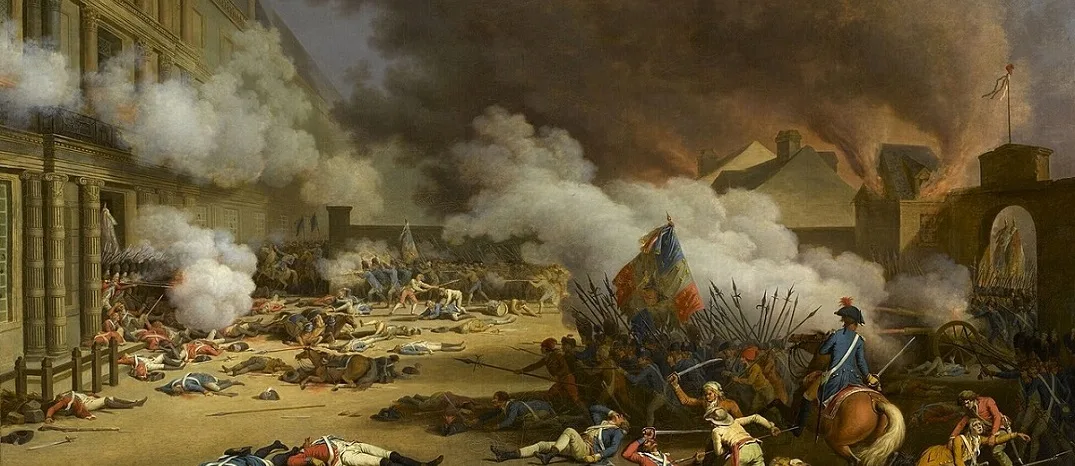
19th Century European Revolutions
In the aftermath of the Congress of Vienna (1815), the ideas of liberalism and nationalism began to permeate rapidly across the European continent. The political settlement imposed by the Congress, which sought to restore the old monarchical order, proved inadequate in suppressing the growing desire for constitutional governance, individual liberties, and national self-determination. Uprisings and revolts became a recurring phenomenon, particularly in regions where political repression was compounded by severe socioeconomic hardships.
The 19th Century – An Era of Unprecedented Transformation
The nineteenth century stands as one of the most transformative periods in human history. It was the century that witnessed the sweeping forces of industrialization and modernization, a dramatic demographic explosion, and the advent of revolutionary means of transportation and communication — including railways, steamships, and the telegraph — that reshaped the very fabric of societies across Europe and beyond.
This era ushered in changes of a magnitude that the world had never previously experienced. Literacy rates surged across the continent, rapid urbanization transformed rural landscapes into bustling industrial centres, and political institutions underwent fundamental restructuring. Alongside these developments, there was a powerful rise of national identity, an extraordinary flourishing of arts and culture, groundbreaking scientific discoveries, and a profound shift in the everyday lifestyles of millions of people. Such monumental transformations inevitably gave rise to deep and far-reaching social upheavals, setting the stage for a century defined by revolution.
Revolutions of the 1820s – The First Wave of Liberal Uprisings
The Spanish Revolution of 1820
The first significant revolution in this series erupted in Spain in 1820. Back in 1812, a progressive and liberal constitution had been drafted and adopted — famously known as the Cádiz Constitution. However, following the restoration of monarchies after the Congress of Vienna, King Ferdinand VII chose to completely disregard and overturn this constitution, reimposing absolute rule over the Spanish people.
In 1820, widespread discontent culminated in a military uprising led by General Rafael del Riego, who sought to restore the liberal constitutional framework. The pressure mounted by the uprising was so intense that Ferdinand VII was compelled to accept and reinstate the Constitution. However, this triumph of liberalism proved short-lived. In 1823, the conservative powers of Europe, acting through the Congress of Verona, dispatched a massive French military force — famously referred to as the ‘100,000 Sons of Saint Louis’ — to Spain. This intervention successfully crushed the liberal movement and restored Ferdinand VII’s absolute authority.
Spread of Liberal Ideas Across Southern Europe
Despite the setback in Spain, the liberal ideals of the 1820s spread rapidly to other parts of Europe, igniting revolts in Portugal, the Kingdom of the Two Sicilies, Sardinia, and several German states. However, in each of these territories, the uprisings were met with overwhelming military force and were decisively suppressed by the established armies and the intervention of the conservative Concert of Europe.
The Greek War of Independence (1821–1829)
Among the revolutions of the 1820s, the Greek Revolution of 1821 stands out as the most consequential and ultimately successful uprising. The Greeks rose in revolt against centuries of Ottoman Turkish domination, and their struggle resonated deeply across Europe. Greek nationalists skilfully appealed to widespread European sympathy for a Christian nation fighting against what was perceived as Muslim political dominance.
This emotional and strategic appeal attracted the support of major European powers. With critical military and diplomatic backing from France, Britain, and Russia, the Greek independence movement gained unstoppable momentum. Greece ultimately secured its independence in 1829, and by 1832, it was formally recognised as a sovereign and independent nation by the international community.
Liberal Agitation in Western Europe
By the mid-1820s, liberal political agitation began to gain renewed vigour in Britain, France, and the Low Countries. Liberals across these nations championed the cause of stronger parliamentary institutions and demanded broader protection of individual rights and civil liberties. They advocated for extending the right to vote to the propertied classes, who were increasingly influential in the economic life of their nations.
Furthermore, liberals pushed for commercial legislation that would promote business growth and free trade. In Britain, this specifically meant mounting a sustained attack on the Corn Laws — protective tariffs that shielded the interests of the landed aristocracy while artificially inflating food prices and, consequently, wage costs. Meanwhile, in Belgium, liberals harboured an additional and deeply felt nationalist grievance, as the Treaty of Vienna had placed their predominantly Catholic and French-speaking territories under the authority of Dutch Protestant rule.
Revolutions of the 1830s – The Second Wave of Uprisings
The July Revolution in France (1830)
The accumulating frustrations of liberals and constitutionalists ignited a powerful new wave of revolutions in 1830, once again sparked by events in Paris. Known to history as the ‘July Revolution’, this uprising successfully deposed the ultraconservative Bourbon King Charles X and replaced him with a ruler who was far more sympathetic to liberal principles — King Louis-Philippe I.
Charles X, a staunch advocate of absolute monarchy, had attempted to dismantle the constitutional framework and restore the pre-revolutionary Ancien Régime. His regressive policies provoked fierce opposition from the upper bourgeoisie and a wide coalition of influential liberal politicians and intellectuals, who galvanized the people of Paris to rise in open revolt against his authoritarian rule. The outcome of the July Revolution was the establishment of France as a constitutional monarchy, marking a decisive victory for liberal governance.
The Belgian Revolution and Independence (1830–1831)
The Kingdom of the Netherlands, as constituted after the Congress of Vienna, was an inherently unstable political entity. It combined a southern region (present-day Belgium), which was predominantly Catholic and French-speaking, with a northern region (present-day Holland), which was largely Dutch-speaking and Protestant (Calvinist). The cultural, linguistic, and religious differences between the two halves made conflict almost inevitable.
In 1830, inspired by the July Revolution in France, a rebellion erupted in Brussels against Dutch rule. This uprising rapidly gained popular support and culminated in Belgian independence in 1831. The newly established Belgian state adopted a liberal constitutional regime and crowned King Leopold I as its first monarch, creating one of the most progressive governmental systems in Europe at that time.
Europe Divided: Liberal West vs. Conservative East
In the wake of the revolutionary waves of the 1820s and 1830s, liberal and constitutional governments spread across much of Western Europe. However, significant portions of the continent remained firmly under absolutist rule. Central Europe — including the majority of the German and Italian states (with the notable exception of Savoy) — along with the sprawling empires of Russia, Austria, and the Ottoman Empire, continued to resist the tide of liberal reform.
Europe was now sharply divided between a liberal, constitutionalist west and a deeply conservative centre and east. The Russian Empire, in particular, appeared largely immune to the political currents sweeping across the rest of the continent. This was partly attributable to the absence of significant social and economic modernization within Russia’s vast feudal society.
A revolt by a group of liberal-minded army officers in December 1825 — known as the Decembrist Revolt — was swiftly and decisively crushed. The new Tsar, Nicholas I, responded by establishing an even more rigorous system of political surveillance, secret police, and censorship. When nationalist revolt erupted in Poland as part of the broader 1830 revolutionary movement, it too was suppressed with overwhelming military force. Russian diplomatic and foreign policy during this period continued to follow largely traditional imperial objectives, including recurrent warfare with the Ottoman Empire in pursuit of territorial expansion southward. It was only after 1850 that the Russian regime began to seriously reconsider its stubbornly conservative posture.
This pattern of conservative resistance, however, could not sustain itself indefinitely across the rest of Europe. Scandinavian governments gradually moved toward greater liberalism by expanding the powers of their parliaments — a transition that was largely completed by the late 1840s. Similarly, the Dutch monarchy undertook comparable liberal reforms during the same period. Elsewhere across the continent, the next major step in this evolutionary process was once again triggered by a dramatic series of revolutions in 1848, which proved to be Western Europe’s final major revolutionary wave.
Revolutions of 1848 – The Spring of Nations
The year 1848 occupies a uniquely significant place in European history. It witnessed a continent-wide eruption of revolutions and popular uprisings that swept across nations with extraordinary speed and intensity. Historians have aptly named this remarkable year “The Spring of Nations” (also known as the “Springtime of the Peoples”), reflecting the widespread awakening of national consciousness and democratic aspirations that characterized the upheavals.
Causes of the 1848 Revolutions
Building upon the factors that had fueled the earlier revolutions of the 1820s and 1830s, the uprisings of 1848 were driven by an even more complex and interconnected set of causes:
- Legacy of Earlier Revolutions: The constitutional and liberal reforms achieved through the previous revolutions had begun to take root and produce tangible effects — for instance, in France, where the precedent of the July Revolution had created expectations for further political progress.
- Bourgeois Opposition to Absolutism: In countries where absolutist rule remained entrenched, the growing and increasingly wealthy bourgeoisie (middle class) rose up against autocratic governance. Meanwhile, in nations that had already established constitutional monarchies, radical politicians — often from the working class and known as “democrats” — demanded even more far-reaching changes, including universal suffrage (the right to vote for all adult men).
- Industrial Revolution and the Rise of the Proletariat: The rapid spread of industrialization was fundamentally reshaping the social structure of European societies. It gave birth to a vast new social class — the proletariat (industrial working class) — who laboured under harsh conditions and increasingly demanded political representation and workers’ rights.
- Expansion of the Press and Media: Technological advances in printing and publishing led to a dramatic expansion of newspapers and pamphlets. This wider and more accessible press served as a powerful vehicle for spreading revolutionary ideas more rapidly and to a far broader section of society than ever before.
- Surge of Nationalism: The forces of nationalism were growing stronger with each passing decade. Ethnic groups across Europe increasingly demanded the right to govern themselves within independent nation-states, challenging the multinational empires that dominated the continent.
- Emergence of Socialism: The ideology of socialism appeared as a formidable new political force, gaining rapid momentum especially after Karl Marx and Friedrich Engels published their landmark work, the Communist Manifesto, in 1848. This treatise provided an intellectual framework for working-class movements and inspired revolutionary action across Europe.
- Economic Crisis and Crop Failures: A severe agricultural crisis struck Europe in 1846, with widespread crop failures leading to food shortages and skyrocketing prices. The resulting economic depression caused immense hardship and widespread discontent among the peasantry as well as the newly emerging urban working classes, creating a volatile environment ripe for revolt.
Geographic Spread of the 1848 Revolutions
The revolutionary upheavals of 1848 engulfed a vast swathe of Western and Central Europe. Major revolutions and significant uprisings erupted in an extensive list of countries and territories, including:
- France
- The Austrian Empire
- The Kingdom of Hungary
- Denmark
- Sweden
- Switzerland
- Poland
- Belgium
- Ireland
- Several German states, including Prussia and Saxony
- The Italian territories of Venice-Lombardy
- Parts of South America, notably Brazil
Notably, many of these uprisings carried strong nationalist dimensions, particularly in the fragmented Italian and German territories, where aspirations for national unification were deeply intertwined with demands for liberal governance.
Key Outcomes and Lasting Impact of the 1848 Revolutions
Although many of the 1848 revolutions were ultimately suppressed or reversed in the short term, they produced several critically important and lasting changes that fundamentally altered the political and social landscape of Europe:
- Abolition of Manorialism: The feudal system of manorialism was permanently abolished throughout Germany and the Habsburg lands. This momentous change liberated the peasant population from centuries of feudal obligations and granted them new legal rights, personal freedoms, and economic opportunities that had been previously denied to them.
- Democracy Entrenched in France: Democratic principles became firmly embedded in the French political system. Even under the subsequent Second Empire of Napoleon III, and despite considerable political manipulation, universal manhood suffrage (the right of all adult men to vote) was permanently installed and never again revoked — a landmark achievement in the history of European democracy.
- Parliamentary Establishment in Prussia: Although Prussia quickly returned to conservative governance after the initial revolutionary fervour subsided, its rulers nonetheless established a parliament based on a limited franchise. This represented a significant, if cautious, concession to liberal opinion and laid the groundwork for future democratic development in the German states.
- Bureaucratic Modernization of the Habsburg Monarchy: The Habsburg (Austrian) monarchy undertook a sweeping rationalization and modernization of its bureaucratic structures, replacing the outdated and fragmented system of localized landlord rule with a centralized and more efficient administrative framework.
- Early Feminist Movements: The revolutionary atmosphere of 1848 also saw the emergence of early feminist agitation in France and Germany, as women began to voice demands for political participation and equal rights — planting the seeds for the broader women’s suffrage and rights movements that would flourish in the decades to come.
- Foundation for Future Political Evolution: Collectively, the events of 1848 set the stage for a period of rapid political evolution after 1850. The reforms achieved — however partial — created new institutional frameworks and political expectations that made the prospect of future violent revolutions increasingly unlikely in Western Europe, channelling political change instead through parliamentary and constitutional processes.