Climatology

Terrestrial Radiation and Heat Balance: Key Concepts for GSI NET and GATE Exam

Terrestrial Radiation and Heat Balance: Key Concepts for GSI NET and GATE Exam

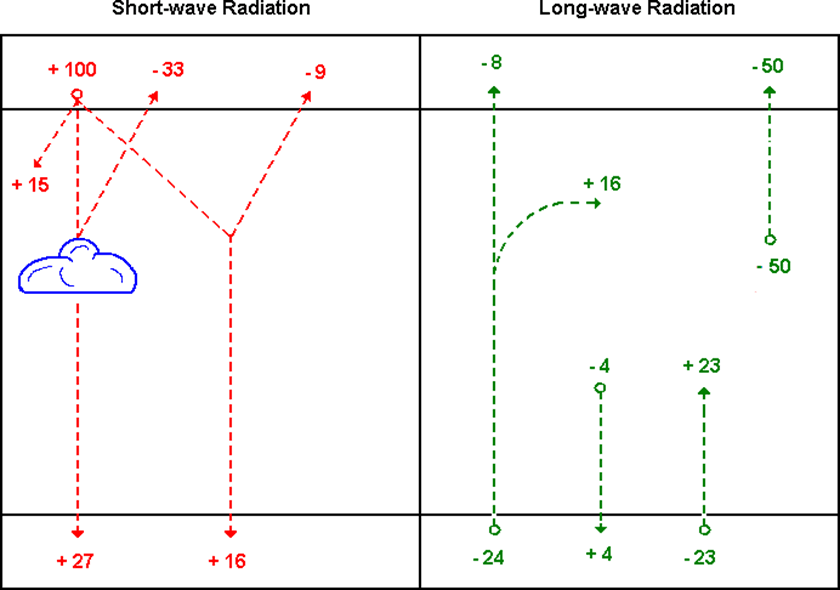
Terrestrial Radiation The absorption of solar radiation raises the temperature of the earth’s surface and atmosphere. The radiation emitted from the land and water surfaces of the earth is long-wave radiation, unlike the short-wave radiation it receives from the sun. The earth’s average temperature approaches 294 Kº, and it emits long-wave radiation within the range […]

Terrestrial Radiation and Heat Balance: Key Concepts for GSI NET and GATE Exam Read More »

Solar Energy and the Solar Constant

Solar Radiation and Its Impact on Earth’s Weather for GATE, NET, and GSI Exams

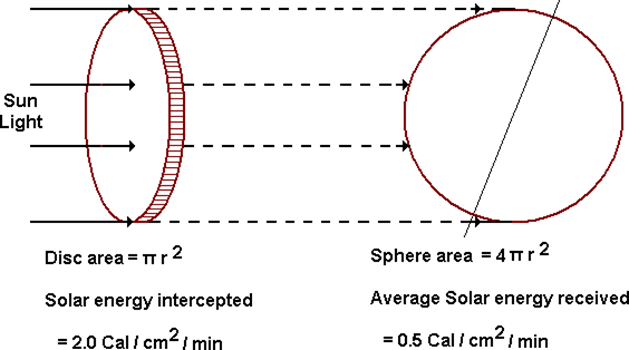
Solar Radiation The weather results from the interaction of solar radiation with the earth’s atmosphere and surface. Earth’s rotation and revolution explain the changing elevation of the sun, along with the latitudinal and seasonal variations in day length, receipt, and escape of radiation, which together affect weather conditions. The Sun as an Energy Source The

Solar Radiation and Its Impact on Earth’s Weather for GATE, NET, and GSI Exams Read More »

Earth – Sun Relationship

Earth-Sun Relationship: Rotation, Revolution, Solstices, and Seasons Explained for GATE, NET, GSI Exams

Earth-Sun Relationship General Division of Seasons Generally, the division of the year into seasons varies with latitude. In middle latitudes, the year is divided into ‘autumn’, ‘winter’, ‘spring’, and ‘summer’. The terms ‘summer’ and ‘winter’ are not as significant in the tropics. Instead, division is usually made in terms of rainfall, such as the ‘rainy

Earth-Sun Relationship: Rotation, Revolution, Solstices, and Seasons Explained for GATE, NET, GSI Exams Read More »

Scroll to Top