
Last Updated: March 2026 | Reading Time: 9 minutes | ~2,000 words
Systemic Lupus Erythematosus (SLE) — commonly called lupus — is the prototypical systemic autoimmune disease, in which the immune system produces autoantibodies (particularly anti-double-stranded DNA antibodies — anti-dsDNA) that attack the body’s own organs and tissues. SLE is a complex, relapsing-remitting disease that can affect virtually every organ system: kidneys, joints, skin, brain, heart, lungs, and blood cells. India has an estimated prevalence of 3–8 per 100,000 population of SLE — with approximately 300,000–500,000 patients — but significant under-diagnosis due to its protean presentation and a shortage of rheumatologists (India has fewer than 1,000 certified rheumatologists for 1.4 billion people). SLE disproportionately affects young women of reproductive age (female:male ratio 9:1) — with Indian women diagnosed on average in their 20s–30s; Indian SLE patients have a significantly higher prevalence of lupus nephritis (kidney involvement — 40–60% of Indian SLE patients vs 20–30% in Caucasians) — the most serious complication and the leading cause of SLE-related morbidity and mortality in India.
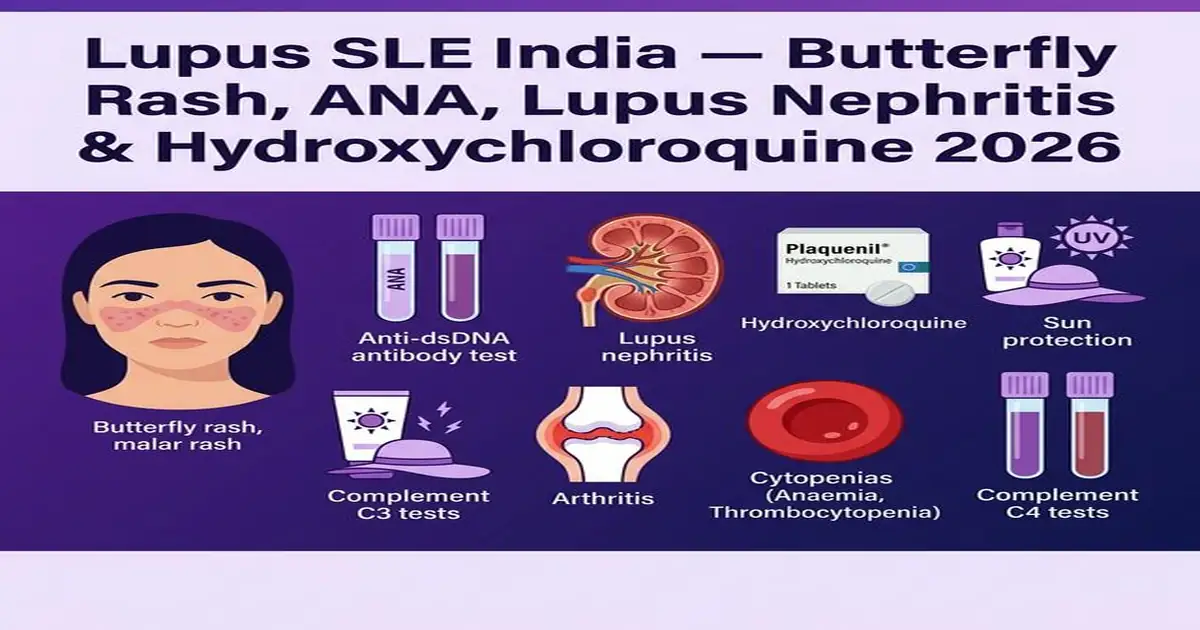
SLE Diagnosis — ACR/EULAR Classification Criteria 2019
| Domain | Features (with points — score ≥10 = SLE classification if ANA positive) | India Significance |
|---|---|---|
| Entry criterion | ANA (Anti-Nuclear Antibody) ≥1:80 by HEp-2 cell IFA (indirect immunofluorescence): MUST be positive to apply the scoring system (not sufficient alone for diagnosis) | ANA positive in ~ 95% of SLE patients; also positive in many non-SLE conditions (drug-induced, healthy individuals ~5%, other autoimmune disease) — ANA alone never diagnoses SLE; positive predictive value low without clinical features |
| Constitutional | Fever (2 points) | Fever + arthralgia + rash in young Indian woman = SLE until proven otherwise |
| Haematological | Leukopenia <4,000/µL (3 points); Thrombocytopenia <100,000/µL (4 points); Autoimmune haemolytic anaemia (4 points) | Pancytopenia in young Indian woman often misdiagnosed as aplastic anaemia or TB-related bone marrow suppression — SLE must be excluded |
| Neuropsychiatric | Delirium (2 pts); Psychosis (3 pts); Seizures (5 pts) | Neuropsychiatric SLE (NPSLE): seizures, psychosis, cerebrovascular disease in young Indian woman = SLE investigation; often misdiagnosed as primary psychiatric disorder |
| Mucocutaneous | Non-scarring alopecia (2 pts); Oral ulcers (2 pts); Subacute/discoid lupus (4 pts); Acute cutaneous lupus (butterfly malar rash) (6 pts) | Malar (butterfly) rash: erythema over cheeks and nose bridge, sparing nasolabial folds; exacerbated by sun; may be subtle in darker Indian skin — misattributed to rosacea or seborrheic dermatitis; oral ulcers common and painless (distinguish from painful aphthous ulcers) |
| Serosal | Pleural/pericardial effusion (5 pts); Acute pericarditis (6 pts) | Young Indian woman with pleuritis/pericarditis + ANA = SLE diagnosis until excluded |
| Musculoskeletal | Joint involvement: synovitis ≥2 joints OR ≥2 joints with morning stiffness >30 min (6 pts) | Non-erosive arthritis (distinguishes from RA — SLE joints don’t erode bone on X-ray); polyarthritis common presenting feature India |
| Renal | Proteinuria >0.5g/24hr (4 pts); Renal biopsy: Class II or V nephritis (8 pts); Class III or IV nephritis (10 pts) | Lupus nephritis: ISN/RPS Class III (focal) or IV (diffuse) = most severe; mandates immunosuppressive therapy (mycophenolate + hydroxychloroquine ± steroids); kidney biopsy essential for class determination and treatment guidance |
| Antiphospholipid antibodies | Anti-cardiolipin/anti-β2GPI/Lupus anticoagulant (2 pts) | Antiphospholipid syndrome (APS) complicating SLE: thrombosis (DVT, stroke, MI), recurrent miscarriages → anticoagulation (warfarin) or aspirin; very important India — young women with recurrent pregnancy loss and stroke must have APS screen |
| Complement | Low C3 or C4 (3 pts); Low C3 AND C4 (4 pts) | Complement consumption (low C3/C4) correlates with disease activity; used to monitor flares alongside anti-dsDNA titre |
| SLE-specific antibodies | Anti-dsDNA+ (6 pts); Anti-Sm+ (6 pts) | Anti-dsDNA: highly specific for SLE (95%); titre correlates with lupus nephritis activity; anti-Sm: less sensitive but very specific; both available at reference labs India |
Frequently Asked Questions
Why is hydroxychloroquine given to all SLE patients?
Hydroxychloroquine (HCQ — brand: Plaquenil; generic: Hcqs, Hydroquin India) is the cornerstone of SLE treatment — the one drug that virtually every SLE patient should receive, regardless of disease severity: How HCQ works in SLE: Antimalarial drug repurposed for autoimmune disease; mechanism: inhibits toll-like receptor (TLR) signalling in immune cells → reduces interferon-α production (the key cytokine driving SLE pathology); prevents antigen presentation by lymphocytes; stabilises lysosomal membranes; blocks UV-induced immune activation; net effect: reduces SLE flare frequency, disease activity, and organ damage. Evidence for HCQ in SLE: Multiple RCTs and long-term cohort studies: HCQ reduces lupus flares by 50%; reduces SLE mortality by 30–50% (survival benefit); reduces lupus nephritis risk; prevents irreversible organ damage (atherosclerosis, thrombosis — through anti-platelet effects); safe in pregnancy (doesn’t cross placenta in harmful quantities; should be CONTINUED in pregnant SLE patients — teratogenic risk of undertreated SLE is much higher than HCQ risk); reduces risk of preterm birth and fetal loss in SLE pregnancies. The standard recommendation: HCQ should be prescribed to EVERY SLE patient unless there is a specific contraindication; dose: 5mg/kg/day (based on actual body weight — maximum 400mg/day; lower dose in CKD). The eye toxicity question — retinopathy: HCQ at dosing >5mg/kg/day for >5 years carries risk of irreversible retinal toxicity (bull’s-eye maculopathy → irreversible visual loss); thus: annual ophthalmology review recommended from year 5 of HCQ use; baseline fundoscopy + OCT recommended before starting; in India: ophthalmology screening often not performed — underappreciated risk; lower HCQ doses (≤5mg/kg/day) significantly reduce retinopathy risk; India cost: HCQ 200mg (Hcqs): ₹80–200/month for standard SLE dose — extremely affordable. What HCQ does NOT do: HCQ alone is insufficient for severe manifestations (nephritis, CNS disease, severe haematological disease) — these require immunosuppressants (mycophenolate, azathioprine, cyclophosphamide, belimumab); HCQ is the baseline disease modifier — always combined with appropriate specific therapy for active organ involvement.
What is lupus nephritis and how is it treated in India?
Lupus nephritis (LN) — kidney involvement in SLE — is the most serious manifestation of lupus in Indian patients, occurring in 40–60% of Indian SLE patients (vs 20–30% in Caucasians), and a leading cause of end-stage kidney disease in young Indian women: Why lupus damages the kidney: Anti-dsDNA autoantibodies and immune complexes (antibody + antigen) deposit in glomeruli → activate complement → trigger inflammatory cascade → glomerulonephritis → proteinuria, haematuria, declining eGFR; kidney biopsy: essential for classifying LN (ISN/RPS classification): Class I/II: mesangial — mild; minimal treatment beyond HCQ; Class III: focal proliferative — moderate severity; Class IV: diffuse proliferative — most severe (80-90% of glomeruli involved); Class V: membranous — heavy proteinuria; Class VI: advanced sclerosing — irreversible fibrosis. Treatment of Class III/IV lupus nephritis (most common severe form): Induction therapy (first 3–6 months): Mycophenolate mofetil (MMF) 3g/day + high-dose prednisolone + HCQ; MMF preferred over cyclophosphamide as standard induction in India (ALMS trial — equivalent efficacy; better tolerability; lower infection risk; preserves fertility); alternatively: low-dose cyclophosphamide (Euro-Lupus protocol: 500mg IV fortnightly × 6 doses + prednisolone) — cheaper than MMF; used when MMF unaffordable. Belimumab (Benlysta) + standard therapy: BLISS-LN trial (2020) — belimumab + MMF significantly improved complete renal response vs MMF alone; anti-BAFF antibody targeting B-cell survival factor; India: available at major tertiary centres; ₹90,000–1,50,000/dose (monthly IV) — limited access; belimumab SC (subcutaneous) emerging. Voclosporin (Lupkynis) + MMF + prednisolone: AURORA-1 trial (2021) — highly impressive complete renal response rates; calcineurin inhibitor; not yet widely available India. Maintenance therapy (after induction): MMF 1–2g/day + HCQ + low-dose prednisolone for minimum 3 years; azathioprine alternative if fertility desired soon (safer in pregnancy than MMF). Monitoring lupus nephritis India: Monthly urine protein:creatinine ratio (PCR) and creatinine during induction; anti-dsDNA titre + C3/C4 every 3 months (rising anti-dsDNA + falling complement = flare); 24-hour protein or spot urine PCR; eGFR monitoring; blood pressure strict control (target <130/80 — ACE-I/ARB first-line, reno-protective). India access to LN treatment: MMF (Cellcept brand → very expensive; generic MMF — Myfocept, Mycophenate — ₹2,000–5,000/month); cyclophosphamide generic very affordable (₹200–500/infusion); prednisolone ₹2–5/tablet; HCQ ₹100–200/month; total basic LN induction treatment cost on generic drugs: ₹3,000–8,000/month — relatively affordable for Indian middle class; biologics (belimumab): major access barrier.
How does SLE affect pregnancy in India?
SLE pregnancy is one of the highest-risk medical situations in obstetric medicine — requiring careful planning, specialist co-management, and strict medication review: Risks of SLE in pregnancy: Maternal: SLE flares during pregnancy (30–40% of pregnancies); lupus nephritis flare — most dangerous; pre-eclampsia risk increased 3–5×; thrombosis (especially if antiphospholipid antibodies present); anaemia; infection risk (immunosuppressed); Fetal/neonatal: increased miscarriage risk (especially with APS); preterm birth (30–40%); fetal growth restriction; neonatal lupus (anti-Ro/SSA antibodies cross placenta → neonatal rash, cytopenias, complete heart block — most serious complication → requires mothers to have anti-Ro screening; if positive → fetal cardiac monitoring from week 16–26); congenital heart block 1–3% risk if anti-Ro positive. Pre-conception planning for SLE: Plan pregnancy during disease remission (at least 6 months of low disease activity before conception); ensure adequate contraception until ready (SLE flares in unplanned pregnancies without preparation = high risk); medication review: SAFE in pregnancy: HCQ (continue — reduces flares), azathioprine (compatible), prednisolone/methylprednisolone (safe at low-moderate doses); STOP before conception: mycophenolate (MMF) — teratogenic (cleft palate, external ear/limb abnormalities) → must stop and switch to azathioprine ≥3 months before conception; cyclophosphamide — teratogenic; methotrexate (avoid); belimumab — stop before conception. Antiphospholipid syndrome (APS) in Indian SLE patients: APS complicates 30–40% of Indian SLE patients; in pregnancy with APS: low-dose aspirin (75mg) + low molecular weight heparin (LMWH — clexane/enoxaparin) from positive pregnancy test throughout pregnancy and 6 weeks postpartum; dramatically reduces pregnancy loss rate in APS; in thrombotic APS (prior stroke/DVT): lifelong warfarin (INR 2–3 or 3–4 depending on site). India multidisciplinary pregnancy care: High-risk obstetrics + rheumatology combined clinic; regular fetal surveillance (growth scans, Doppler); monitoring for pre-eclampsia; postpartum flare monitoring (30% flare risk in 3 months postpartum — increase immunosuppression vigilance); HCQ continuation through breastfeeding — safe.
What lifestyle precautions are essential for SLE patients in India?
SLE management extends far beyond medications — lifestyle modifications significantly reduce flare risk, organ damage, and complications: Sun protection — the most important lifestyle modification: UV radiation is a potent SLE trigger — UV activates keratinocytes → nuclear material released → stimulates anti-dsDNA antibody production; clinical consequence: sun exposure triggers systemic SLE flares (not just skin rash) — photosensitive SLE patients who sun-bathe or work outdoors without protection may develop lupus nephritis flares from sun exposure; India context: intense tropical sun throughout the year; cultural pressure to have outdoor lifestyle (cricket, farming, religious events outdoors); sunscreen (SPF ≥50, broad-spectrum UVA+UVB) on all exposed skin daily — even on cloudy days (UV penetrates cloud); protective clothing (long sleeves, dupatta, wide-brim hat); avoid peak sun hours (10 AM – 4 PM); tinted car windows; UV-filtering window glass for home and office; SLE patients who work in agriculture (significant proportion of Indian women) need adapted sun protection strategies. Infection prevention: SLE patients on immunosuppression have markedly increased infection risk (steroids, MMF, cyclophosphamide); annual influenza vaccine (SAFE — inactivated vaccine; do NOT give live vaccines during immunosuppression); pneumococcal vaccine (PCV13 + PPSV23 sequence); COVID-19 vaccination — recommended (complete primary + booster series before intensifying immunosuppression if possible); avoid contact with TB-exposed individuals (SLE patients on steroids have high TB reactivation risk — screen with IGRA/TST before starting heavy immunosuppression; prophylactic isoniazid if positive in some protocols). Vitamin D supplementation: Vitamin D deficiency is near-universal in Indian SLE patients (sun avoidance + immunosuppression + renal disease); low vitamin D → higher disease activity; supplement cholecalciferol 2,000–4,000 IU/day; monitor 25-OHD levels. Cardiovascular risk management: SLE patients have 5–10× higher cardiovascular risk than age-matched non-SLE individuals (accelerated atherosclerosis via chronic inflammation + corticosteroid use + traditional risk factors); manage hypertension aggressively (ACE-I/ARB preferred — dual reno-cardiac protection); statin therapy if LDL elevated or Framingham risk >10%; aspirin in APS; smoking cessation (tobacco = major trigger for SLE flares AND cardiovascular risk). Psychological support: SLE is a chronic, unpredictable disease affecting young women during career, relationship, and reproductive years — extraordinarily high psychological burden; depression rates in SLE: 30–50%; anxiety: 40–60%; psycho-oncology/rheumatology-psychology collaboration emerging in India (AIIMS Delhi rheumatology unit has co-located clinical psychologist); lupus patient support groups (Lupus Trust India — Mumbai, Delhi chapters); peer support community of young Indian women with SLE — powerful in improving adherence and quality of life.
What to Read Next
- CKD — Lupus Nephritis is a Major Cause of CKD in Young Indian Women; eGFR + Urine PCR Monitoring Monthly in Active LN
- High-Risk Pregnancy — SLE Pregnancy: APS Heparin Protocol, Stop MMF 3 Months Before Conception, Anti-Ro Cardiac Monitoring
- Arthritis — SLE Arthritis is Non-Erosive (Unlike RA); Distinguish with ANA/anti-CCP/RF Panel
- Anaemia — SLE Causes Multiple Anaemia Types: Autoimmune Haemolytic, Anaemia of Inflammation, Iron Deficiency; Screen All
- Depression — SLE Depression: 30-50% Prevalence in Young Indian Women; Integrate Rheumatology + Psychology Services
A 26-year-old woman in Nagpur presents with 4 months of fatigue, joint pains, hair loss, and a facial rash that worsens in sunlight. Her GP diagnoses iron deficiency anaemia and vitamin D deficiency. A dermatologist calls it seborrheic dermatitis. Six months later she develops frothy urine (proteinuria) and her creatinine is rising. Lupus nephritis Class IV on biopsy. An avoidable 6-month delay in diagnosis, during which her GFR silently declined. The butterfly rash, the photosensitivity, the hair loss, the joint pain — these are not separate conditions requiring separate specialists. They are systemic lupus. Every primary care physician in India needs to see a young woman with these features and think: ANA. Because the consequences of missing it — irreversible renal failure at age 28 — are catastrophic.
About This Guide: Written by the StudyHub Health Editorial Team (studyhub.net.in) based on ACR/EULAR SLE Classification Criteria 2019, EULAR Recommendations for SLE 2023, Indian Rheumatology Association (IRA) guidelines, and AIIMS Delhi lupus nephritis protocols. Last updated: March 2026.
☀️ Sun Protection = Disease Control: UV light triggers systemic SLE flares — not just skin rash. Indian SLE patients must use SPF ≥50 broad-spectrum sunscreen daily (cloudy or not), wear protective clothing, avoid peak sun 10 AM–4 PM, and use tinted glass at home and work. This is not cosmetic advice. This is medical treatment.
💊 Hydroxychloroquine for Life: HCQ (₹100–200/month) should be prescribed to EVERY SLE patient unless there is a specific contraindication. It reduces flares by 50% and mortality by 30–50%. It is safe in pregnancy. Annual eye check after 5 years of use. Never stop HCQ without rheumatologist guidance — stopping HCQ doubles your flare risk within 6 months.
⚕️ Medical Disclaimer: This article provides general educational information about SLE. Diagnosis, antibody testing, kidney biopsy, and immunosuppression decisions require a qualified rheumatologist and nephrologist. SLE pregnancy management requires a high-risk multidisciplinary obstetric team.