
Gupta Art and Architecture reached its zenith during the Gupta Empire (320-550 CE), symbolizing the classical golden age of Indian artistic history. Sculpture was the dominant medium of the era, with Mathura and Sarnath rising as pivotal centers for the creation of Hindu deities, Buddhist figures, and Jain Tirthankaras. Characterized by a distinct “Classical decorum,” Gupta sculpture displayed immense grace and elegance, drawing partial inspiration from the Greco-Buddhist art of Gandhara.
Simultaneously, this period established the bedrock for structural Hindu temple architecture, most notably exemplified by the Dashavatara Temple at Deogarh. While there was a temporary stagnation in rock-cut architecture until the late 5th century, sites such as the Ajanta, Elephanta, and Ellora caves eventually came to embody the monumentality and aesthetic equilibrium defined by the Gupta style.
Gupta Age
The emergence of the Gupta Empire in 4th century AD is often hailed as the “Golden Age of India”. While the earlier Gupta rulers were Buddhists and continued the traditions of Buddhist architecture, temple architecture came to the fore front under the patronage of the Hindu rulers of the later Gupta phase. Temple architecture reached its climax during this period. Similarly, Buddhist and Jain art also reached its peak during the Gupta Age.
The Gupta rulers, especially in the later phase, were Brahmanical rulers. However, they showed exemplary tolerance for all other religions. Three principal deities worshipped were – Vishnu in the Northern and Central part of India, Shiva in the Southern part and Shakti in the Eastern part of India as well as in the Malabar coast or South-west part of India.
Architecture
Caves
During the Gupta period, architectural development of the caves remained constant. However, the use of mural paintings on the walls of the caves became an added feature. Some of the finest examples of mural paintings can be found in the caves of Ajanta and Ellora.
Ajanta Caves
Ajanta is a series of rock-cut caves in the Sahyadri ranges on Waghora River near Aurangabad in Maharashtra. There are a total of 29 caves there of which 25 were used as Viharas or residential caves while 4 were used as Chaitya or prayer halls. The caves were developed in the period between 200 BC to 650 AD probably.
The Ajanta caves were inscribed by the Buddhist monks, under the patronage of the Vakataka kings – Harishena being a prominent one. The figures in these caves were made using fresco painting technique and demonstrate considerable naturalism. The colours were obtained from local vegetation and minerals. The outlines of the paintings were done in red colour and then the inside was painted. One of the striking features is the absence of blue colour in the paintings. Cave No. 16 is one of the most elegant specimens of cave architecture.
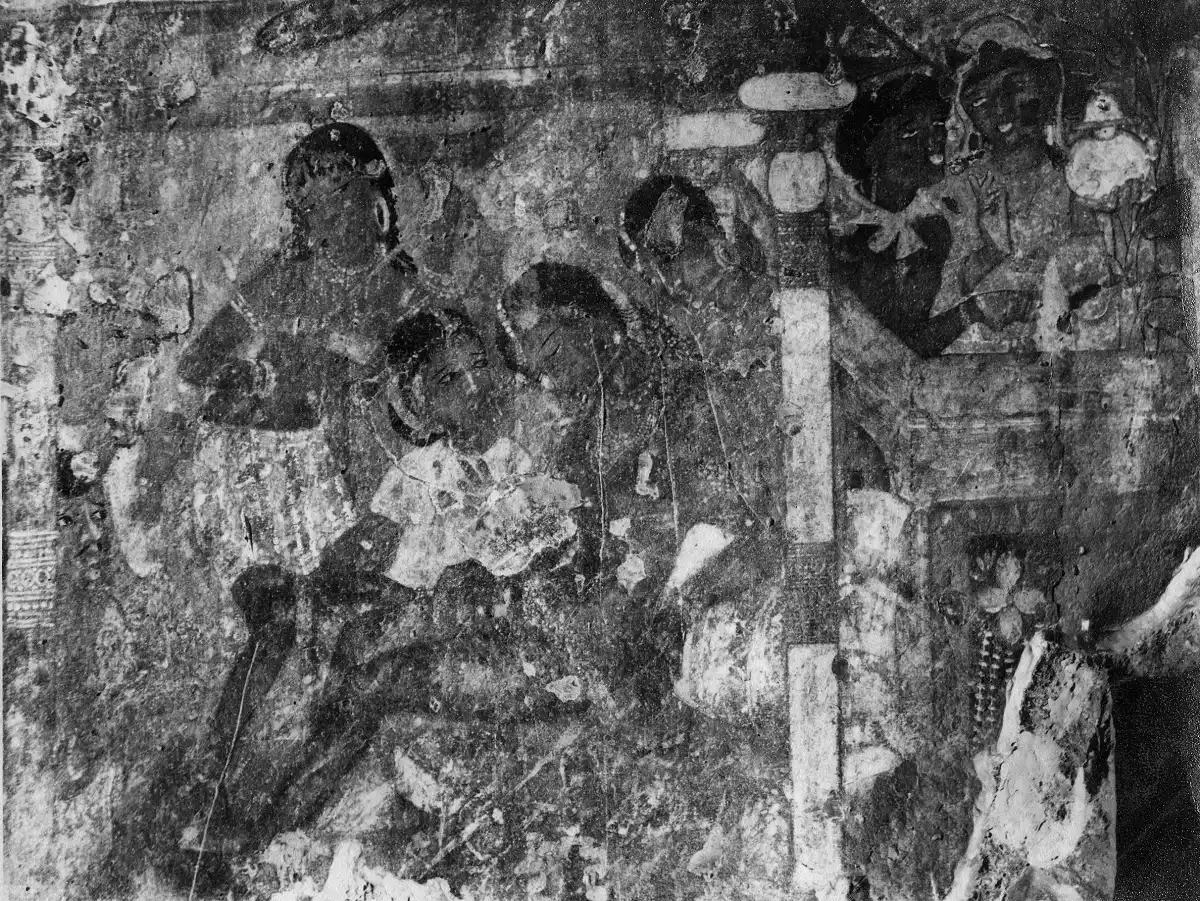
The paintings are generally themed around Buddhism – the life of Buddha and Jataka stories. Of the 29 caves, five were developed during the Hinayana phase while the remaining 24 were developed during the Mahayana phase of Buddhism. Reference of the Ajanta caves can be found in the travel accounts of Chinese Buddhist travellers Fa Hien and Hiuen Tsang. Some prominent sculptures of Ajanta Caves are:
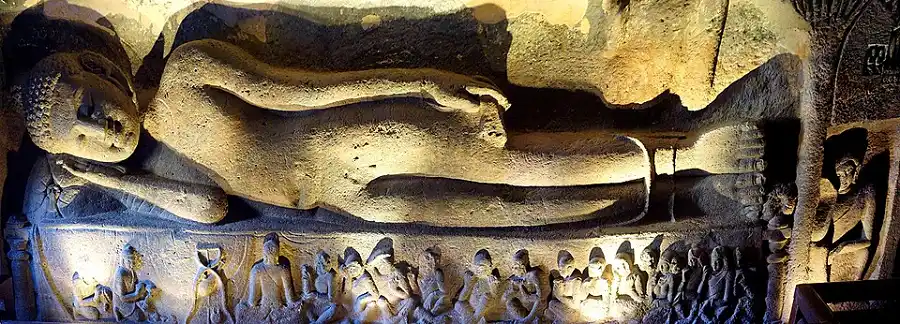
- Mahaparinirvana of Buddha in Cave No. 26
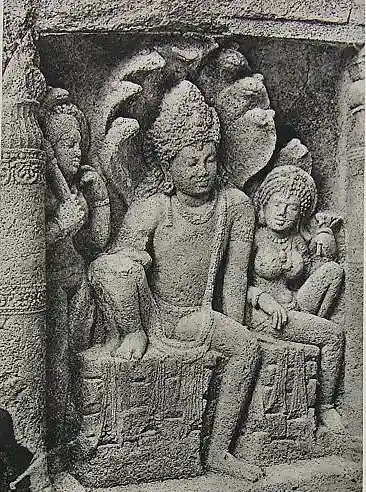
- Naga King and his consort in Cave No. 19
Technique of Painting The paintings were done using Fresco method. It involved a three-step technique:
- A layer of clay, mixed with cow dung and rice husk was applied on the surface of the rock.
- A coating of lime plaster was then applied on the top of it.
- Colours and pigments were then applied on the moist surface. This allowed the pigments to seep in and create a lasting image on the rock surface.
Examples: Dying princess, Flying apsara, etc.
FRESCO: A technique of mural painting executed upon freshly laid or wet lime plaster. It is closely associated with Italian Renaissance painting.
Ellora Caves
Ellora caves are another important site of cave architecture. It is located nearly 100 Kms away from Ajanta caves. It is a group of 34 caves – 17 Brahmanical, 12 Buddhist and 5 Jain. These set of caves were developed during the period between 5th and 11th centuries AD (newer as compared to Ajanta Caves) by various guilds from Vidarbha, Karnataka and Tamil Nadu. Hence, the caves reflect a natural diversity in terms of theme and architectural styles.
- Caves 1–12: Buddhist
- Caves 13–29: Hindu
- Caves 30–34: Jain (Digambara sect)
The Hindu and Buddhist Caves were predominantly constructed by Rashtrakuta dynasty and Jain Caves by Yadava dynasty.
Some of the prominent caves in Ellora are:
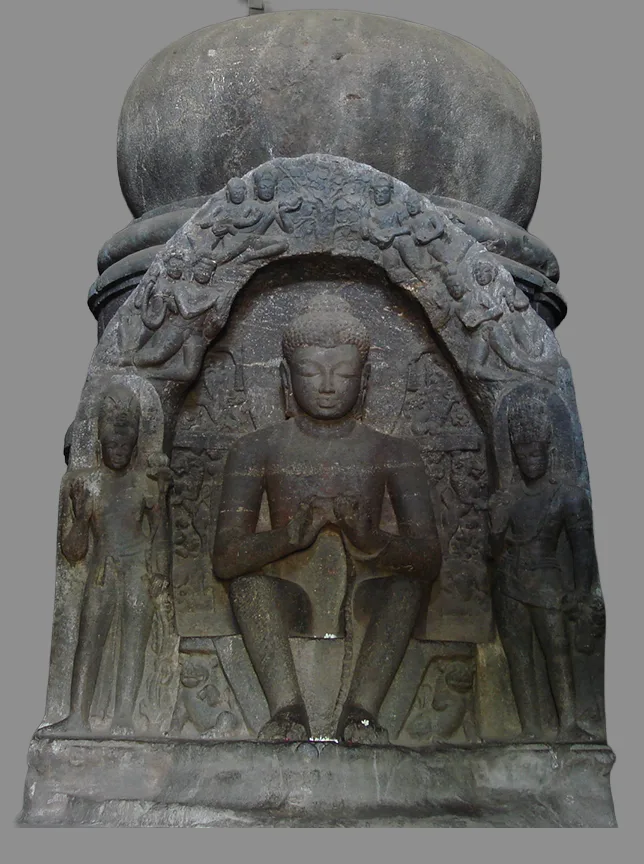
Cave No. 10 is a Buddhist Chaitya cave known as Visvakarma Cave or Carpenter’s Cave. Buddha is seated in Dharmachakra Mudra here with the Bodhi tree carved at his back.
Cave No. 14 is themed “Raavan ki Khai”.
Ellora Cave 14, known as Ravana Ki Khai, is an early Hindu cave from the 7th century, initially a Buddhist vihara, famous for its detailed sculptures of Hindu deities like Shiva, Vishnu, and the Saptamatrikas (Seven Mothers) in a grand pillared hall with a Shiva shrine. Key features include the impressive 16 pillars, the Ganga & Yamuna goddesses guarding the entrance, and panels depicting scenes like Ravana shaking Mount Kailash, reflecting the rich Saiva and Vaishnava themes
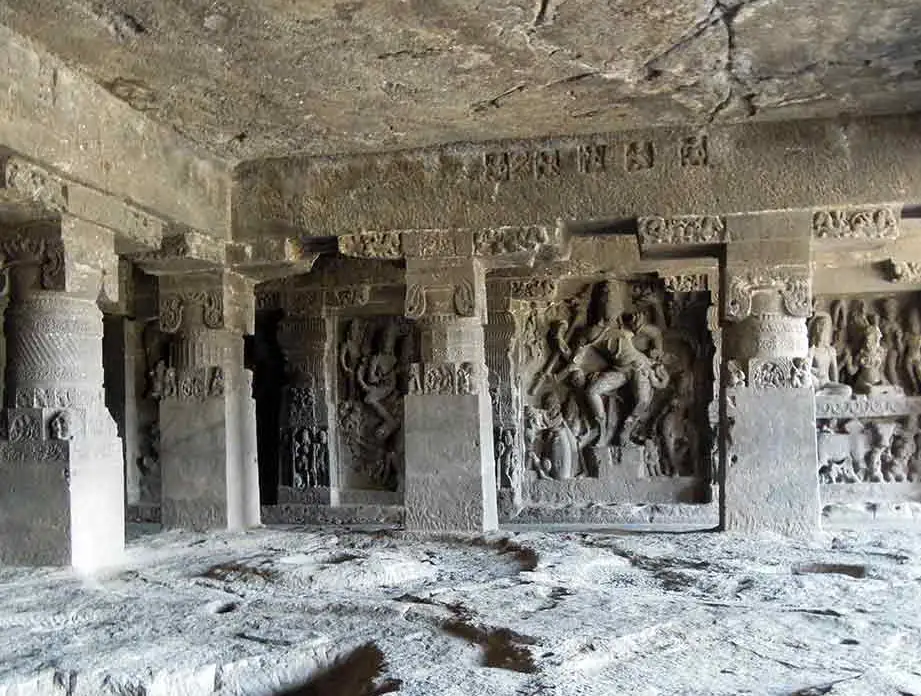
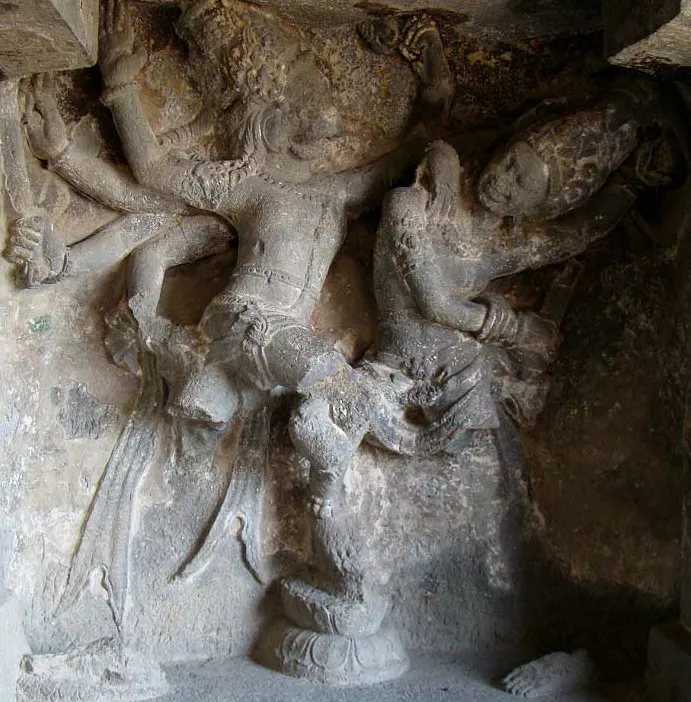
Cave No. 15 is Dashavatar Temple.
Ellora
Cave 15, popularly known as the Dashavatara Cave, is a significant 8th-century rock-cut Hindu temple in the UNESCO World Heritage site of Ellora, India. It is particularly famous for its transition from Buddhist to Hindu architecture and its extensive relief panels depicting the ten incarnations of Lord Vishnu.
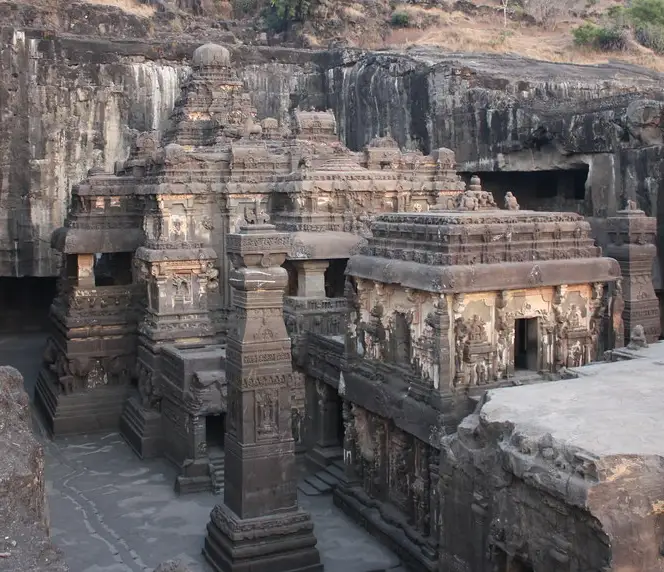
Cave No. 16 is Kailasha Temple dedicated to Lord Shiva. It was developed under the patronage of Rashtrakuta king Krishna I and was carved out of a monolith, and even has a courtyard. In Cave No. 16, there is also a sculpture on the wall of Kailasha temple depicting Ravana shaking Mount Kailasha. It is considered one of the masterpieces of Indian sculpture.
Dhumar Lena Cave No. 29
Ellora Cave 29, known as Dumar Lena, is a large, important Hindu cave temple dedicated to Shiva, built in the late 6th century CE and influenced by the Elephanta Caves. It’s famous for its massive scale, cruciform plan, central shrine with a huge linga, and spectacular sculptural panels depicting stories of Shiva, including the iconic Ravana Shaking Mount Kailasa, making it a significant example of early rock-cut architecture at Ellora.
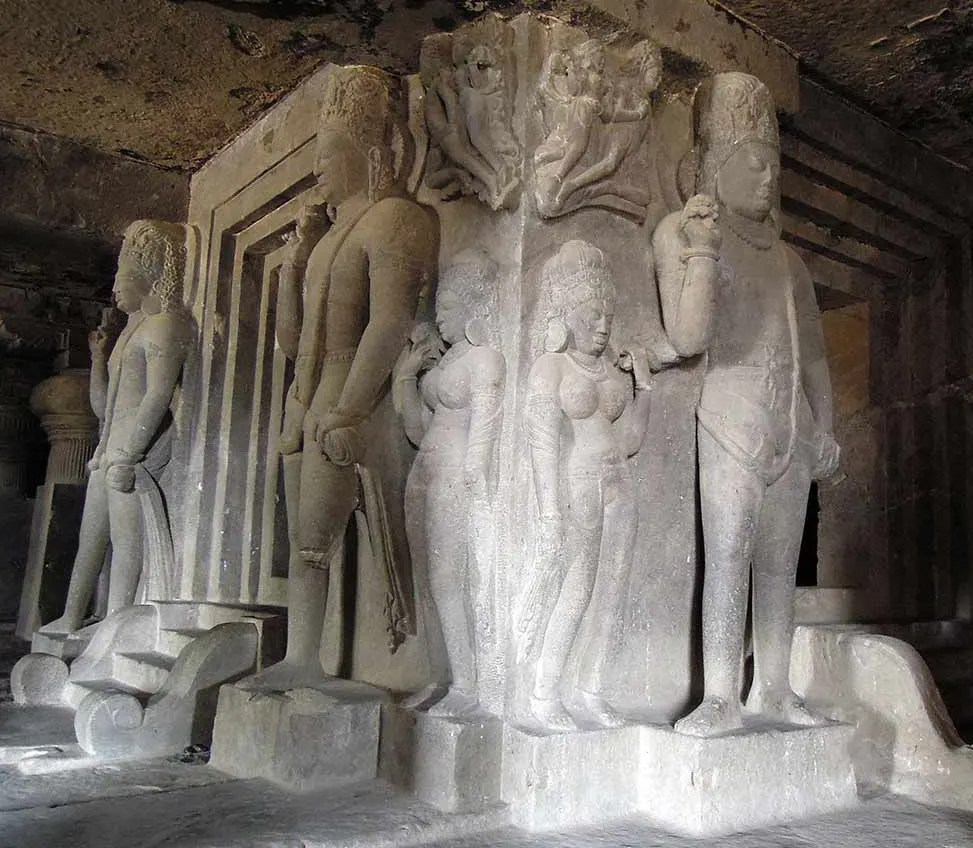
- Rameshwar Lena Cave No. 21
- Two famous Jain caves are Indra Sabha (Cave No. 32) and Jagannath Sabha (Cave No. 33).
Bagh Caves
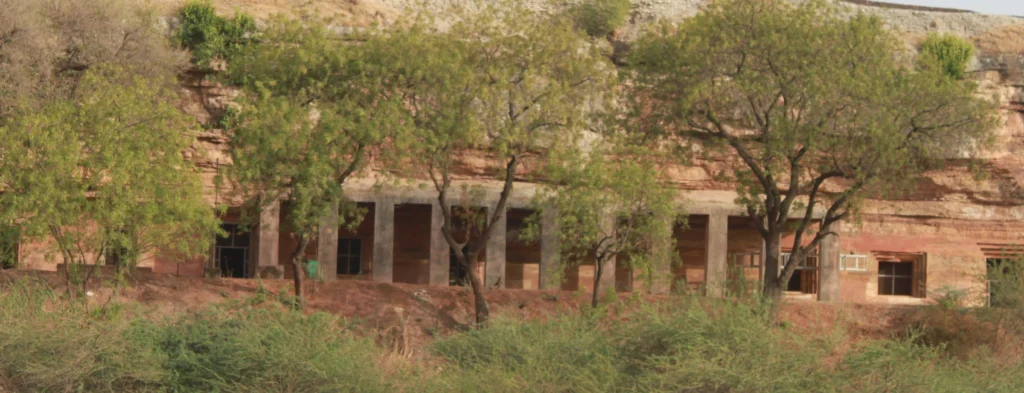
Located on the bank of Baghni River in Madhya Pradesh, it is a group of nine Buddhist caves developed around 5th-6th century AD. It is architecturally very similar to the Ajanta caves. Most significant cave here is Rang Mahal. Paintings in Bagh caves are more materialistic rather than spiritualistic.
Junagadh Caves
These are Buddhist caves located in Junagadh district of Gujarat. In place of caves, three different sites can be found: (1) Khapra Kodiya, (2) Baba Pyare and (3) Uparkot. A unique feature of the Junagadh caves is the presence of a 30-50 ft high citadel known as “Upar Kot” in front of the prayer hall.
Mandapeshwar Caves
Located in Borivalli near Mumbai and also known as Montperir caves, it was developed in late Gupta period as a Brahmanical cave. However, it was later converted into a Christian cave. The remains of the site include sculptures of Natraja, Sada Shiva and Ardhanarishwara. The church and its graveyard are situated above the cave precints.
Udayagiri caves
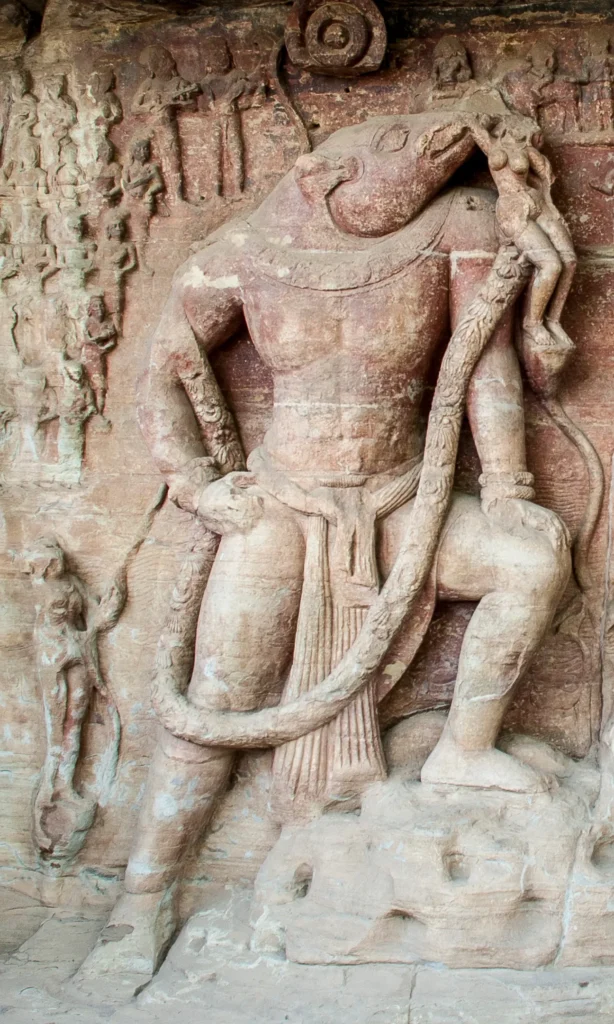
(not to be confused with Udayagiri-Khandagiri Caves in Odisha) It is located in Vidisha, Madhya Pradesh. Created in early 5th century AD under the patronage of Chandragupta II, it is famous for having numerous sculptures on the hill walls. The sculpture of Varaha or Boar incarnation of the Vishnu is notable. The caves have one of the earliest Hindu sculptures. It also has caves dedicated to Shiva, Narasimha (half-lion, half-man), Narayana (resting Vishnu) and Skanda.
Stupas
The Gupta age saw a decline in the development of stupas. However, Dhamek Stupa at Sarnath near Varanasi is a fine example of stupa developed during this period. It is marked as a spot where Buddha gave his first sermon.
Scupltures
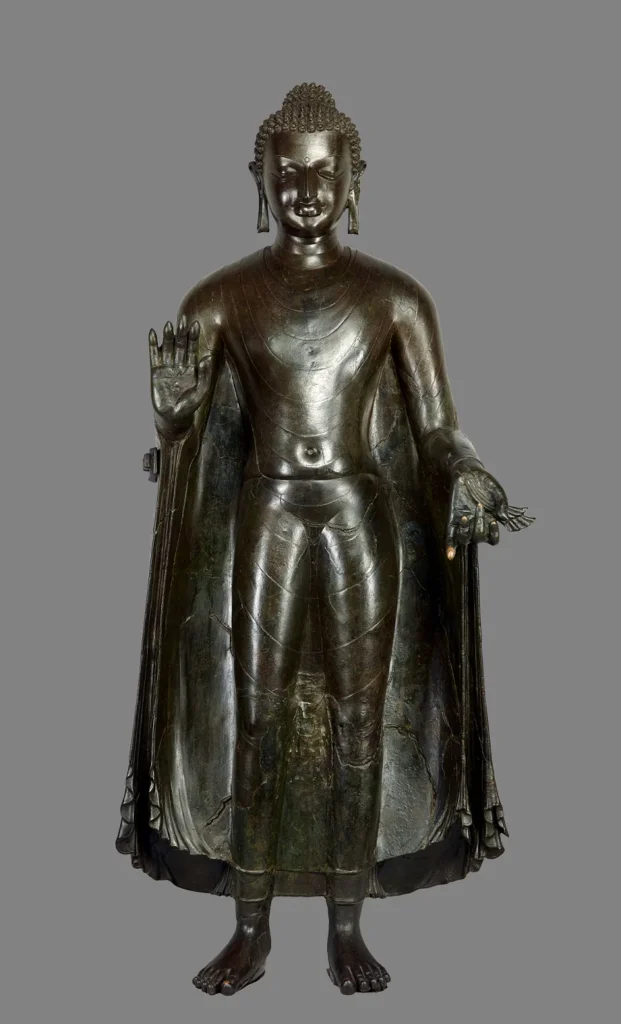
During the Gupta period, a new school of sculpture developed around Sarnath. It was characterised by the use of cream coloured sandstone and the use of metal. The sculptures of this school were immaculately dressed and lacked any form of nakedness. Ihe halo around the head of Buddha was intricately decorated. Example: Sultanganj Buddha (7.5 ft high) in Bihar. It is a copper sculpture.
IMPORTANT ANCIENT INSCRIPTIONS AND EDICTS
1. Sohgaura Copper Plate
The earliest known copper-plate, known as the Sohgaura copper-plate, is a Mauryan record that mentions famine relief efforts. It is one of the very few pre-Ashoka Brahmi inscriptions found in Gorakhpur district of Uttar Pradesh.
2. Ashokan Edicts
The Edicts of Ashoka are a collection of 33 inscriptions on the Pillars of Ashoka as well as boulders and cave walls made by the Emperor Ashoka of the Mauryan Empire during his reign from 269 to 232 BC. These inscriptions were dispersed throughout the country and it represents the first tangible evidence of Buddhism. The edicts describe in detail the Ashoka’s view about dharma, to solve the severe problems faced by the complex society.
The Edicts are divided into:
- Pillar Edicts
- Major Rock Edicts: 14 edicts (termed 1st to 14th) and two separate ones found in Odisha.
- Major Rock Inscriptions: Minor Rock Edicts, the Queen’s Edict, Barabar cave inscriptions and the Kandahar bilingual inscription.
These inscriptions show Ashoka’s devotion towards the Buddhist philosophy along with his efforts to spread and develop the Buddhist dharma throughout his kingdom. The edicts mainly focus on social and moral precepts rather than specific religious practices or the philosophical dimension of Buddhism.
The inscriptions revolve around a few themes: Ashoka’s conversion to Buddhism, the description of his efforts to spread Buddhism, his moral and religious precepts and his social and animal welfare programmes. In these inscriptions, Ashoka refers to himself as “Beloved Servant of the God” (Devanampiyadasi). The identification of Devanampiyadasi with Ashoka was confirmed by an inscription at Maski. The inscriptions found in the Eastern part of India were written in Magadhi Prakrit using the Brahmi script.
3. Rummindei Pillar Edicts (Lumbini)
These inscriptions, written in Brahmi script, come under the Minor Pillar Inscriptions. These contain inscriptions recording their dedication. The inscriptions mentions Ashoka’s visit to Lumbini (Rummindei), Rupandehi district, Nepal, the birthplace of Lord Buddha. Ashoka exempted Lumbini from paying tax, and fixed its contribution of grain at one – eighth.
4. Prayag-Prashasti
Prayag-Prashasti is the name given to the Allahabad Pillar. “Prayag” means a meeting place for something or someone. Prayag is an ancient name of Allahabad as it is the meeting place or ‘Sangam’ of rivers Ganga, Yamuna and the mythical Saraswati. Prashasti means “in praise of someone” and is a eulogy.
The Allahabad Prasasti was originally engraved on the Ashokan Pillar in Kausambhi near Allahabad. Later it was removed to the Allahabad fort. It is an Ashokan Stambh but has four different inscriptions i.e. a) The usual Ashokan inscriptions in Brahmi script as in all pillars. b) The Queen’s edict regaling the charitable deeds of Ashoka’s wife Kaurwaki. c) Samudragupta’s (335 – 375 AD) inscriptions written by Harisena in Sanskrit language and Brahmi script. It mentions about the conquests of Samudragupta and boundaries of the Gupta Empire. d) Jahangir’s inscriptions in Persian.
5. Mehrauli Inscription
The Mehrauli Iron Pillar is located in Delhi in the Qutub Minar complex. It is notable for the rust-resistant composition of the metals used in its construction. This pillar was established by Chandragupta- II of Gupta dynasty as Vishnupada in the honour of Lord Vishnu.
This pillar credits Chandragupta with conquest of the Vanga Countries by his battling alone against the confederacy of the enemies united against him. It also credits him for conquest of Bahlikas in a fight that ran across seven mouths of Indus River.
6. Kalsi Inscription
Kalsi town is known for its heritage importance. It is a small town located in between Chakrata and Dehradun on the banks of Yamuna river. The site of Ashoka’s inscriptions at Kalsi is singularly unique as it is the only place in North India where the great Mauryan emperor has inscribed the set of the 14 rock edicts. The language of these edicts is Prakrit and the script is Brahmi. The Rock edict was written around 450 BC and is made of quartz which is 8 ft broad and 10 ft long.
These rock edicts reflect Asoka’s human approach in his internal administration when he converted himself to Buddhism. It also reflects the policies for the commitment to non-violence and restriction of war. The inscription also tells about his life when he took the path of spirituality.
7. Maski Inscription
Maski is a village and an archaeological site in Raichur district of Karnataka. It lies on the bank of the Maski river which is a tributary of the Tungabhadra. The site has a minor rock edict of Emperor Ashoka. It was the first edict of Emperor Ashoka that contained the name Ashoka in it instead of ‘Devanampriya’ or ‘Piyadassi’. The inscription remains a dharma shasana, and tells people to follow the tenets of Buddhism. Moreover the inscription also suggests the spread of Mauryan rule up to the Krishna Valley of North-eastern Karnataka.
8. Kalinga Edicts
Kalinga in present Odisha still stands tall as a witness of its thousand year old legacy. The Kalinga War was the turning point in Ashoka’s career and he not only gave up his ambition of “Digvijaya” but also decided to take the path of non – violence and to follow Buddhism.
The set of Rock Edicts contain 11 out of the well known 14 Rock Edicts of Ashoka. The language of the edicts is Magadhi Prakrita and the script being the early Brahmi. In place of the 11th, 12th and 13th rock edicts, two special edicts known as Separate Rock Edicts or Kalinga Edicts have been incorporated, which are peace-making in nature and meant for the pacification of the newly conquered people of Kalinga.
9. Kanganahalli Inscriptions
Located in Gulbarga district of Karnataka, this site contains a Mahastupa of 75 ft diameter along with various sculptural slabs. A prominent one being the portrait slab of King Ashoka and his queen attended by two chauri bearers. To confirm that it is Ashoka, the sculptural slab also contains a single line label “Rayo Ashoka” in Brahmi script of the Satavahana period.
10. Aihole Inscription
Aihole in Karnataka was the first capital of Chalukyas. Many inscriptions were found at Aihole, but the inscription found at Meguti Temple popularly known as Aihole inscription witnessed many historical events of Chalukyas. The inscription is written in Sanskrit and it is in Kannada script.
There is a mention about the defeat of Harshavardhana by Pulakeshin II and the victory of Chalukyas over Pallavas. It also mentions about the shifting of the capital from Aihole to Badami. They were written by Ravikirti, the court poet of Pulakeshin II who reigned from 610 to 642 AD.
11. Hathigumpha Inscription
The Hathigumpha Inscription also known as Elephant Cave Inscription from Udayagiri-Khandagiri Caves in Odisha, were inscribed by King Kharavela during 2nd century BC.
The Hathigumpha Inscription consists of 17 lines in Prakrit language and in Brahmi script. Hathigumpha Inscription at Udayagiri Caves is the main source of information about Kalinga ruler Kharavela. The Hathigumpha Inscription is like the history of Kharavela as a king, a conqueror, a patron of culture and a champion of Jainism.
12. Shahbazgarhi and Mansehra Rock Edicts
Located in present Pakistan, they record 14 edicts of King Ashoka and were written in Kharosthi script.
TEMPLE ARCHITECTURE
Temple architecture, with the development of a square sanctum and a pillared portico emerged during the Gupta period. There was a gradual progression from the flat-roofed, monolithic temples in the initial stages to the sculptured ‘shikhara’ in the later years. The progression can be distinguished into five stages:
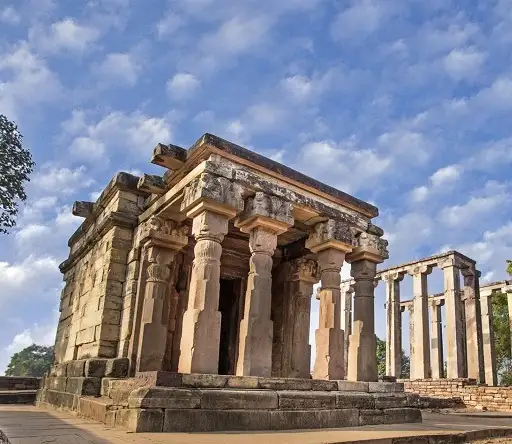
First Stage: The features of the temple that developed during this phase are:
- The temples had flat roof.
- The temples were square in shape.
- The portico was developed on shallow pillars.
- The entire structure was built on low platform. Example: Temple No. 17 at Sanchi (MP).
Second Stage: The temples built during this phase continued most of the features of the earlier phase. However, the platforms were higher or upraised. Some instances of two-storied temples have also been found. Another important addition of this phase was a covered ambulatory passageway around the sanctum sanctorum or garbhagriha. The passageway was used as a pradakshina path. Example: Parvati temple at Nachna Kuthara in Madhya Pradesh.
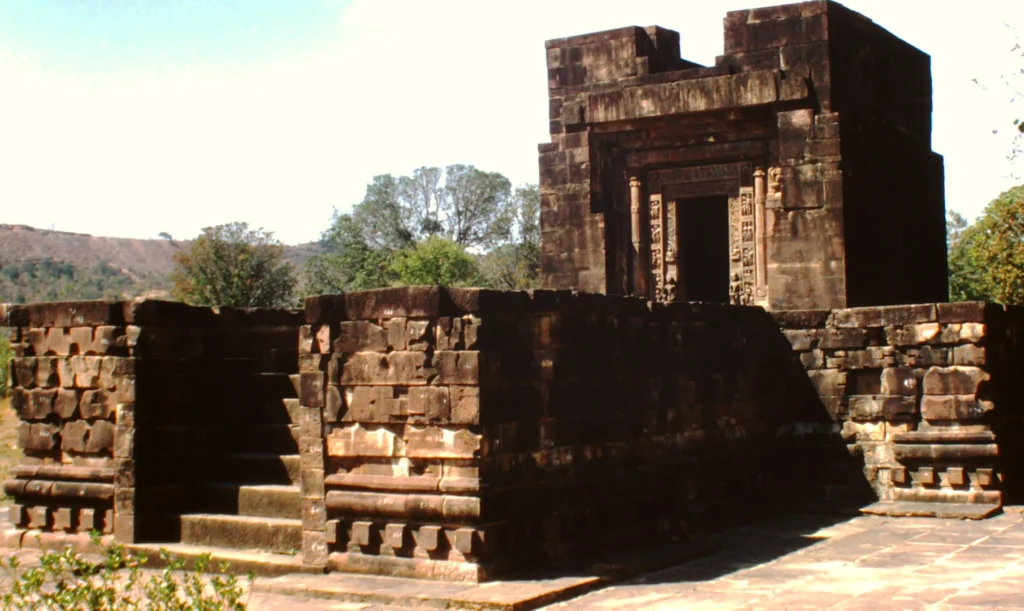
Third Stage: This stage saw the emergence of shikharas in place of a flat roof. However, they were still quite low and almost square, i.e. curvilinear. Panchayatan style of temple making was introduced.
In the Panchayatan style of temple making, there were four subsidiary shrines along with the temple of the principal deity. The main temple was square with an elongated mandap in front of it, giving it a rectangular shape. The subsidiary shrines were placed opposite to each other on either side of the mandap, giving the ground plan a crucified shape. Examples: Dashavatar temple at Deogarh (Uttar Pradesh), Durga temple at Aihole (Karnataka), etc.
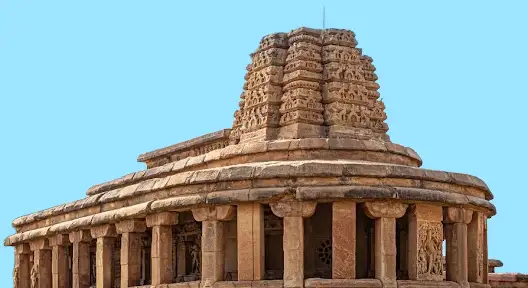
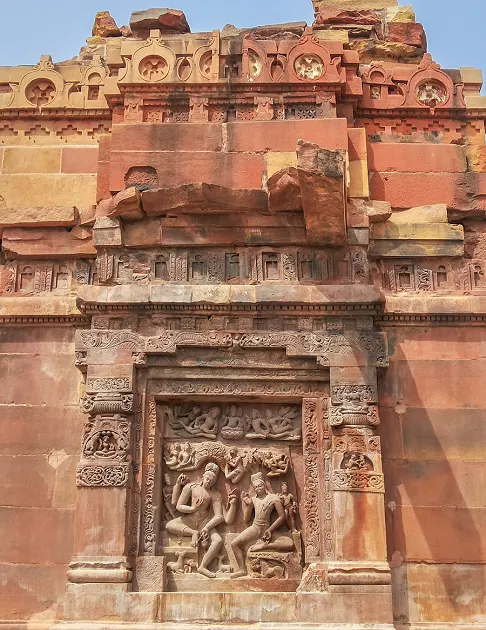
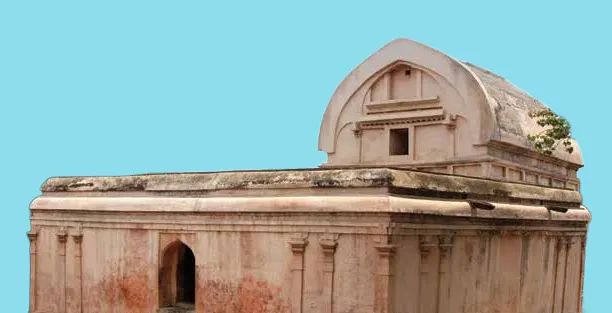
Fourth Stage: The temples of this stage were almost similar except that the main shrine became more rectangular. Example: Ter temple in Maharashtra.
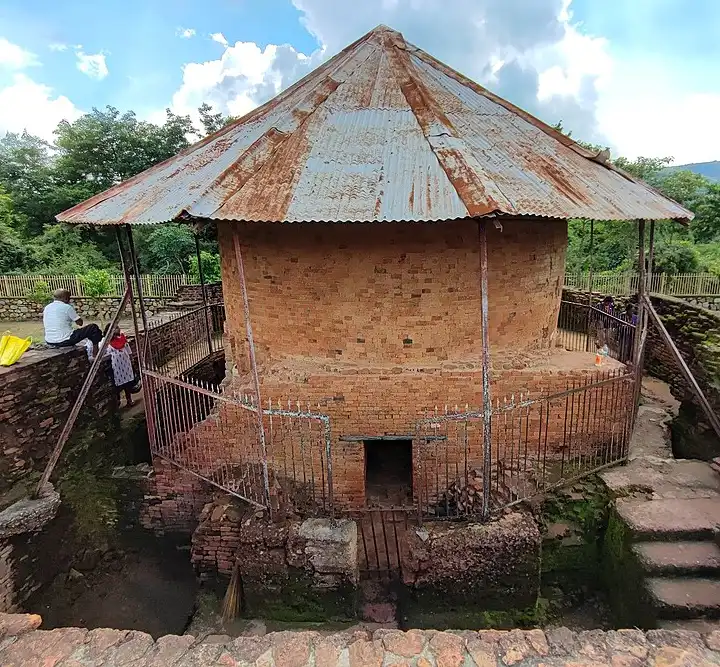
Fifth Stage: In this stage, circular temples with shallow rectangular projections were introduced. Rest of the features of the previous phase continued. Example: Maniyar Math at Rajgir.
Styles of Temple Architecture
The basic form of a Hindu temple comprises the following:
- Sanctum Sanctorum: Also known as Garbhagriha (literally womb-house) is a small room, generally cubicle, which houses the principal deity of the temple.
- Mandapa: It is the entrance to the temple. It may be a portico or a hall and is generally designed to house a large number of worshippers.
- Shikhara: It is a mountain like spire. The shapes varies from pyramidal to curvilinear.
- Vahana: It is the mount or vehicle of the main deity and is placed just before the sanctum sanctorum.
However, under the patronage of the local rulers, different styles of architecture developed in the different regions of India.
Nagara School of Architecture
From 5th century AD onwards, a distinct style of temple architecture developed in the Northern part of India, known as the Nagara Style of Architecture. Even in the Nagara school, different sub-schools emerged in western, central and eastern parts of the country. Some of the features of Nagara style are:
- The temples generally followed the Panchayatan style of temple making, which consisted of subsidiary shrines laid out in a crucified ground plan with respect to the principal shrine.
- Presence of assembly halls or mandaps in front of the principal shrine.
- Outside the garbhagriha, images of the river goddesses Ganga and Yamuna were placed.
- Generally, there were no water tanks or reservoirs present in the temple premises.
- The temples were generally built on upraised platforms.
- The porticos had a pillared approach.
- Shikharas were generally of three types:
- Latina or Rekha-prasad: They were square at the base and the walls curve inward to a point on the top.
- Phamsana: They had a broader base and were shorter in height than the Latina ones. They slope upwards on a straight line.
- Valabhi: They had a rectangular base with the roof rising into vaulted chambers. They were also called wagon-vaulted roofs.
- The vertical end of the shikhara ended in a horizontal fluted disc, known as the Amalak. On top of that, a spherical shape was placed known as the Kalash.
- Inside the temple, the wall was divided into three vertical planes or rathas. These were known as triratha temples. Later, pancharatha, saptaratha and even navaratha temples came into existence. The vertical planes were used as different panels to make narrative sculptures.
- The ambulatory passageway or the pradakshina path around the sanctum sanctorum was covered.
- Generally, the temple premises did not have elaborate boundary walls or gateways.
Under the Nagara School, following three sub-schools emerged:
1. Odisha School:
In different parts of the Kalinga empire, this distinct style of temple architecture developed. Some of its features were:
- The exterior walls were lavishly decorated with intricate carvings, but interior walls were plain.
- There was no use of pillars in the porch. Iron girders were used instead to support the roof.
- The shikhara in the Odisha school was known as rekha deul. They were almost vertical roofs which suddenly curved inwards sharply.
- The mandap was known as jagamohan in this region.
- The ground plan of the main temple was square.
- Temples were surrounded by a boundary wall as in Dravidian style of temple architecture.
Examples: Sun Temple at Konark (also known as Black Pagoda), Jagannath Temple at Puri, Lingaraj Temple at Bhubaneswar, etc. After seeing Konark temple, Rabindranath Tagore once commented – “this is a monument where the language of stone surpasses the language of man”.
2. Khajuraho School:
In the central part of India, the Chandela rulers developed a distinct style of temple making of their own – known as Khajuraho School or Chandela School. The features of the temples included:
- In these temples, both the interior and exterior walls were lavishly decorated with carvings.
- The sculptures were generally erotic in their themes and drew inspiration from Vatsyayana’s Kamasutra.
- The temples were made of sandstone.
- The temples had three chambers – Garbhagriha, Mandapa and ardhamandapa. Some temples had a vestibular entrance to the garbhagriha known as antarala.
- The temples were generally north or east facing.
- Panchayatan style of temple making was followed. The subsidiary shrines had rekha-prasad shikharas creating an impression of a mountain range.
- The temples were built on relatively high platform and belong to Hindu as well as Jain religion.
Examples: Kandariya Mahadev Temple, Lakshmana Temple at Khajuraho, etc.
3. Solanki School: (also known as Maru-Gurjara style)
In the North-Western parts of India including Gujarat and Rajasthan, this school developed under the patronage of Solanki rulers. The features of this school included:
- The temple walls were devoid of any carvings.
- The garbhagriha was connected with the mandapa both internally as well as externally
- The porticos had decorative arched gateways known as torans.
- A unique feature of this school is the presence of step-tank, known as suryakund in the proximity of the temple.
- The steps of the tank are full of small temples with wooden carvings present in them.
- The Solankis used a variety of material to make temples including sandstone, black basalt and soft-marble.
- Most of the temples are east-facing and designed such that every year during the equinoxes, the sun-rays fall directly into the central shrine.
Example: Modhera Sun Temple, Gujarat (built in 1026–27 by Bhima-I).