Last Updated: March 2026 | Reading Time: 10 minutes | ~2,100 words
PCOS (Polycystic Ovary Syndrome) is the most common hormonal disorder in Indian women of reproductive age — affecting an estimated 1 in 5 to 1 in 4 Indian women (20–25%), nearly twice the global average of 8–13%. Despite its prevalence, PCOS is massively under-diagnosed in India — large numbers of women live for years with irregular cycles, unexplained weight gain, excessive hair growth, and infertility without knowing the root cause. PCOS is not just a “period problem” — it is a complex metabolic and hormonal disorder with implications for diabetes, heart disease, mental health, and cancer risk if unmanaged. This complete guide covers everything: what PCOS actually is, how to diagnose it, and what genuinely works to manage it.
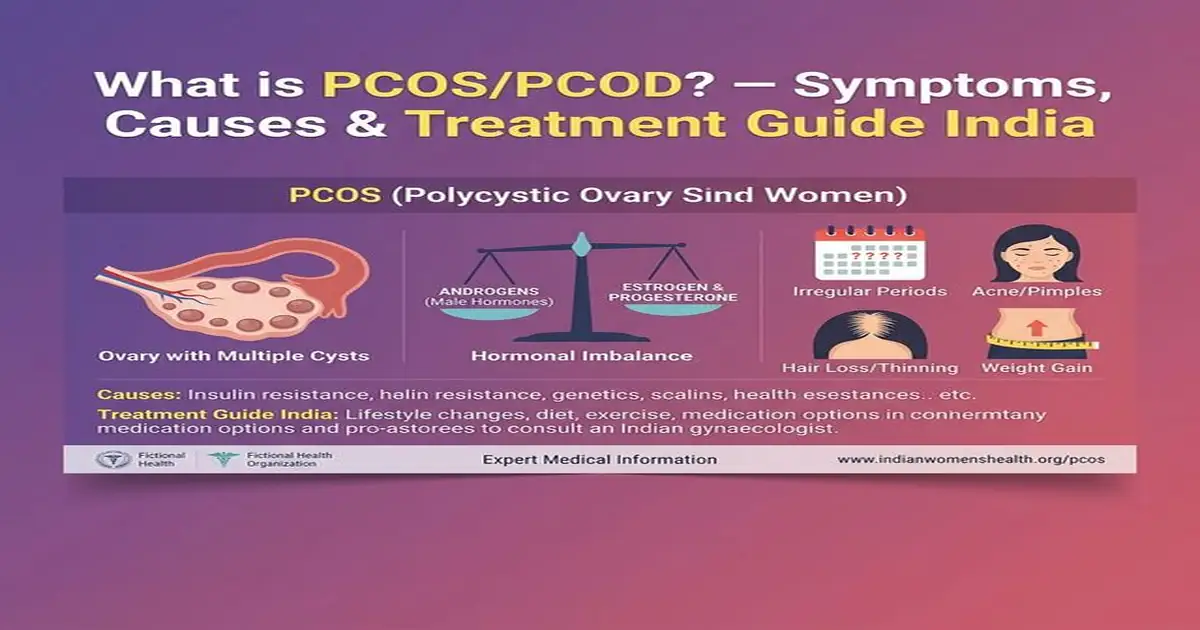
What is PCOS? What is PCOD? Are They the Same?
| Term | Full Form | Medical Accuracy | Key Distinction |
|---|---|---|---|
| PCOS | Polycystic Ovary Syndrome | ✅ Medically correct and preferred term globally | A syndrome — multiple symptoms together; not just cysts |
| PCOD | Polycystic Ovarian Disease | ⚠️ Commonly used in India; not the preferred medical term | Implies a “disease” defined by cysts — which is misleading since 20% of normal women have polycystic-appearing ovaries without PCOS |
The key point: having cysts on ovaries does NOT mean you have PCOS. PCOS is diagnosed by a pattern of symptoms and hormonal findings — not just by ovarian appearance on ultrasound. Many women are incorrectly told they have PCOD based solely on an ultrasound showing multiple small follicles, without proper hormonal testing.
Diagnosis — The Rotterdam Criteria (International Standard)
PCOS is diagnosed when a woman meets at least 2 of these 3 criteria (after excluding other hormonal conditions):
- 🔴 Oligo/anovulation — irregular or absent periods (cycles longer than 35 days OR fewer than 8 cycles per year)
- 🔴 Clinical or biochemical hyperandrogenism — excess male hormones: clinical signs (excess facial/body hair, acne, male-pattern hair loss) OR blood tests (elevated testosterone, DHEAS, free androgen index)
- 🔴 Polycystic ovarian morphology (PCOM) — on ultrasound: 12 or more follicles (2–9mm) OR ovarian volume >10ml in at least one ovary
Symptoms of PCOS in Indian Women — Complete List
| Symptom | Why It Happens | % of PCOS Women Affected |
|---|---|---|
| Irregular periods (oligomenorrhoea) | Anovulation — eggs not released regularly; cycles stretch beyond 35 days | 70–80% |
| Absent periods (amenorrhoea) | Complete absence of ovulation; no period for 3+ months | 20–30% |
| Excess facial/body hair (hirsutism) | High androgens (testosterone) stimulate hair follicles on face, chest, abdomen, thighs | 65–75% |
| Acne (chin, jawline, back) | Androgens stimulate sebaceous glands → excess oil → acne | 15–30% |
| Scalp hair thinning / hair loss | DHT (dihydrotestosterone) shrinks scalp hair follicles — female pattern hair loss | 40–70% |
| Weight gain / difficulty losing weight | Insulin resistance → fat storage; especially central/abdominal fat | 40–80% (higher in Indian women) |
| Dark skin patches (acanthosis nigricans) | Thick, velvety dark patches at neck, underarms, groin — marker of insulin resistance | 30–50% in Indian PCOS |
| Fertility problems (difficulty conceiving) | Irregular ovulation means fewer opportunities for conception per year | 70–80% of those trying to conceive |
| Mood issues (anxiety, depression) | Hormonal imbalance + sleep disruption + body image issues drive mental health impact | 40–60% |
| Pelvic pain | Enlarged ovaries with multiple follicles causing pressure; sometimes related to endometriosis co-occurrence | 20–30% |
PCOS Types — Not One-Size-Fits-All
| PCOS Type | Dominant Feature | Common in India? | Primary Management Focus |
|---|---|---|---|
| Insulin Resistant PCOS | Strong insulin resistance; weight gain; dark patches; high fasting insulin | Most common in India (60–70%) | Metabolic management — diet, exercise, metformin |
| Adrenal PCOS | High DHEAS (adrenal androgen); normal LH/FSH ratio; stress-triggered | 10–15% | Stress management; adrenal support |
| Inflammatory PCOS | Chronic low-grade inflammation; normal insulin; abnormal cycles | 10–15% | Anti-inflammatory diet; omega-3; Vitamin D |
| Post-pill PCOS | Irregular cycles after stopping oral contraceptive pills; was masked by OCP | Rising with OCP use | Time + lifestyle; usually resolves in 4–6 months |
Hormone Tests for PCOS — What to Get Tested and When
| Test | When to Take | PCOS Finding | Cost (India) |
|---|---|---|---|
| FSH (Follicle Stimulating Hormone) | Day 2–3 of period | Normal or low in PCOS; if high = poor ovarian reserve | ₹300–500 |
| LH (Luteinising Hormone) | Day 2–3 of period | LH:FSH ratio >2:1 or 3:1 = classic PCOS pattern | ₹300–500 |
| Total Testosterone | Day 2–5 of period (morning) | Elevated in 60–80% of PCOS | ₹400–700 |
| DHEAS (Adrenal androgen) | Any day | Elevated in adrenal PCOS; high = adrenal source of androgens | ₹500–800 |
| AMH (Anti-Müllerian Hormone) | Any day of cycle | High in PCOS (>3.5 ng/mL); reflects many follicles | ₹800–1,500 |
| Fasting insulin + Glucose (HOMA-IR) | Fasting 8–12 hours | High insulin = insulin resistance (most Indian PCOS) | ₹400–700 |
| TSH (Thyroid) | Any day | Thyroid disease mimics PCOS — must rule out | ₹300–500 |
| Prolactin | Day 2–3 (fasting, unstressed) | Must rule out — high prolactin causes irregular cycles like PCOS | ₹300–500 |
| Pelvic Ultrasound | Day 2–5 of period (transvaginal preferred for accuracy) | PCOM: ≥12 follicles 2–9mm OR ovarian volume >10ml | ₹800–1,500 |
PCOS Treatment — Comprehensive Approach
Lifestyle — The Most Powerful PCOS Treatment
- ⚖️ Weight loss of just 5–10% restores ovulation in 55–100% of overweight women with PCOS, reduces testosterone levels, and improves insulin sensitivity — often more effectively than any single medication.
- 🏃 Exercise: 150+ min/week aerobic + resistance training 3×/week. Exercise directly lowers insulin and androgen levels independent of weight loss. Walking after meals for 20 minutes significantly blunts post-meal insulin spikes.
- 🍽️ Low glycemic index diet: Replace white rice and white bread with millets (jowar, bajra, ragi), whole wheat, oats; reduce sugar and packaged foods; increase fibre from vegetables and legumes. Low-GI eating reduces insulin — the root driver of most Indian PCOS.
- 😴 Sleep (7–9 hours): Sleep deprivation worsens insulin resistance and cortisol, both of which worsen PCOS. Evidence shows even one week of sleep restriction raises testosterone in women.
- 🧘 Stress management: Chronic stress raises cortisol → raises insulin → raises androgens. Yoga, pranayama, and mindfulness have trial-evidence of reducing PCOS symptoms in Indian women.
Medications for PCOS
| Medication | Used For | How It Helps |
|---|---|---|
| Metformin (Glycomet, Glucophage) | Insulin resistant PCOS; irregular cycles; pre-diabetes | Reduces hepatic glucose output; improves insulin sensitivity; reduces androgens; restores ovulation |
| Combined Oral Contraceptive Pills (OCP) | Cycle regulation; acne; hirsutism (not fertility) | Provides hormonal withdrawal bleeds; suppresses androgens; reduces acne and excess hair |
| Spironolactone (Aldactone) | Hirsutism; acne; hair loss | Androgen receptor blocker; reduces hair growth and acne. Must use contraception — teratogenic. |
| Letrozole (Femara) | Ovulation induction (fertility) | Now preferred over clomiphene for PCOS ovulation induction (higher live birth rate) |
| Clomiphene Citrate | Ovulation induction (older standard) | Anti-oestrogen; stimulates FSH; less preferred now |
| Inositol (Myo-inositol + D-chiro-inositol) | Insulin resistance; ovulation; egg quality | Insulin sensitiser; multiple trials show improvement in cycle regularity and fertility |
Frequently Asked Questions
Can PCOS be cured permanently?
PCOS cannot be “cured” in the sense of being permanently eliminated — it is a lifelong hormonal condition. However, it can be effectively managed to the point where symptoms are minimal or absent, periods are regular, fertility is preserved, and long-term risks (diabetes, cardiovascular disease) are significantly reduced. Many women with PCOS who achieve significant weight loss and maintain a low-GI lifestyle find their periods normalise completely, their androgen levels return to normal range, and their fertility improves substantially — sometimes without any medication. The challenge is that PCOS management requires permanent lifestyle commitment: symptoms often return when weight is regained or lifestyle regresses. Post-menopause, PCOS-related ovarian symptoms resolve naturally (since ovulation is no longer relevant), but the metabolic risks (insulin resistance, diabetes risk, cardiovascular risk) persist — making lifelong metabolic health management important throughout life.
Does PCOS cause infertility?
PCOS is the most common cause of anovulatory infertility (infertility due to not releasing eggs regularly) — accounting for approximately 70–80% of cases of this type. However, PCOS does NOT mean permanent infertility. With appropriate management, the vast majority of women with PCOS can conceive: lifestyle changes alone restore ovulation in 55–100% of overweight PCOS women who lose 5–10% body weight. For those who need medical help, letrozole tablets successfully induce ovulation in 60–70% of patients per cycle; clomiphene or injectable FSH are other options; and IVF (In Vitro Fertilisation) has high success rates specifically in PCOS patients (who typically have a large number of eggs available). The key message for Indian families: a PCOS diagnosis does not mean a woman cannot have children. It means she has a specific hormonal pattern that requires careful management — and with the right approach, most women with PCOS achieve successful pregnancies.
What is the best diet for PCOS in India?
The most evidence-supported diet for PCOS — especially for the insulin-resistant PCOS variant that dominates in India — is a low glycemic index (low-GI) diet that keeps post-meal insulin spikes minimal. In Indian terms, this means: Replace white rice with jowar/bajra/ragi roti or smaller portions of whole grain rice; white bread with whole wheat chapati; refined sugar with minimal jaggery or none. Increase vegetable intake (raw salads, sabzi) with every meal to add fibre that slows glucose absorption; dal and legume intake for plant protein and fibre; omega-3 sources (flaxseed, walnuts, fish) which directly reduce androgen production. Avoid or minimise packaged foods, cold drinks, biscuits, maida-based items, and sweetened dairy products. Some specific supplements with PCOS evidence: Inositol (Myo-inositol 2g + D-chiro-inositol 50mg twice daily — equivalent to or better than metformin in some trials); Vitamin D (correct deficiency — most Indian PCOS women are Vitamin D deficient, and Vitamin D supplementation improves cycle regularity); omega-3 fatty acids 2g/day (reduces testosterone levels in randomised trials). Intermittent fasting (16:8) has emerging positive evidence specifically in PCOS for reducing insulin and androgens — though it should be started gradually.
PCOS vs thyroid — what is the difference?
PCOS and hypothyroidism share many symptoms — irregular periods, weight gain, hair loss, fatigue — and commonly coexist (studies report 22–27% of Indian PCOS patients also have thyroid disease). Key differences: Hypothyroidism causes weight gain through slowed metabolism and water retention, while PCOS causes weight gain through insulin resistance and increased fat storage — particularly abdominal fat. Hypothyroidism typically causes generalised hair loss and hair thinning all over the scalp; PCOS causes frontal hairline recession and crown thinning (female pattern, androgenic alopecia). Hypothyroidism causes dry skin; PCOS causes oily skin and acne. Hypothyroidism rarely causes excess facial/body hair; PCOS frequently does. Laboratory distinction: TSH elevated = hypothyroidism; normal TSH but high testosterone/LH-FSH imbalance with polycystic ovaries = PCOS. Because the two conditions overlap in symptoms and frequently coexist, any woman with irregular periods and weight gain should have both TSH AND the PCOS hormone panel tested — not just one or the other.
What are the long-term risks of untreated PCOS?
Untreated PCOS carries significant long-term health risks that extend far beyond irregular periods: (1) Type 2 Diabetes: Women with PCOS have a 5–10× higher lifetime risk of developing Type 2 diabetes; with the insulin resistance common in Indian PCOS, this risk is even higher. Regular HbA1c screening is essential. (2) Cardiovascular disease: PCOS is associated with hypertension, dyslipidaemia (high triglycerides, low HDL), and chronic inflammation — the cluster of metabolic syndrome factors that drives cardiovascular disease. (3) Endometrial cancer: Chronic anovulation means the endometrium is exposed to ongoing oestrogen stimulation without progesterone opposition, which markedly increases risk of endometrial hyperplasia and cancer over decades. Regular withdrawal bleeds (induced with OCP or progesterone) significantly reduce this risk — which is a key reason doctors prescribe OCPs to PCOS women even for those not seeking contraception. (4) Mental health: PCOS has 3× higher prevalence of clinical anxiety and depression compared to the general population; body image concerns (hirsutism, weight, acne) are a major driver in Indian women who face social pressure around appearance. (5) Pregnancy complications: Even after conceiving, women with PCOS have elevated risks of gestational diabetes, pre-eclampsia, preterm birth, and miscarriage — requiring careful monitoring. All of these risks are substantially reduced with effective long-term PCOS management.
What to Read Next
- PCOS Diet India — Complete Low-GI Meal Plan for Indian Women
- Thyroid Symptoms in Women — Frequently Confused with PCOS
- Iron Deficiency Anemia — Heavy PCOS Periods Cause Iron Loss
- Fatty Liver — Insulin Resistance Links PCOS and Fatty Liver
- Diabetes Prevention — Essential for Every Woman with PCOS
PCOS is not a life sentence — it is a metabolic signal that your body is asking for a different lifestyle. Swap the maida for millets, walk after every meal, sleep for 8 hours, and manage your stress. These four habits, consistently maintained, can transform PCOS from a source of daily suffering into a manageable background condition that barely touches your life.
About This Guide: Written by the StudyHub Health Editorial Team (studyhub.net.in) based on the 2023 International Evidence-Based PCOS Guidelines, Indian PCOS prevalence studies, and FOGSI clinical practice protocols. Last updated: March 2026.
Authoritative Sources: International PCOS Guidelines 2023 | Mayo Clinic — PCOS | FOGSI — Federation of Obstetric and Gynaecological Societies of India | ICMR India
⚕️ Medical Disclaimer: This article is for general informational and educational purposes only. PCOS requires proper diagnosis with blood tests and ultrasound under gynaecological supervision. Never self-diagnose based on symptoms alone or start hormone medications without medical oversight. Always consult a gynaecologist or endocrinologist for PCOS management.