Last Updated: March 2026 | Reading Time: 9 minutes | ~2,100 words
Prostate cancer is the second most common cancer in Indian men — an estimated 25,000–30,000 new cases diagnosed annually in India, with incidence rising sharply due to improved PSA testing awareness, an ageing male population, and dietary Westernisation (high red meat, high dairy, low phytoestrogen). Indian men present, on average, at a significantly more advanced stage than Western counterparts — approximately 60–70% of Indian prostate cancer is diagnosed at stage III–IV (locally advanced or metastatic), compared to 25–30% in the USA — primarily because PSA testing is not routine, symptoms (urinary obstruction) appear only at locally advanced stage, and prostate-specific health awareness is culturally low among Indian men. Prostate cancer is a disease with an extraordinary therapeutic range: truly localised, low-grade prostate cancer in an elderly patient may require no treatment at all (active surveillance), while metastatic castration-resistant prostate cancer (mCRPC) is managed with a growing arsenal of life-prolonging agents including abiraterone, enzalutamide, docetaxel, lutetium-177 PSMA, and olaparib — several of which are now accessible in India through a combination of generics and patient access programmes.
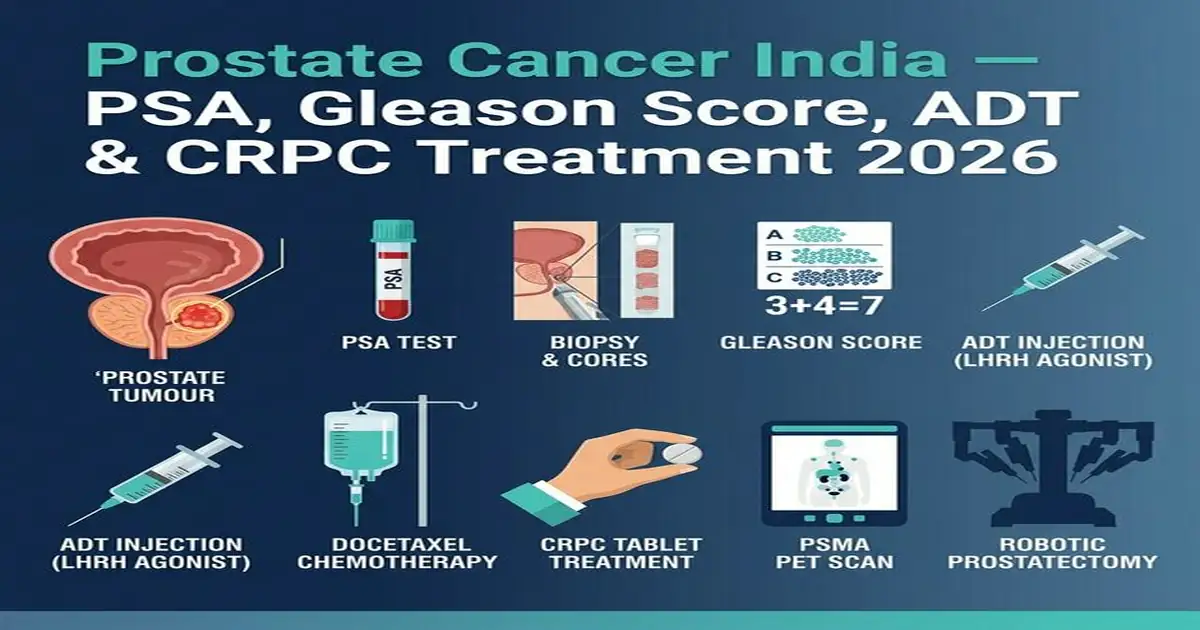
Prostate Cancer — Risk Stratification and Staged Treatment
| Stage / Risk Group | Definition | Treatment Options | India Context |
|---|---|---|---|
| Active Surveillance (AS) | Low-risk localised: Gleason ≤6 (Grade Group 1); PSA <10 ng/mL; cT1–T2a; <3 cores positive; <50% any core positive; selected favourable intermediate risk may qualify | No immediate treatment; PSA every 3–6 months; repeat biopsy at 12 months then every 1–3 years (MRI-targeted biopsy preferred); mpMRI prostate at baseline; trigger for treatment: Gleason upgrade (GG ≥2), PSA velocity >1 ng/mL/yr, clinical progression; reclassification rate: 30–40% at 5 years; 10-year cancer-specific survival 98–99% — identical to immediate treatment | AS significantly under-utilised in India — cultural fear of “leaving cancer untreated” leads to overtreatment of GG1 prostate cancer with radical prostatectomy or radiotherapy causing unnecessary urinary incontinence and erectile dysfunction; AS requires reliable follow-up which is challenging in rural India; should be offered at specialist uro-oncology centres with mpMRI access |
| Localised — Low/Intermediate Risk | Gleason 6–7 (GG1–2); PSA <20 ng/mL; clinical T1–T2; no nodes/mets; ISUP Grade Group 1–3 | Radical prostatectomy (RP): open or laparoscopic (robotic preferred — da Vinci: less blood loss, faster recovery, nerve-sparing for potency preservation); External beam radiotherapy (EBRT): SBRT (stereotactic body radiotherapy — 5 treatment sessions) increasingly standard; image-guided IMRT; brachytherapy (LDR seeds); comparable oncological outcomes between RP and RT for low-intermediate risk; patient preference + comorbidities guide choice | Robotic prostatectomy (da Vinci): available at Apollo, Fortis, Narayana, Manipal (major cities); ₹3–6 lakh; SABR/SBRT: available at AIIMS Delhi, TMH Mumbai, Kidwai Bangalore, Apollo; Brachytherapy: limited centres India; surgical expertise important — high-volume centre recommended |
| Locally Advanced (High Risk) | Gleason 8–10 (GG4–5); PSA >20 ng/mL; cT3–T4; N0M0 (no distant mets); ISUP GG4–5 | EBRT + long-term ADT (androgen deprivation therapy — LHRH agonist/antagonist): RTOG 92-02: long-term (2–3yr) ADT superior to short-term with RT; surgery: radical prostatectomy ± pelvic lymph node dissection as part of multimodality plan; post-operative RT if adverse features (positive margins, pT3, rising PSA post-RP); ADT alone if not fit for RT/surgery (palliative intent) | LHRH agonists India: goserelin (Zoladex) 3.6mg monthly or 10.8mg 3-monthly implant; leuprorelin (Lupride, Eligard); LHRH antagonist: degarelix (Firmagon) — no testosterone flare (preferred if spinal cord compression or severe LUTS); ADT side effects: hot flushes, bone loss (DEXA + bisphosphonate/denosumab), metabolic syndrome, sexual dysfunction, depression — manage proactively |
| Metastatic Hormone-Sensitive (mHSPC) | Newly diagnosed metastatic (M1: bone, lymph node, visceral) — still hormone-sensitive; PSA often very high (>50–100); bone scan positive | ADT (goserelin/leuprorelin/degarelix) + intensification agent: LATITUDE, STAMPEDE, ENZAMET, TITAN trials established combination ADT + novel hormonal agent (NHA) as standard: abiraterone acetate + prednisolone (LATITUDE — high volume mets: 38% reduction in mortality vs ADT alone); enzalutamide (ENZAMET, ARCHES); apalutamide (TITAN); darolutamide (ARASENS + docetaxel); docetaxel + ADT (CHAARTED — high-volume disease); combination: ADT + NHA + docetaxel (triplet — PEACE1/ARASENS) for highest volume disease | Abiraterone generics India: brand Abi-Mega, Zytiga, Labirate: ₹50,000–1,50,000/month branded; generic abiraterone 250mg (Natco, Cipla, Sun Pharma): ₹15,000–30,000/month — revolutionary access; enzalutamide: ₹40,000–80,000; docetaxel generic: ₹2,000–5,000/cycle (extremely affordable); many patients with mHSPC now receiving combination ADT + generic abiraterone India |
| Castration-Resistant Prostate Cancer (CRPC) | PSA rising or radiological progression despite castrate testosterone levels (<50 ng/dL on ADT); mCRPC (metastatic CRPC) vs nmCRPC (non-metastatic CRPC) | mCRPC: abiraterone (if not already used in mHSPC) or enzalutamide or docetaxel (if NHA not already); Lutetium-177 PSMA therapy (VISION trial — 4 months OS benefit; PSMA PET scan required to qualify); Olaparib (PARP inhibitor — BRCA1/2 or HRR mutation: PROFOUND/PROpel trials — 50%+ of patients); Cabazitaxel (post-docetaxel); nmCRPC: apalutamide/enzalutamide/darolutamide (SPARTAN/PROSPER/ARAMIS — MFS benefit); Radium-223 (bone metastases — ALSYMPCA) | PSMA PET/CT: available at AIIMS Delhi, TMH Mumbai, Apollo, Medanta, PGIMER Chandigarh; Lu-177 PSMA therapy: available at AIIMS Delhi (largest programme India), Amrita Kochi, BARC Mumbai, Apollo; ₹3,00,000–5,00,000/treatment cycle (4–6 cycles); rapidly expanding; olaparib: BRCA testing (NGS panel) essential before prescribing; olaparib India ₹2,00,000–3,00,000/month branded; generic awaited |
Frequently Asked Questions
Should Indian men get PSA screening — and what is the correct interpretation?
PSA (prostate-specific antigen) screening for prostate cancer is one of the most debated topics in oncology — yet the evidence is clearer than the controversy suggests, and India’s late-stage presentation epidemic makes the debate even more critical: What PSA measures: PSA is a glycoprotein produced by prostate epithelial cells — not a “cancer marker” but a prostate marker; PSA elevated in: prostate cancer (malignant), benign prostatic hyperplasia (BPH — very common cause of elevated PSA in Indian men), prostatitis (inflammation — acutely can dramatically elevate PSA), after vigorous cycling/prostate massage (minor elevation); normal PSA: <4.0 ng/mL (traditional threshold); contemporary guideline refinements: age-adjusted PSA norms (younger men [<50] should have lower values), PSA density (PSA/gland volume — reduces BPH false positives), PSA velocity (rate of rise — >0.75 ng/mL/year = concern), free:total PSA ratio (<10% → higher cancer probability). The screening controversy — PLCO vs ERSPC: PLCO (USA): no significant mortality reduction (but contaminated by pre-study PSA testing in control arm); ERSPC (Europe): 21–27% prostate cancer mortality reduction with PSA screening; harms: overdiagnosis and overtreatment of low-grade disease (GG1 — which would never have caused death — causing urinary incontinence and erectile dysfunction from prostatectomy); modern risk stratification (mpMRI, biopsy selection, active surveillance) has dramatically reduced overtreatment harm. Current recommendations for Indian men: No national PSA screening programme in India (unlike UK NHS/USPSTF); ICMR currently does not recommend population-wide routine PSA; informed decision-making: Indian men aged 50–70 with a ≥10-year life expectancy should have a discussion about PSA testing with their urologist; high-risk groups (first-degree relative with prostate cancer; African ancestry): discussion from age 40–45; Indian-specific: given 60–70% late-stage diagnosis rate in India, offering PSA to symptomatic men (LUTS, haematuria, pelvic pain, unexplained bone pain) is critically important and underutilised; a single PSA test is insufficient — serial PSA is more informative; mpMRI prostate before biopsy in PSA 4–20 range (PI-RADS score) reduces unnecessary biopsies by 25–30%. PSA post-radical prostatectomy (PSA nadir): Post-RP PSA should reach <0.1 ng/mL; biochemical recurrence: PSA ≥0.2 ng/mL on two consecutive measurements; triggers salvage radiotherapy + possible ADT; PSMA PET/CT (choline PET inferior) far superior to conventional CT/bone scan for localising biochemical recurrence.
What are the side effects of ADT (androgen deprivation therapy) — and how to manage them?
Androgen deprivation therapy (ADT) — the cornerstone of advanced prostate cancer treatment in India — achieves dramatic PSA responses and disease control, but causes a constellation of well-characterised and manageable side effects that profoundly affect Indian men’s quality of life, often without adequate proactive management: Hot flushes (vasomotor — 50–80% of ADT patients): Identical mechanism to menopausal hot flushes; often severe, sleep-disruptive; management: venlafaxine 37.5–75mg (SNRI — most effective non-hormonal option); cyproterone acetate (anti-androgen — low-dose 50mg/day; reduces flushes but careful in cardiovascular risk); megestrol acetate; acupuncture (some evidence); medroxyprogesterone acetate (effective but thrombosis risk). Bone loss (osteoporosis — universal with long-term ADT): ADT reduces testosterone → osteoblast dysfunction → bone mineral density loss 2–4%/year; fracture risk greatly elevated; management: DEXA scan at baseline and every 2 years; calcium 1,200mg/day + Vitamin D 2,000IU/day for all ADT patients; bisphosphonate (zoledronic acid 4mg IV yearly — most used India for ADT osteoporosis); denosumab 60mg SC 6-monthly (superior to ZA in ADT osteoporosis — prevents skeletal-related events); generic zoledronic acid ₹3,000–5,000/infusion (very accessible India). Metabolic syndrome (near-universal with ADT >6 months): Weight gain (5–10kg average); increased visceral adiposity; insulin resistance → diabetes onset/worsening; dyslipidaemia (LDL↑, HDL↓, TG↑); cardiovascular events increased (LHRH agonists → cardiovascular risk — LHRH antagonists/ADT may be safer in pre-existing CVD); management: lifestyle counselling (aerobic exercise + resistance training — proven to reduce ADT metabolic effects; a key evidence gap in Indian practice); monitor FPG/HbA1c, lipids every 6 months on ADT; statin if LDL elevated; metformin if new-onset diabetes; degarelix (LHRH antagonist) associated with lower cardiovascular events than LHRH agonists in retrospective analyses. Sexual dysfunction (erectile dysfunction + libido — 80–100% of ADT patients): Testosterone suppression → complete loss of libido and erectile dysfunction; counselling before ADT — discuss impact; PDE5 inhibitors (sildenafil/tadalafil): limited efficacy without testosterone but worth trying; vacuum erection device; relationship counselling; testosterone suppression on ADT is not reversible immediately on stopping — recovery of testosterone takes 6–18 months after stopping ADT. Psychological effects (depression, cognitive — 25–40%): ADT significantly increases depression risk; “chemical castration” has profound body image and masculinity impact for Indian men; screen routinely; antidepressants (SSRIs) if needed; cognitive impairment — “ADT fog” — reported by many patients; exercise reduces cognitive effects (REHEAL study).
What to Read Next
- BPH (Benign Prostatic Hyperplasia) — Distinguish Benign Enlargement from Prostate Cancer; PSA + DRE + TRUS Biopsy; Alpha-Blockers (Tamsulosin) vs TURP
- Kidney Stones — Obstructive Uropathy from Advanced Prostate Cancer; Ureteric Stenting/PCN; Distinction from BPH-Driven Retention
- Osteoporosis — ADT-Induced Bone Loss: DEXA + Zoledronic Acid or Denosumab Mandatory for Long-Term ADT; Fracture Prevention
- Depression — ADT Causes Clinically Significant Depression; Screen Every 3 Months; SSRI + Exercise Protocol Evidence-Based
- Colorectal Cancer — CRC + Prostate Cancer Both Benefit from PSMA PET/NGS Molecular Testing; Cross-Tumour Genomics in India
A 65-year-old man in Patna presents to his doctor with a 6-month history of difficulty urinating and back pain. He is prescribed tamsulosin for “prostate trouble.” Six months later, his PSA comes back at 450 ng/mL. CT scan shows extensive bone metastases. He has metastatic prostate cancer. His urinary symptoms and back pain were not BPH and back muscle strain. They were the presenting symptoms of stage IV prostate cancer. A PSA test at first presentation would have cost ₹300. The opportunity to treat him in a hormone-sensitive, potentially curable window has passed. Awareness, PSA interpretation, and appropriate referral pathways save lives at a fraction of the cost of treating metastatic disease.
About This Guide: Written by the StudyHub Health Editorial Team (studyhub.net.in) based on EAU Prostate Cancer Guidelines 2024, NCCN Prostate Cancer Guidelines 2024, ESMO Advanced Prostate Cancer Guidelines 2023, and Urological Society of India (USI) recommendations. Last updated: March 2026.
🩺 PSA Test = ₹300 that Can Save Your Life: Any Indian man over 50 with urinary symptoms, bone pain, or a family history of prostate cancer should ask their doctor for a PSA test. 60–70% of Indian prostate cancers are diagnosed at late stage — entirely preventable with earlier PSA testing. Late diagnosis = metastatic disease = non-curable disease. Early diagnosis = potentially curative surgery or radiotherapy.
💊 ADT Side Effects Are Manageable — Ask Your Oncologist: Hot flushes? → Venlafaxine. Bone loss? → DEXA + zoledronic acid. Weight gain/metabolic? → Exercise + metformin if diabetic. Depression? → SSRI + psychological support. These are universal ADT side effects — not something to suffer in silence. Every man on ADT should have monthly bone health, metabolic, and psychological monitoring.
⚕️ Medical Disclaimer: This article provides general educational information about prostate cancer. PSA interpretation, biopsy decisions, treatment selection, and CRPC management require qualified uro-oncologist/medical oncologist assessment. PSMA PET/CT and Lu-177 PSMA therapy require nuclear medicine specialist input.