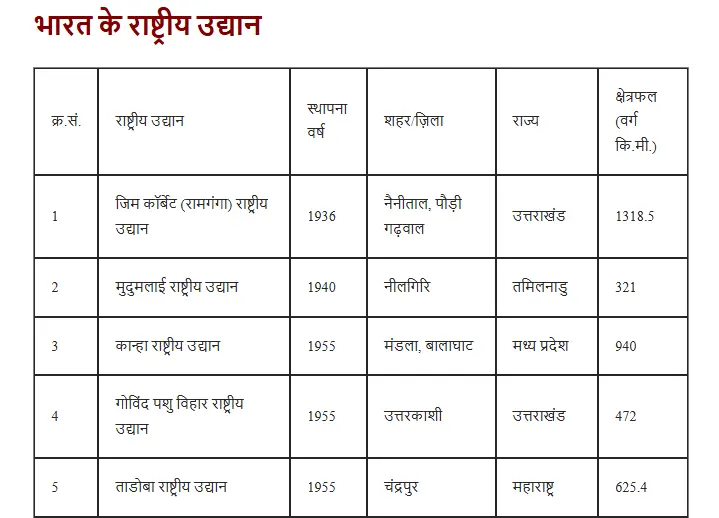
भारत के राष्ट्रीय उद्यान-2025
भारत के राष्ट्रीय उद्यानों की सूची 2025 तक, भारत में 107 राष्ट्रीय उद्यान हैं, जो 44,402.95 वर्ग किलोमीटर के क्षेत्र में […]

भारत के राष्ट्रीय उद्यानों की सूची 2025 तक, भारत में 107 राष्ट्रीय उद्यान हैं, जो 44,402.95 वर्ग किलोमीटर के क्षेत्र में […]

भारत के प्रमुख शोध संस्थान एवं उनके अध्यक्ष (जुलाई 2025 तक की जानकारी के अनुसार ) यहाँ भारत के प्रमुख
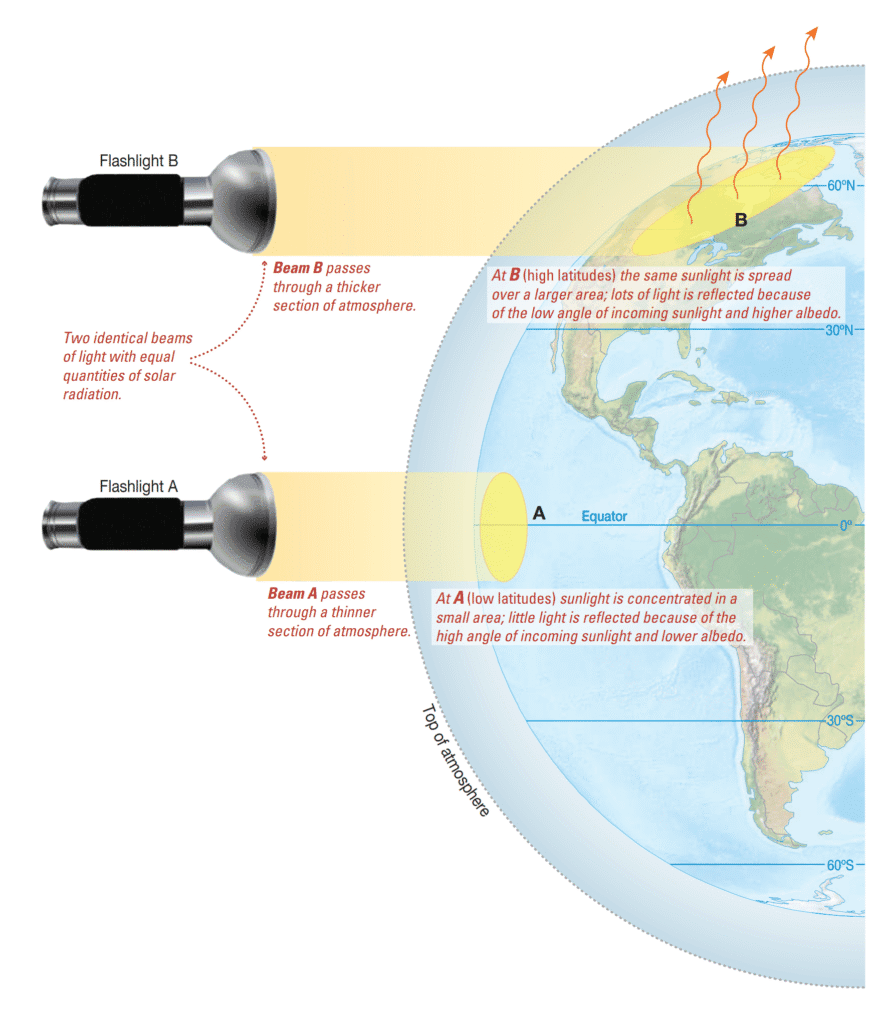
How Latitude Affects the Distribution of Solar Radiation If Earth were a flat surface oriented perpendicularly to the Sun, solar

Ocean heating phenomenon refers to the systematic redistribution of thermal energy from low-latitude oceanic regions to polar areas through atmospheric and oceanic circulation systems. Near polar regions, solar radiation strikes Earth’s surface at low angles with high albedo from ice surfaces reflecting substantial energy back to space. Conversely, in the 35°N to 40°S latitude zone, steeper solar angles enable greater energy absorption. This creates a net heat gain in equatorial oceans and net heat loss in polar regions, driving global heat redistribution through thermohaline circulation and atmospheric processes.
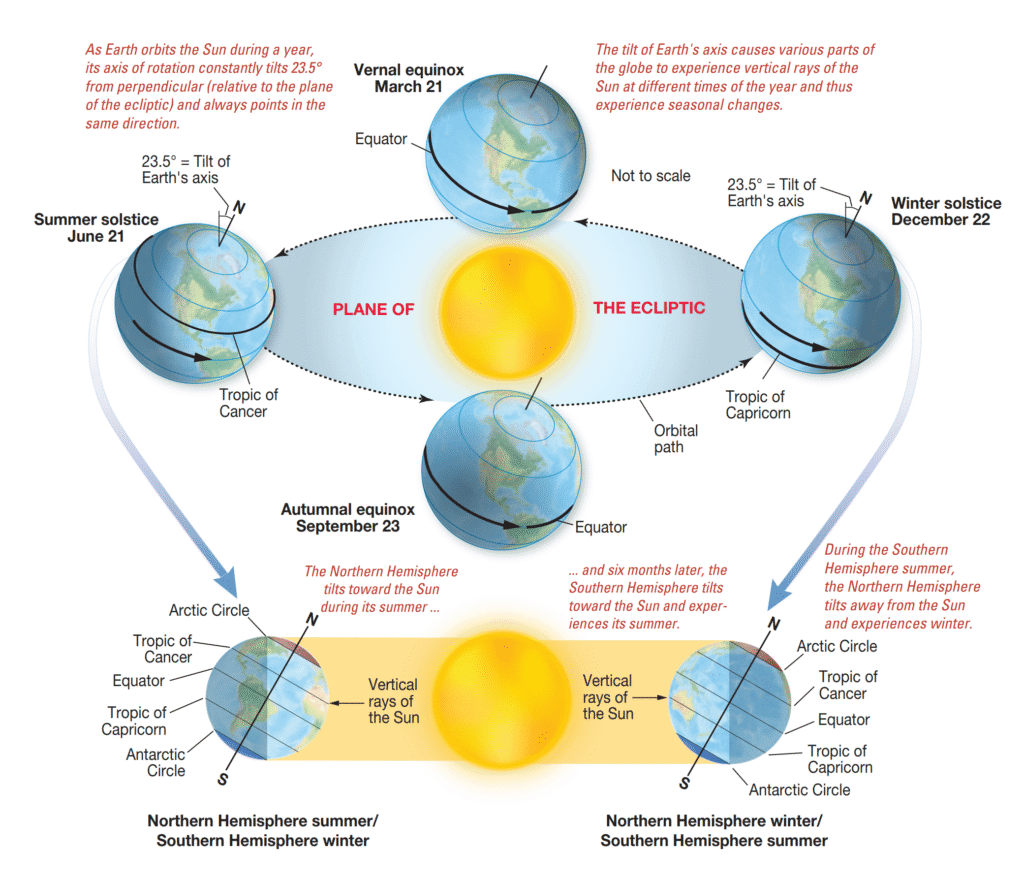
What Causes Earth’s Seasons? This seemingly straightforward inquiry often leads to a common misunderstanding: Although Earth follows an elliptical trajectory

Why did the Mughals fail? The Mughal Empire, established by Zahiruddin Babur following his decisive triumph at the Battle of
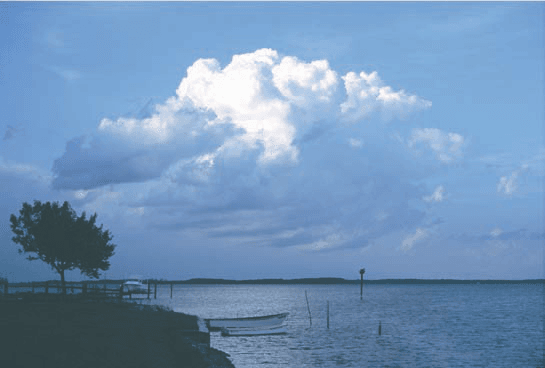
Humid air is actually lighter than dry air at the same temperature and pressure. This counterintuitive fact occurs because water vapor molecules (H₂O, molecular weight 18) are lighter than the nitrogen (N₂, molecular weight 28) and oxygen (O₂, molecular weight 32) molecules they replace in the atmosphere. According to Avogadro’s law, equal volumes of gases contain the same number of molecules, so when lighter water vapor displaces heavier air molecules, the overall mass decreases, making humid air less dense than dry air.
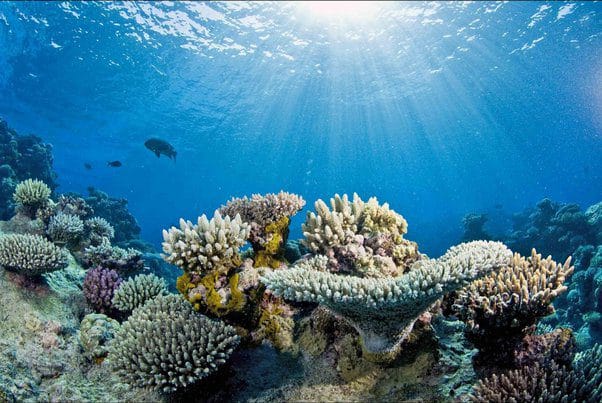
Coral reefs are marine ecosystems formed by colonies of coral polyps held together by calcium carbonate. These biodiversity hotspots support over 4,000 fish species and 800 hard coral species, earning them the nickname “Rainforests of the Sea.” Coral reefs require warm water temperatures (70-85°F), clear shallow waters, and adequate sunlight for their symbiotic algae called zooxanthellae to perform photosynthesis.
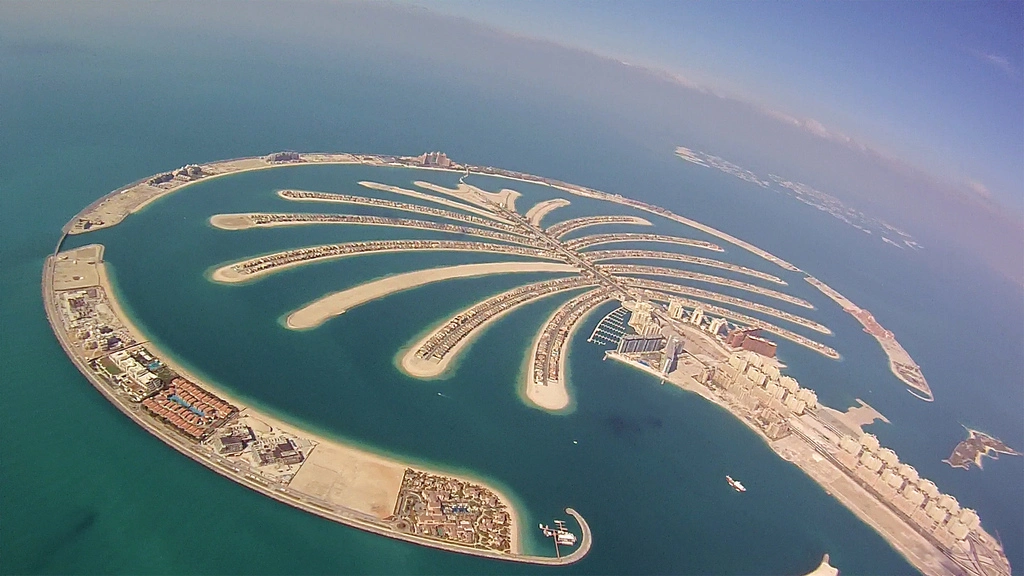
Imagine a landmass entirely surrounded by water, isolated from the rest of the world. From the massive expanse of Greenland

We, the People of India…” These opening words are not just an introduction; they are the heartbeat of the world’s