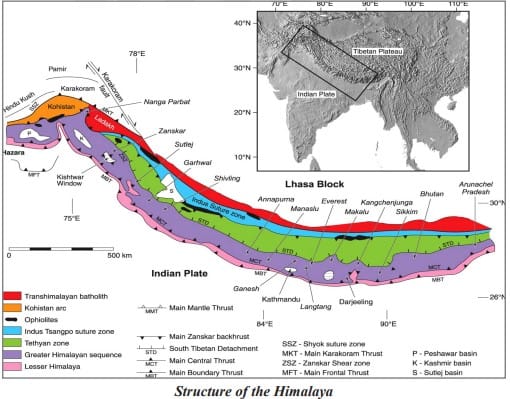
Structure of Himalayas: Complete Guide to Mountain Formation
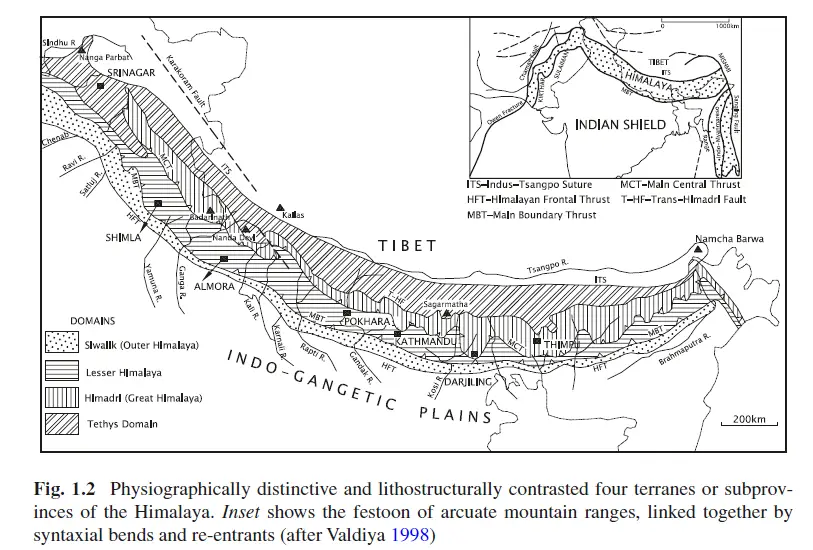
The Himalayas represent one of Earth’s most complex mountain systems, formed through tectonic collision between Indian and Eurasian plates. This massive folded mountain chain spans 2,500 km and consists of three main divisions: Greater Himalayas (highest peaks), Lesser Himalayas (medium height ranges), and Outer Himalayas (Shivalik foothills). The structure includes five major tectonic zones from the Indus-Tsangpo Suture Zone in the north to the Sub-Himalayas in the south, each characterized by distinct geological formations and thrust systems.