Last Updated: March 2026 | Reading Time: 8 minutes | ~1,900 words
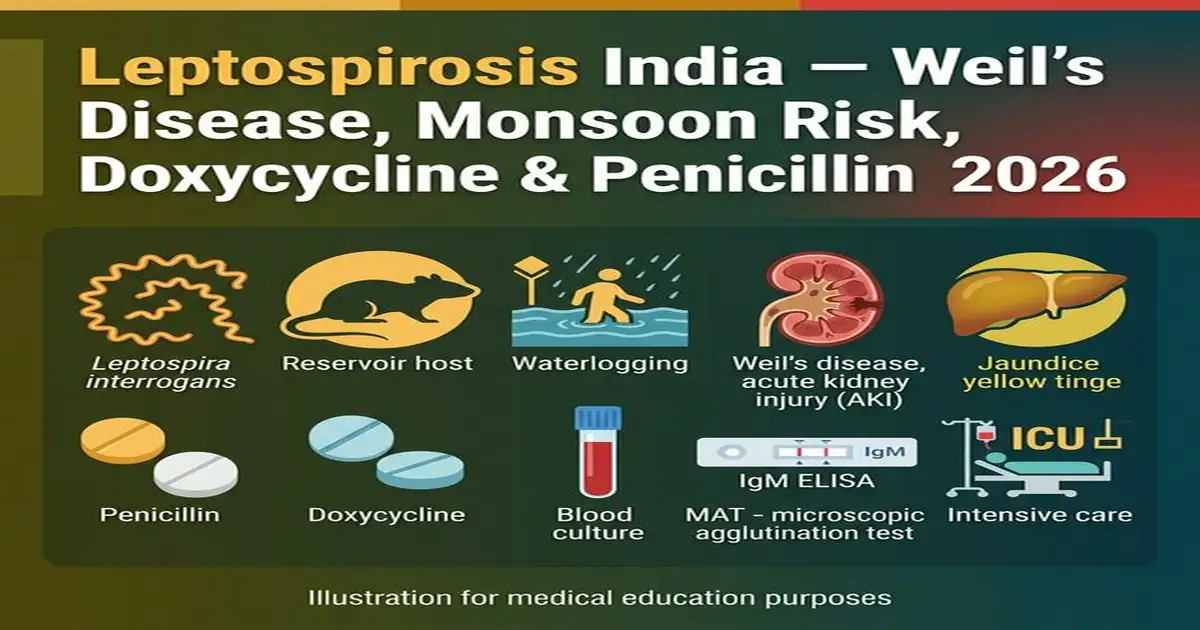
Leptospirosis — caused by the pathogenic spirochaete Leptospira interrogans — is India’s most significant zoonotic disease and a major but underappreciated cause of acute febrile illness and organ failure during and after the monsoon season. India reports approximately 10,000–15,000 confirmed cases annually, but the true burden is estimated to be 10–100 times higher due to severe underdiagnosis (clinical mimicry of dengue, malaria, and typhoid fever; limited laboratory capacity for MAT testing in most district hospitals). Case fatality rates in severe leptospirosis (Weil’s disease) in India range from 5–15% in treated patients and up to 50% in untreated severe disease. High-burden states: Kerala (highest burden — annual outbreaks post-monsoon, particularly in rice-paddy farming communities), Goa, Karnataka, Tamil Nadu, Gujarat, Maharashtra, Andaman & Nicobar Islands. Urban leptospirosis in Mumbai — post-flooding waterlogging creates human-rodent contact with contaminated water — is increasingly recognised (Mumbai 2005 floods → massive leptospirosis outbreak). The transmission is almost entirely through exposure to water or soil contaminated by urine of infected animals — primarily rats (reservoir host par excellence), cattle, pigs, dogs — entering the human body through skin abrasions, mucous membranes, or conjunctiva. Understanding the clinical spectrum — from mild flu-like illness to life-threatening multi-organ failure — and the critical window for antibiotic therapy which changes outcomes is essential for every Indian clinician and patient living in endemic areas.
Leptospirosis — Clinical Phases, Diagnosis and Treatment
| Phase / Severity | Clinical Features | Diagnosis | Treatment | India Context |
|---|---|---|---|---|
| Leptospiraemic Phase (Days 1–7) | Abrupt high fever (39–40°C); severe myalgia (especially calf muscles — hallmark; patients cannot walk on tiptoes due to calf tenderness); severe retro-orbital headache; conjunctival suffusion (bilateral conjunctival redness without discharge — key distinguishing feature vs conjunctivitis); rash (rare — maculopapular); nausea, vomiting, diarrhoea; initially indistinguishable from dengue/malaria/typhoid — the clinical “undifferentiated febrile illness” period | Blood culture (positive in first 7–10 days — Leptospira EMJH medium; slow growth 6–8 weeks); blood PCR (real-time PCR — highly sensitive in leptospiraemic phase — day 1–7; urine PCR day 8+); serology (IgM ELISA: positive from day 5–7; MAT — microscopic agglutination test — gold standard; titre ≥1:100 or 4-fold rise = positive); urine dark-field microscopy: low sensitivity; FBC: neutrophilia + thrombocytopenia (low platelets); LFT/RFT: monitor from day 4 | Doxycycline 100mg oral twice daily × 7 days (mild-moderate leptospiraemia): reduces severity, duration; excellent oral bioavailability; most widely available and affordable in India; penicillin G 1.5 MU IV 4-hourly OR amoxicillin 500mg oral TDS × 7 days: alternatives; prophylaxis post-flood exposure: doxycycline 200mg weekly during exposure period (high-risk occupational — rat catchers, sewer workers, paddy farmers) | Kerala: annual surveillance programme (leptospirosis reportable — IDSP weekly S/T/L reporting); Kerala government provides free doxycycline prophylaxis to flood-rescue workers; Karnataka: outbreak protocol at district level; ICMR reference labs: NICED Kolkata, NIV Pune for MAT testing; district hospital labs: IgM-ELISA Lepto-Tek Lateral Flow available at most district hospitals; PCR limited to tertiary care |
| Immune Phase / Weil’s Disease (Days 7–30 — severe) | Jaundice (conjugated hyperbilirubinaemia — bilirubin can reach 30–50 mg/dL; “yellow eyes” — prominent; classically painless jaundice with severe myalgia + fever — distinguishes from viral hepatitis where myalgia less prominent); acute kidney injury (oliguric — urine output <400mL/day; creatinine rising; AKI develops in 50–60% of severe leptospirosis — hypokalaemia common — unlike RTA hyperkalaemia; can need dialysis); pulmonary haemorrhage syndrome (ARDS + haemoptysis — most lethal manifestation; “leptospiral pulmonary haemorrhage syndrome — LPHS” — 50% mortality; resembles haemoptysis from TB/pulmonary embolism; CT chest: bilateral alveolar infiltrates); uveitis (iris, ciliary body inflammation — can develop weeks after recovery — bilateral; may cause visual impairment if not treated; steroids + mydriatics); myocarditis (conduction abnormalities — arrhythmias — ECG monitoring); meningism/aseptic meningitis (CSF: lymphocytic pleocytosis, elevated protein, normal glucose) | Same as above + repeated: bilirubin (trend); creatinine + electrolytes (K+ daily); ABG (metabolic acidosis + hypoxia in ARDS/LPHS); chest x-ray (bilateral fluffy infiltrates = LPHS); ECG (arrhythmias); urine output + daily weights; MAT confirmation in convalescent samples (2–4wk); HRCT chest if haemoptysis; echocardiography if myocarditis | IV Benzyl Penicillin G 1.5 MU 6-hourly × 7 days (standard severe leptospirosis): reduces renal failure duration, dialysis requirements; IV Ceftriaxone 1g once daily × 7 days (non-inferior to penicillin G — Ceftriazone trial; easier dosing — widely used India); IV doxycycline (if PO not tolerated); Jarisch-Herxheimer reaction: spirochaete lysis → fever/rigors 2–4 hours after first penicillin dose — treat with paracetamol, reassure; Renal support: strict fluid balance, furosemide for early oligo; haemodialysis or CRRT if AKI established; Pulmonary haemorrhage (LPHS): ICU, lung-protective ventilation, methylprednisolone pulse (500mg IV × 3 days — some evidence for LPHS); ECMO in refractory LPHS (limited India); platelet transfusion if severe thrombocytopenia with bleeding | Kerala: Weil’s disease ICU admissions peak in September–November post-monsoon; Thrombocytopenia in leptospirosis often triggers dengue diagnosis (similar platelet drop — MAT/IgM testing distinguishes); JPAC (Jaundice + Pulmonary + AKI + Calf tenderness) clinical clue for leptospirosis; dialysis: AIIMS, JIPMER Puducherry, Kerala medical colleges experienced; mortality with ICU care and IV penicillin/ceftriaxone: 5–15% |
| Occupational High-Risk Groups India | Paddy farmers (wading in flooded fields — skin contact with rat-urine contaminated water); sewer/drain workers (chronic exposure — Leptospira survives in alkaline moist environments); abattoir workers, veterinarians; urban flood rescue workers (Mumbai, Surat, Chennai — flooded street wading); fish/crab handlers (Goa, Kerala coastal); dog handlers, animal shelter workers; military/paramilitary (jungle/field postings) | Occupational history essential — ask specifically: “Did you wade in floodwater? Do you work in paddy fields? Are you a sewer worker?” | Chemoprophylaxis: doxycycline 200mg oral once weekly during exposure period: community trial evidence (Adler 2010); reduces risk by 80%; side effects: photosensitivity, GI; personal protection: rubber boots, gloves, avoid waterlogging exposure; rat control (rodenticide, food storage, municipal sanitation); vaccine: leptospira vaccine exists (Cuba, France — Spirolept) — not licenced India; India: dog vaccine (Lepto) available — reduces canine urban reservoir | Kerala: annual post-flood doxycycline prophylaxis campaign (rescue workers and flood-exposed communities); NVBDCP/IDSP integrated leptospirosis surveillance; Mumbai BMC post-flood protocol: awareness + doxycycline availability at municipal hospitals; Andaman & Nicobar: year-round exposure — cattle farming and pig rearing major reservoirs |
Frequently Asked Questions
How is leptospirosis distinguished from dengue and typhoid during the monsoon season?
In India’s monsoon season, three diseases — leptospirosis, dengue, and typhoid (enteric fever) — create an almost identical initial clinical presentation of acute febrile illness, leading to frequent misdiagnosis and treatment delays. Knowing the distinguishing features is lifesaving: The fever triad in Indian monsoon season: All three share: high fever (39–40°C); severe headache; myalgia; nausea; anorexia; thrombocytopenia; initial neutrophilia or lymphocytosis — making clinical differentiation in the first 48–72 hours extremely difficult without laboratory confirmation. Key distinguishing clinical features: Leptospirosis hallmarks: calf muscle tenderness (exquisite — patients unable to walk normally; a finding absent in dengue and typhoid — the most useful bedside differentiator); conjunctival suffusion (bilateral bright red conjunctiva without discharge — absent in dengue/typhoid); jaundice appearing at day 7–10 (in Weil’s disease — dengue hepatitis exists but jaundice less severe; typhoid can cause mild jaundice); water/flood exposure history in past 2–30 days; occupation (paddy farmer, sewer worker, rescue worker — critical history); AKI developing at day 7–10 with hypokalaemia (unusual in dengue — thrombocytopenia dominates dengue; unusual in typhoid — relative bradycardia, rose spots dominate); pulmonary haemorrhage + AKI + jaundice = almost pathognomonic Weil’s disease; Dengue distinguishers: dengue haemorrhagic features (petechiae, positive tourniquet test, gum bleeding — more prominent than leptospirosis); retroorbital pain (intense — characteristic dengue); rash (maculopapular, appears as fever defervesces — “isles of white in sea of red”); no calf tenderness; no jaundice in uncomplicated dengue; exposure: Aedes aegypti urban mosquito — daytime biting; NS1 antigen positive day 1–5; IgM positive day 5+; Typhoid distinguishers: relative bradycardia (pulse lower than expected for fever degree — Faget sign); rose spots (salmon-coloured macules on trunk — classical but often absent in Indian typhoid); constipation week 1 → diarrhoea week 2; hepatosplenomegaly prominent; Step-ladder fever pattern (progressive daily rise); Widal test (limited specificity in India — repeated prior exposure creates background antibody titres); blood culture positive week 1 (Salmonella typhi/paratyphi). India investigation reflexes — the logical order: Day 1–3 fever: NS1 antigen (dengue); blood smear + malaria RDT; blood culture (typhoid); Day 4–7 fever: IgM ELISA (dengue + leptospirosis simultaneously — same sample); blood culture; Widal; CBC + LFT + RFT + electrolytes (leptospirosis pattern: thrombocytopenia + elevated bilirubin + rising creatinine + HYPO-kalaemia); Day 7–14 fever: MAT (leptospirosis gold standard); culture; Weil-Felix (scrub typhus — also monsoon + undifferentiated fever + eschar hunting); SCRUB TYPHUS: Orientia tsutsugamushi infection from mite bite — hallmark: eschar (painless black crust at bite site — axilla, groin, behind ear) — MUST examine for eschar in all Indian fevers — treated with doxycycline (same as leptospirosis); rapid IgM scrub typhus test: ₹500–800. Practical India diagnostic approach: Treat empirically for most likely diagnosis while testing; if severe jaundice + AKI + calf tenderness + flood exposure = START IV ceftriaxone/penicillin immediately for leptospirosis (do not wait for MAT results — MAT takes days at reference labs); if dengue-like features predominantly = supportive + platelet monitoring; if enteric features = ceftriaxone covers both typhoid and leptospirosis — useful empirical combination coverage in uncertain severe febrile illness; importance: leptospirosis empirical treatment with doxycycline/ceftriaxone is cheap, safe, and potentially lifesaving — do not delay for confirmation in severe cases.
What should Indians do after wading through floodwater — and who needs doxycycline prophylaxis?
Every year during India’s monsoon season, millions of Indians wade through flood water — from rescue workers and paddy farmers to city dwellers navigating waterlogged roads. The risk of leptospirosis from this exposure is real, particularly in endemic states, and the prevention strategy is clear: Immediate post-exposure actions (within 24–72 hours of significant flood exposure): Wash exposed skin thoroughly with soap and clean water immediately after contact; avoid touching eyes, nose, mouth after flood exposure until washed; check for skin cuts, abrasions, wounds — these are the main entry portals; if any cuts exposed to floodwater: wash with antiseptic; seek medical attention. Who should receive doxycycline prophylaxis: High-risk exposure (justified prophylaxis): rescue workers wading in floodwater in endemic states (Kerala, Karnataka, Goa, Maharashtra, Andaman); paddy/rice farmers during and after monsoon in high-endemic areas; sewer and drain workers throughout monsoon; occupational exposure anticipated >2 weeks; accidental immersion in contaminated water (India floods — swimming in floodwater); Moderate-risk exposure (individual risk-benefit: consider prophylaxis in endemic settings): urban flooding in known leptospirosis-endemic cities (Mumbai, Kochi, Mangaluru, Chennai); Low-risk: brief incidental contact with floodwater (shoes wet, feet wet briefly) without skin breaks — prophylaxis generally not needed; Doxycycline prophylaxis regimen: 200mg oral single dose (some guidelines) OR 200mg once weekly during exposure period; duration of exposure = duration of prophylaxis; max 6 weeks; contraindicated: children <8 years (tetracycline contraindicated — bone/tooth deposition) → use amoxicillin-clavulanate alternative; pregnant women (doxycycline contraindicated → amoxicillin 500mg TDS × 5 days; or penicillin if severe); G6PD deficiency: no interaction with doxycycline (unlike primaquine for malaria). India government protocols: Kerala Health Department: post-flood doxycycline prophylaxis kampanya (campaign) — 200mg weekly for all rescue workers + flood-displaced families in endemic districts; Karnataka: standard issue of doxycycline to flood rescue teams; Mumbai BMC: post-flood leptospirosis awareness and doxycycline availability at municipal health posts; Andaman & Nicobar: year-round chemoprophylaxis for high-risk occupations. What NOT to do after flood exposure: Do not wade barefoot or without rubber boots in floodwater in endemic areas; do not use untreated flood water for drinking or cooking; do not delay treatment if fever + calf pain + jaundice develops within 2–30 days of exposure — this is leptospirosis until proven otherwise; do NOT ignore “mild fever” post-flood in endemic areas — early treatment changes outcome dramatically; do not treat leptospirosis as dengue and manage supportively — doxycycline/penicillin is specific therapy and saves the kidneys and liver.
What to Read Next
- Dengue Fever — Differentiate from Leptospirosis: NS1 + IgM ELISA + Calf Tenderness + Conjunctival Suffusion vs Tourniquet Test + Petechiae
- Typhoid — Enteric Fever vs Leptospirosis: Blood Culture; Eschar (Scrub Typhus); Ceftriaxone Covers Both; Widal Test Specificity Limitations India
- Malaria — Malaria + Leptospirosis Co-infection Documented India (Same Exposure, Same Water); Always Test Both Simultaneously in Endemic Areas
- Kidney — Leptospirosis AKI: Hypokalaemia + Oliguric AKI; CRRT/Haemodialysis Critical Tool; Distinguish from Obstructive Uropathy on USS
- Liver — Weil’s Disease Jaundice vs Viral Hepatitis vs Cirrhosis Decompensation — Biliary Pattern + MAT + Flood History; Penicillin G IV
Every October in Kerala, after the southwest monsoon recedes and paddy harvest begins, leptospirosis outbreaks follow. Farmers who waded to save their harvest from flooded fields. Workers who cleared drain blockages. Children who played in the flooded streets. Many develop fever, calf pain, jaundice. Some reach their primary health centre in time. Some are told it is “dengue” and sent home with paracetamol. Doxycycline costs ₹15 for a 7-day course. The difference between receiving it on day 3 of illness and receiving it on day 10 — or not at all — may be the difference between recovering at home and dialysis in a government ICU. Every ASHA worker, every community health volunteer, every PHC doctor in Kerala and Odisha and Karnataka must know this disease by name, by season, by symptom, and by treatment.
About This Guide: Written by the StudyHub Health Editorial Team (studyhub.net.in) based on WHO Leptospirosis Guidelines 2003 (updated technical guidance 2021), IDSP India surveillance data, Indian Journal of Medical Microbiology leptospirosis consensus 2022, and Kerala State Health Policy leptospirosis protocols. Last updated: March 2026.
🌊 Flood + Fever + Calf Pain = Think Leptospirosis: If you develop fever, severe calf muscle pain (can’t walk on tiptoe), and yellow eyes within 2–30 days of wading in floodwater — go to your nearest hospital immediately. Tell them you waded in flood water. Ask for IV ceftriaxone or penicillin G. Do not wait. Do not treat at home. Early treatment prevents kidney failure and saves your life.
💊 Doxycycline Prophylaxis After Flood Exposure: If you are in a leptospirosis-endemic state (Kerala, Karnataka, Goa, Maharashtra, Andaman) and have waded significantly in floodwater — especially if you are a rescue worker, farmer, or sewer worker — ask your doctor or PHC for doxycycline 200mg/week during exposure. Kerala government distributes this free to flood rescue workers. This is not optional in high-risk exposure.
⚕️ Medical Disclaimer: This article provides general educational information about leptospirosis. Diagnosis (MAT, IgM ELISA, PCR) and treatment decisions — particularly for severe Weil’s disease with AKI/LPHS/myocarditis — require qualified healthcare provider assessment. Do not self-treat severe symptoms including jaundice, haemoptysis, or significantly reduced urine output.