Last Updated: March 2026 | Reading Time: 8 minutes | ~1,900 words
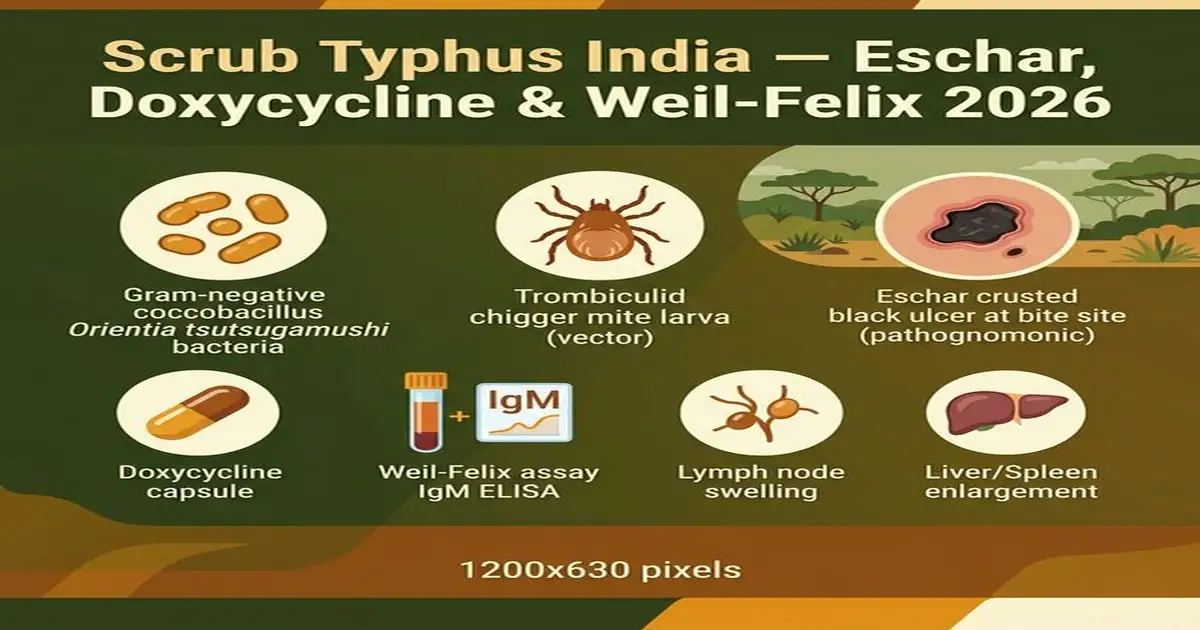
Scrub typhus is an acute febrile illness caused by Orientia tsutsugamushi — an obligate intracellular gram-negative coccobacillus transmitted by the bite of infected trombiculid chigger mite larvae (Leptotrombidium spp.). India has experienced a dramatic increase in scrub typhus reporting over the past decade, driven primarily by increased awareness and diagnostic availability rather than true incidence increases, though climate change and land-use changes (deforestation, agricultural expansion into scrub vegetation) may be contributing to expanded mite habitats. India reports approximately 30,000–100,000+ scrub typhus cases annually (heavily underreported — true burden estimated 10–100× higher), with significant burden in the Himalayan foothills (Himachal Pradesh, Uttarakhand — highest), NE India (Assam, Meghalaya, Manipur), Rajasthan, Odisha, Tamil Nadu, Andhra Pradesh, and Jammu & Kashmir. Scrub typhus is the most common cause of non-malarial acute febrile illness in many parts of India, and is a frequently missed diagnosis — the eschar (pathognomonic black crusted skin ulcer at the chigger bite site) is present in only 40–60% of Indian cases and is often missed unless specifically searched for. Without recognition and treatment with doxycycline, scrub typhus can progress to severe multiorgan failure (pneumonitis, encephalitis, myocarditis, AKI, ARDS) with case fatality rates of 15–30% — despite doxycycline being one of the cheapest drugs available in India (₹3–5/capsule).
Scrub Typhus — Clinical Features, Diagnosis and Management
| Feature / Category | Details | India Notes |
|---|---|---|
| Clinical Presentation — Uncomplicated | Incubation: 6–21 days after chigger bite (often bite unnoticed — painless); sudden onset high fever (39–41°C); severe headache (often retro-orbital); myalgia (muscle aches — severe); generalised lymphadenopathy (regional draining lymph nodes near eschar enlarged — tender); Eschar (pathognomonic but not always present): black-crusted painless ulcer with surrounding erythematous halo at bite site; search sites: axillae, groin, behind ears, waistline, scalp, perineum (covered/warm/moist areas — mite prefers to bite); maculopapular rash on trunk (5th–10th day — fades quickly — often missed); relative bradycardia (Faget’s sign — pulse-temperature dissociation — heart rate unusually slow for degree of fever); conjunctival injection (red eyes); hepatosplenomegaly (liver/spleen enlarged on palpation) | India eschar rate: 40–60% in Indian series (vs 90%+ in Japan/Korea — different O. tsutsugamushi strains; Gilliam/Karp/Kato strains common India); missing the eschar is the commonest cause of diagnostic delay India; search systematically — undress fully, examine all body folds; rash: often transient and missed by the time of presentation (day 7–10); relative bradycardia: classic teaching point — helps distinguish from dengue (which causes typical tachycardia with fever); differential in India: dengue (thrombocytopenia — scrub often thrombocytopenia too), leptospirosis (calf tenderness), typhoid (rose spots — rare), malaria (blood film/RDT), viral hepatitis (elevated LFTs — scrub also causes LFT elevation) |
| Clinical Presentation — Severe (Complications) | Occurs if untreated or delayed (typically day 7–14 of illness): Scrub typhus pneumonitis / ARDS: patchy bilateral infiltrates on CXR; hypoxia; respiratory failure — leading cause of ICU admission in severe scrub typhus; Scrub typhus encephalitis/meningoencephalitis: confusion, seizures, coma (CNS involvement — O. tsutsugamushi invades cerebral endothelium → vasculitis); CSF: mononuclear pleocytosis, elevated protein (similar to viral meningitis — culture negative → crucial to test for scrub typhus IgM in all “viral” meningitis in India); Myocarditis: elevated troponin T/I; arrhythmias; heart failure; echocardiographic wall motion abnormality; Acute Kidney Injury (AKI): rising creatinine; oliguria; can require haemodialysis; Hepatitis: elevated AST/ALT (5–10× ULN); jaundice (if severe); Pancytopenia (platelets + WBC + Hb all falling — can mimic haematological malignancy); DIC (late severe disease) | India: approximately 15–30% of scrub typhus cases develop complications (mortality without treatment — 15–30%); highest complication rate in delayed presentations (treatment after day 7 of illness); scrub typhus encephalitis India: major burden in paediatric cases (children often present with fever + seizures/altered consciousness — scrub typhus must be tested before assuming bacterial/viral aetiology); ARDS from scrub typhus: requires ICU mechanical ventilation — mortality 30–50% once established; AKI in scrub typhus: often recoverable with doxycycline + supportive care (unlike leptospirosis — bilateral cortical necrosis non-reversible); myocarditis troponin elevation: check echocardiogram in all complicated scrub; mortality: doxycycline given early (within first 5 days) → mortality approaches 0%; delay to day 10+ → mortality 20%+ |
| Diagnosis | Clinical diagnosis: fever + eschar + lymphadenopathy + epidemiology (rural/forest exposure, Himalayan region, monsoon/post-monsoon — scrub season Oct–Feb in South India, Jun–Oct in Himalayan regions) → start empirical doxycycline; Laboratory confirmation: Scrub typhus IgM ELISA (Inbios/PanBio): sensitivity 70–90%; specificity 80–90%; becomes positive from day 7–10 of illness (false-negative if tested early); IgM ELISA preferred India — available at district hospitals and reference labs; Weil-Felix test (WFT): older agglutination test — OXK antigen (Proteus mirabilis OXK cross-reactive with O. tsutsugamushi); titre ≥1:80 significant; sensitivity only 50–70%; specificity low (false positives in liver disease, leptospirosis, pregnancy); still widely used India (cheap, rapid, available everywhere) — should be replaced by IgM ELISA where possible; PCR (eschar swab or blood): most sensitive (90%+); available ICMR/NICD Delhi, AIIMS, CMC Vellore, state labs — not widely available at district level; CBC: leucopenia or leucocytosis + thrombocytopenia (platelets 50,000–150,000 common); elevated LFTs (AST > ALT — hepatocellular pattern); CRP very high; procalcitonin often elevated (can mislead to bacterial sepsis workup); blood culture (negative — O. tsutsugamushi unculturable in routine labs — obligate intracellular) | India diagnostic gap: most scrub typhus deaths occur because physicians do not think of it → no empirical doxycycline given; empirical doxycycline is cheap, safe, and diagnostic-therapeutic (fever defervescence within 24–48h = confirms diagnosis); MEWS rule India: unexplained fever + thrombocytopenia + elevated LFTs + rural exposure → scrub typhus until proven otherwise; IgM ELISA availability: NRHM has distributed rapid scrub typhus kits to district hospitals in endemic states (HP, UK, AP, Odisha) → test before assuming dengue/malaria; pediatric: thrombocytopenic fever in child from Himalayan/NE India → scrub typhus + dengue both test simultaneously; Weil-Felix: if OXK ≥1:80 → start doxycycline; OXK negative does NOT rule out scrub typhus (use IgM ELISA + clinical judgment) |
| Treatment — Doxycycline (Drug of Choice) | Doxycycline 100mg orally twice daily × 7–14 days (WHO/IDSA/DGHS India recommendation); start EMPIRICALLY without waiting for lab confirmation if clinical suspicion (eschar + fever + thrombocytopenia + rural exposure); response: fever typically defervesces in 24–48 hours (dramatic improvement — if fever persists >72h → reassess diagnosis); duration: 7 days minimum (some guidelines 10–14 days in severe disease to prevent relapse); children <8 years: doxycycline still recommended (benefits outweigh tooth staining risk in scrub typhus — WHO 2013 confirmed; short course acceptable; dental staining from short courses minimal); pregnancy: doxycycline relatively avoided (1st trimester — foetal effects) → Azithromycin 500mg once daily × 7 days (alternative — less efficacy than doxy); chloramphenicol (alternative in pregnancy: inadequate in late-term — “Grey Baby Syndrome”); rifampicin (500mg once daily × 7 days): used in pregnancy and areas with doxycycline-resistant scrub (Thailand — some India strains emerging); IV doxycycline: for severe/ICU patients (IV formulation available — ₹50–100/vial indie); ICU management: mechanical ventilation for ARDS; haemodialysis for AKI; cardiac monitoring for myocarditis; supportive care | Doxycycline tablet India: ₹3–5/capsule (generic: Pfiphos, Vibramycin generic, Doxt-S); 7-day course = ₹40–70 total; one of the cheapest potentially life-saving drug courses in all of medicine; CONTRAINDICATIONS: known allergy (rare — tetracycline class); esophageal stricture (take with full glass of water, upright); DRUG INTERACTIONS: antacids/iron/milk reduce doxycycline absorption (separate by 2–3 hours); rifampicin reduces doxycycline levels significantly; steroids: NOT recommended in uncomplicated scrub typhus; in severe meningoencephalitis with cerebral oedema: short-course dexamethasone sometimes used (limited evidence); relapse: rare if full 7+ day course completed; more common with <5-day courses |
| Prevention & Epidemiology India | No approved vaccine (O. tsutsugamushi has multiple antigenically distinct serotypes — vaccine development challenging); Personal protection: protective clothing (long sleeves, pants tucked into boots) in scrub vegetation, grassland, forest edges; DEET 20–30% insect repellent on skin + permethrin on clothing (kills chiggers on contact); avoid sitting/lying on ground in endemic areas; check body for mites after outdoor exposure; permethrin-treated clothing: highly effective against chigger larvae; chemoprophylaxis: doxycycline 200mg weekly (used in military — limited civilian recommendation); habitat modification: eliminating scrub/tall grass around dwellings in endemic areas; India endemic districts: IMD/NVBDCP notification from HP, UK, ASSAM, MANIPUR, AP, Telangana, Odisha, Tamil Nadu — all endemic; seasonal patterns: Himalayan: June–November; South India: September–February (post-monsoon; chigger breeding linked to soil moisture after monsoon) | India IDSP: scrub typhus is notifiable disease since 2019 under IDSP surveillance (outbreak reporting); military: Indian Army (deployed jungle/Himalayan operations) — high scrub typhus burden; NE India ASOM/Assam: scrub typhus + malaria + leptospirosis all co-endemic → diagnostic challenge; Japan/Korea: scrub typhus well-studied (better diagnostic infrastructure); India: still heavily under-resourced for scrub typhus diagnosis; One Health approach: mite ecology in India strongly linked to changing land use (rice paddy margins, plantation agriculture, deforestation → new chigger habitats); climate change: expanding scrub typhus belt northward and to new altitude ranges in India |
Frequently Asked Questions
How do I find the eschar — and why is searching for it so important in India?
The eschar is the single most diagnostically valuable physical finding in scrub typhus — yet it is routinely missed in Indian clinical practice, leading to preventable deaths. What is the eschar: The chigger bite causes painless papule → vesicle → central necrosis → black crusted eschar (0.5–3cm, painless, surrounded by erythema); present from day 3–7 of illness; heals with shallow scar. Where to search systematically (undress fully): Axillae (most common); groin/inguinal folds; waistband; behind ears/scalp; perineum/genitalia; popliteal fossa; between toes; umbilical area; trunk folds. This search takes 3 minutes and costs ₹0. Why it matters: Finding eschar + fever = start doxycycline immediately (₹3–5/capsule) → near-zero mortality; missing eschar → no doxycycline → ARDS/encephalitis/renal failure → mortality 15–30%; India failure mode: physician examines clothed patient, misses eschar, labels “viral fever,” sends home. India series: Only 40–60% of Indian scrub cases have detectable eschar (vs 90%+ Japan/Korea — different strains); even without eschar, fever + thrombocytopenia + rural Himalayan/NE India exposure → start doxycycline empirically.
How does scrub typhus differ from dengue, leptospirosis and typhoid — India’s monsoon fever differential?
In India’s monsoon and post-monsoon season, four major febrile illnesses peak simultaneously with overlapping features: Dengue vs scrub: Dengue — tachycardia; retro-orbital + bone pain (“breakbone fever”); NO eschar; NO lymphadenopathy; NS1 antigen+; Scrub — relative bradycardia (Faget’s sign); eschar (if found); lymphadenopathy; IgM ELISA scrub+. Leptospirosis vs scrub: Lepto — calf muscle tenderness (hallmark); conjunctival suffusion + jaundice + haematuria; flood/paddy wading; IgM ELISA lepto+; Scrub — eschar; lymphadenopathy; IgM ELISA OT+. Typhoid vs scrub: Typhoid — stepwise rising fever; rose spots (rare); Widal OT ≥1:160; blood culture Salmonella; Scrub — eschar; OXK Weil-Felix+; IgM ELISA OT+. Malaria vs scrub: Malaria — periodic fever; splenomegaly; blood film MP+/RDT PfHRP2+; NO eschar; Scrub — IgM ELISA OT+. India monsoon fever protocol: For fever >5 days + thrombocytopenia + rural exposure: CBC + LFT; blood film + malaria RDT; dengue NS1 + IgM; scrub typhus IgM ELISA (if >7d) or Weil-Felix OXK; leptospira IgM ELISA; blood culture; eschar examination. Empirical tip: doxycycline covers BOTH scrub typhus AND leptospirosis simultaneously — start while awaiting results.
What to Read Next
- Dengue — Key Differential: Dengue Tachycardia vs Scrub Relative Bradycardia; NS1 Test; No Eschar in Dengue
- Leptospirosis — Co-endemic Monsoon: Calf Tenderness + Flood = Lepto; Doxycycline Covers Both Scrub + Lepto
- Malaria — Monsoon Fever Cluster: Blood Film + RDT Differentiates from Scrub; Both Thrombocytopenic
- Typhoid — Stepwise Fever Overlaps Scrub; Ceftriaxone Typhoid vs Doxycycline Scrub — Different Treatments
- Kidney — Scrub Typhus AKI Vasculitis-Mediated; Recoverable with Early Doxycycline
A school teacher from Shimla presents in October with 9-day fever, severe headache, confusion, and platelets of 62,000. Full examination reveals a 1.5cm black eschar in his right axilla. Doxycycline 100mg BD started immediately. Fever gone in 36 hours. Platelets normalise by day 5. Home on day 7. Total drug cost: ₹56. The eschar took 45 seconds to find. For want of those 45 seconds and ₹56 — thousands of Indians die every year from scrub typhus encephalitis in hospitals that never searched for an eschar.
About This Guide: Written by the StudyHub Health Editorial Team (studyhub.net.in) based on WHO Scrub Typhus Guidelines 2016, IDSA Rickettsial Diseases Guidelines 2016, DGHS India Scrub Typhus Clinical Guidelines 2022. Last updated: March 2026.
🔍 Fever >5 Days + Thrombocytopenia from Rural/Himalayan India? Ask your doctor to: (1) Fully undress and examine ALL body folds for eschar — painless black ulcer. (2) Test scrub typhus IgM ELISA. (3) Start doxycycline empirically while awaiting results — ₹56 for 7-day course. Fever gone in 24–48h on doxycycline = scrub typhus confirmed.
⚕️ Medical Disclaimer: This article provides general educational information about scrub typhus. Diagnosis, empirical doxycycline initiation, and management of severe complications (ARDS, encephalitis, myocarditis, AKI) require qualified medical specialist assessment. Pregnant women with suspected scrub typhus should discuss azithromycin/rifampicin alternatives with a physician.