Last Updated: March 2026 | Reading Time: 8 minutes | ~1,900 words
Heat stroke — the most severe form of heat illness — kills thousands of Indians every year and represents a rapidly worsening public health crisis as climate change intensifies India’s summer heatwaves. India officially recorded over 700 heat-related deaths in 2022 and approximately 400–500 deaths in 2024, but the true mortality is believed to be 10–20 times higher due to under-attribution (deaths labelled as cardiac arrest, multi-organ failure, or “unknown cause” without temperature documentation). The India Meteorological Department (IMD) declared record heatwave events in 2022–2024 — maximum temperatures of 44–48°C in Rajasthan, MP, UP, Bihar, Odisha, Telangana, and an unprecedented early summer 2024 heatwave affecting Delhi (May temperatures 48°C at Narela weather station). Heat stroke is defined as a core temperature >40°C with central nervous system dysfunction (confusion, delirium, seizures, unconsciousness) — distinguishing it from heat exhaustion (temperature <40°C, CNS intact) and heat cramps (benign). India’s most vulnerable populations: outdoor labourers (construction workers, agricultural workers, brick kiln workers — working through peak heat 12pm–3pm), elderly individuals (impaired thermoregulation), infants and young children (high surface area:mass ratio, dependent on caregivers for hydration), pilgrims (Amarnath, Char Dham yatras at high altitude in summer), rural communities without electricity/fans, and patients on anticholinergic medications (impaired sweating). Heat stroke is a medical emergency with case fatality rates of 20–50% without rapid cooling — every degree above 40°C and every minute without cooling increases mortality.
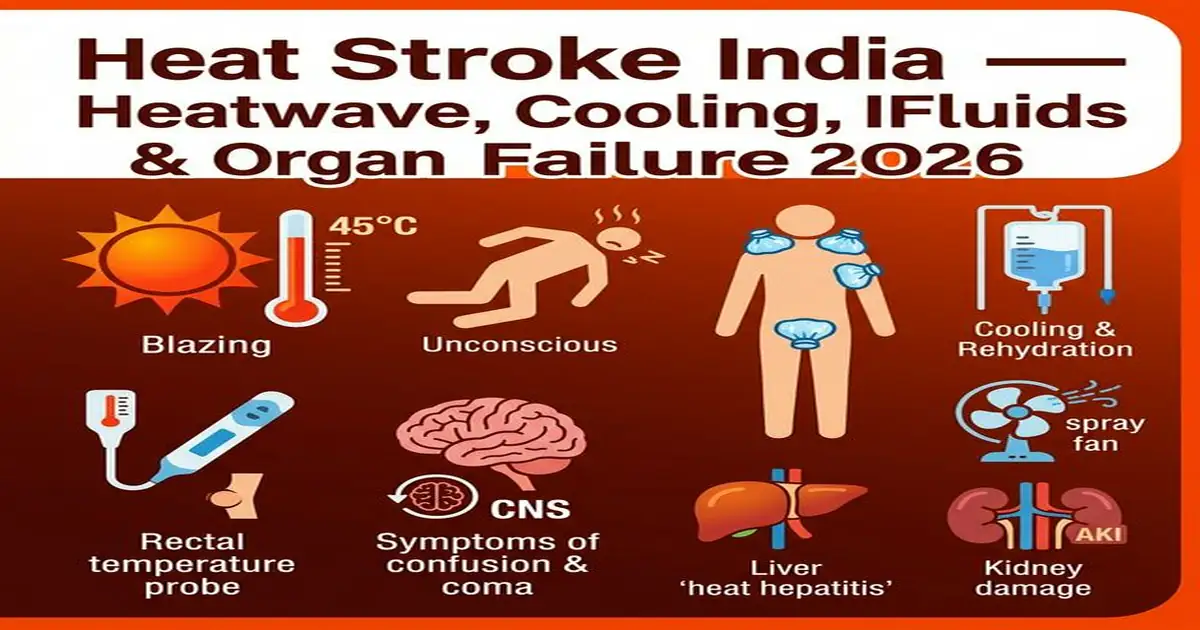
Heat Illness — Classification, Diagnosis and Emergency Management
| Condition | Core Temp / CNS | Key Features | Treatment | India Notes |
|---|---|---|---|---|
| Heat Cramps | <38°C; CNS normal | Painful muscle spasms (calves, abdomen, hands) during or after intense exertion in heat; profuse sweating; caused by salt + water depletion; normal or mildly elevated core temperature; no CNS dysfunction | Oral rehydration with electrolytes (ORS or sports drink with sodium); move to cool environment; gentle stretching; rest; IV normal saline if unable to drink; no specific pharmacological treatment needed; NOT a medical emergency | Common in construction workers, agricultural labourers, athletes; underreported; often self-treated with local home remedies; avoid plain water without salt (worsens hyponatraemia in salt-depleted worker) |
| Heat Exhaustion | 37–40°C; CNS intact (may be mildly confused) | Heavy sweating; weakness; dizziness; nausea/vomiting; headache; pale, cool, clammy skin; rapid weak pulse; fainting (syncope); core temperature <40°C; CNS essentially intact (mild confusion acceptable but not delirium/coma); if untreated → progresses to heat stroke | Move immediately to cool environment (shade, air-conditioned room, fan); remove excess clothing; oral cool fluids (ORS); cool water spraying + fanning; IV 0.9% NaCl 500mL–1L if vomiting/unable to drink; monitor core temperature; recovery usually within 30 minutes of cooling; if not improving rapidly or temperature rising → treat as heat stroke | India: pilgrims, outdoor workers, electricity cut areas (rural India >8 hours power cuts in summer); ASHA workers should identify heat exhaustion cases and initiate basic cooling; every PHC should have thermometer (rectal or axillary), ORS, IV saline, and fan/cool water as minimum heat illness kit |
| Classic Heat Stroke (Non-Exertional) | >40°C rectal; CNS dysfunction (confusion/delirium/coma/seizures) | Passive heat exposure (hot environment without exertion); typical victims: elderly, very young, chronically ill; skin: often HOT and DRY (classic — sweating mechanism fails in elderly); confusion, agitation, delirium, seizures, coma; can develop over hours-days; tachycardia; hypotension; multi-organ failure: AKI (creatinine rising), liver failure (LFT elevation — “heat hepatitis” — transaminases can reach 1000s IU/L), coagulopathy (DIC), rhabdomyolysis (CPK markedly elevated), ARDS | IMMEDIATE COOLING IS THE DEFINITIVE TREATMENT — every minute counts: Cold water immersion (CWI — most effective): immerse torso in cold water (15–20°C) — reduces core temperature fastest (0.2°C/minute); most effective method evidence; not always practical India; Evaporative cooling (most practical India): undress patient; spray cool/tepid water over body; fan continuously → evaporation cools rapidly (0.1–0.15°C/minute); ice packs: axillae, groins, neck (sites of superficial large vessels) — adjunct; target: reduce core temperature to 39°C within 30 minutes (then STOP active cooling — risk of overshoot hypothermia); IV cool normal saline 0.9% (caution — not too fast — pulmonary oedema risk in elderly); supportive: anti-seizure (IV lorazepam/diazepam for seizures); renal support (AKI); avoid antipyretics (paracetamol/NSAIDs — ineffective for heat stroke — fever here is not prostaglandin-driven); avoid alcohol-based sponging (alcohol absorption risk in children) | India: elderly in urban slums without fans/coolers; rural communities with power cuts; patients on anticholinergics (TCAs, antihistamines, antipsychotics — impair sweating); pilgrims on Char Dham yatra (high altitude + exertion); India IMD heatwave alert system (colour-coded red/orange/yellow alerts); NDMA heatwave action plan: district heat action plans (HAP) in UP, Bihar, Rajasthan, Odisha; Ahmedabad HAP (first India HAP 2013): 20% reduction in summer heat death attributed to early alert + cooling centre system |
| Exertional Heat Stroke (EHS) | >40°C; CNS dysfunction | Physical exertion in hot/humid environment; younger, fit individuals (athletes, military, labourers); skin may be WET (sweating present — unlike classic HS); rapid onset (minutes to hours); rhabdomyolysis prominent (CPK often >10,000 IU/L → AKI — myoglobinuria: dark tea-coloured urine); DIC; hypoglycaemia (exertional energy depletion); severe acidosis (lactic); more commonly seen in military personnel, sports events, construction workers in peak afternoon heat | Same cooling priority as classic HS — cold water immersion most effective for EHS (military/sports medicine — most evidence base for CWI in EHS — cool to 39°C in <30 minutes → remove from water); manage rhabdomyolysis: aggressive IV fluids (150–200mL/hour 0.9% NaCl → target urine output 200–300mL/hour); do NOT use diuretics for rhabdo (reduces nephroprotective urine flow); sodium bicarbonate (alkalinise urine — if CPK >50,000 or myoglobinuria established — reduces myoglobin cast precipitation); haemodialysis/CRRT for established AKI; blood glucose monitoring + dextrose if hypoglycaemic | India: military personnel (soldiers in Rajasthan desert sector); construction workers (in peak summer); marathon runners/army physical training events; Delhi/Rajasthan/MP armed forces see EHS cases regularly; rhabdomyolysis + dark urine in construction worker after afternoon outdoor work in May = EHS + rhabdo until proven otherwise; avoid training outdoor in 12pm–4pm during peak summer (military protocol) |
| Prevention — India-Specific Heatwave Action | Not applicable | Individual: avoid outdoor work/activity 12pm–3pm May–June; drink 3–4L water/day during heatwave even without thirst; wear light-coloured loose cotton clothing; use wet cloth on head/neck; ORS (sachet — 1 sachet/litre boiled cooled water); WHO/India: Nimbu pani, chaas (buttermilk), coconut water, aam panna — effective traditional electrolyte drinks; Community: NDMA heatwave early warning (IMD alert → District); cooling centres at PHC, panchayat offices, schools; water distribution to outdoor workers; employer responsibility (mandatory break + shade + water under law); vulnerable population: identify elderly and infirm before heatwave season | Ahmedabad Municipal Corporation HAP (Heat Action Plan): model for India — early warning + pre-cooling public buildings + training health workers + IEC communication; Odisha, Telangana, Karnataka (Bellary district — hottest India) + UP HAPs operational; IMD colour coding: Red alert (heat wave >47°C or >45°C + 2-day persistence) → state-level emergency; NDMA directs: ASHA/ANM home visit to vulnerable elderly during red alerts; India Construction Workers Act: employers must provide shade, cool water breaks — enforcement poor |
Frequently Asked Questions
Why does heat stroke cause multi-organ failure — and what is the correct cooling method in India?
Heat stroke is not merely “overheating” — it is a systemic inflammatory catastrophe that, if not rapidly reversed, causes irreversible damage to virtually every organ: Pathophysiology of heat stroke organ damage: Direct thermal cell injury: proteins denature at temperatures >41–42°C → cell membrane disruption, enzyme inactivation, DNA damage → cellular necrosis in liver (hepatocytes), skeletal muscle (rhabdomyolysis), kidney tubules (AKI), brain neurons (permanent neurological damage); Endotoxaemia: heat stress → gut mucosal barrier failure → gram-negative bacteria/LPS translocation from gut lumen → systemic endotoxaemia → exuberant systemic inflammatory response (SIRS) → cytokine storm (TNF-α, IL-1β, IL-6 surge) → multi-organ failure cascade (same mechanism as sepsis — “heat stroke = thermal sepsis”); Coagulopathy: thermal endothelial damage + liver failure (clotting factor depletion) + thrombocytopenia → DIC (disseminated intravascular coagulation); CNS vulnerability: neurons extremely sensitive to hyperthermia → cerebral oedema, seizures, Purkinje cell cerebellar damage (can cause permanent cerebellar ataxia after survival — “heat stroke survivor ataxia”); Renal failure: direct tubular necrosis from heat + myoglobin precipitation (rhabdomyolysis) + dehydration-driven prerenal → acute tubular necrosis; Liver failure: “heat hepatitis” — transaminases (ALT/AST) can reach 1,000–10,000 IU/L within 24–72 hours of heat stroke → jaundice, coagulopathy, hypoglycaemia; peaks at day 3–5; can cause acute liver failure; Rhabdomyolysis: direct muscle cell heat injury → myoglobin release → renal tubular myoglobin precipitation + direct nephrotoxicity → AKI + dark urine + electrolyte disorders (hyperkalaemia, hypocalcaemia, hyperphosphataemia — dangerous arrhythmia risk). Evidence-based cooling methods — India practical guide: Priority order (fastest to slowest core temperature reduction): Cold water immersion (CWI): place patient in container/tub of cold water (15–20°C); most effective single method; reduces core temperature ~0.2°C/minute; recommended in exertional heat stroke in fit young individuals where CWI is practical; limitations India: tubs/cold water rarely available in field/PHC; Evaporative cooling: undress patient completely; spray cool (not ice-cold) water on skin; fan vigorously; alcohol sponging NOT recommended (risk of alcohol absorption, hypothermia overshoot); evaporation rate determines cooling speed — most feasible India method; Ice packs: apply to groins, axillae, neck (carotid), wrist — areas with superficial large vessels; adjunct — do NOT use as sole cooling; internal cooling: cool IV fluids (4°C saline if available); cold peritoneal lavage (severe refractory cases — ICU only); temperature monitoring: rectal thermometer (most accurate for core temp — oral/axillary unreliable in heat stroke); target: 39°C rectal → stop active cooling (risk of overshoot hypothermia); shivering during cooling: do NOT give sedation just for shivering (body trying to generate heat → counterproductive if shivering controls core temp); if shivering severe → low-dose benzodiazepine; What NOT to do in heat stroke: Do not give paracetamol/ASA/NSAIDs — fever in heat stroke is not prostaglandin-mediated; these drugs are useless for heat stroke hyperthermia and waste precious time; Do not give too much IV fluid too fast (especially classic HS elderly — pulmonary oedema risk → use 250–500mL boluses titrated to clinical response); Do not delay cooling to insert IV lines (start cooling immediately — IV access can be obtained while cooling); Do not use alcohol sponging (risk of absorption through dilated skin vessels).
Who is most at risk of heat stroke in India — and what does the government do during heatwaves?
India’s heat stroke burden falls overwhelmingly on identifiable high-risk populations — making targeted prevention both possible and cost-effective if state governments act early: Highest-risk groups — India-specific: Outdoor labourers (construction workers, agricultural workers, road workers, MGNREGA workers): work through peak heat; no shade/water mandated in most worksites; typically low-income → no access to cooled spaces at home; India’s approximately 50 million construction workers are the single largest heat-vulnerable occupational group; brick kiln workers (North India — Bihar, UP, Rajasthan — extreme radiant heat from kilns in summer months); Elderly (>65 years): thermoregulatory capacity declines with age — reduced sweating, reduced thirst sensation, impaired cardiovascular adjustment to heat; increased co-morbidities (diabetes, heart failure, diuretics) worsen heat tolerance; isolated elderly in urban chawls/slums without fans = extremely high risk during power cuts; Infants and young children: cannot regulate their own hydration; left in vehicles → vehicle cabin temperatures reach 60–70°C in Indian summer within 15 minutes (child heat stroke from vehicle entrapment — emerging India issue); Pilgrims: Char Dham Yatra (Uttarakhand — Yamunotri, Gangotri, Kedarnath, Badrinath) — combined high altitude + summer heat + exertion → heat stroke and altitude illness both occur; Amarnath Yatra (Jammu & Kashmir); recent Hathras Satsang (July 2024 — 120+ deaths partly from heat + crowd crush); Patients on medications: anticholinergics (TCAs, antihistamines, antiparkinsonians — impair sweating); diuretics (dehydration); beta-blockers (impair cardiovascular heat response); alcohol (dehydration + impaired thermoregulation). India government heat action architecture: IMD (India Meteorological Department): seasonal heat wave forecasting; 5-day forecast system; colour-coded alerts (Yellow: watch; Orange: alert; Red: warning/emergency); automatic alerts to district collectors and NDMA when red alert issued; NDMA (National Disaster Management Authority): national heatwave guidance for states; district HAP (Heat Action Plan) template provided to all states; Ahmedabad Heat Action Plan success story: implemented 2013 after 2010 heatwave (1344 Ahmedabad excess deaths); HAP elements: community cooling centres (schools/community halls air-conditioned during peak hours); cool drinking water distribution; ASHA/ANM home visits to identified vulnerable elderly; media awareness campaign (daily heatwave warning on All India Radio/DD); training PHC doctors in heat stroke recognition and cooling; result: 2015 Ahmedabad summer — no significant excess mortality despite comparable temperature to 2010; reduced heat mortality by 50+ deaths in first year; HAP now operational across several Indian states: Odisha, Telangana, UP, Rajasthan, Gujarat, Bihar; climate change trajectory: India’s heat exposure will intensify — IPCC projects frequency of extreme heat events in South Asia to double by 2040 even under low-emission scenarios; heat stroke will become increasingly important cause of mortality in India’s climate future.
What to Read Next
- Kidney — Heat Stroke AKI + Rhabdomyolysis: Aggressive IV Fluids + Bicarbonate; CRRT for Established Oliguria; Dark Urine = Refer Urgently
- Diabetes — Diabetic Patients Have Impaired Sweating and Heat Tolerance; Autonomic Neuropathy Worsens Heat Regulation; High Heat Stroke Risk
- Hypertension — Antihypertensive Drugs (Diuretics, Beta-blockers) Increase Heat Stroke Risk; Adjust Hydration Advice in Summer for Medicated Patient
- Snakebite — Rural India Emergency Cluster: Snakebite + Heat Stroke + Leptospirosis Peak Together in April–September in Agricultural India
- Child Malnutrition — Malnourished Children Have Reduced Heat Adaptation Capacity; Heat + Dehydration + Malnutrition = Triple Vulnerability
May 2024. Delhi registers 48°C. A 72-year-old widow lives alone in a second-floor room in West Delhi. No air cooler. Three-hour power cut at 2pm. She stops drinking water — she feels nauseated in the heat. By 5pm she is confused and cannot respond to her neighbour’s calls. Temperature on arrival to hospital: 42.1°C rectal. She is confused, tachycardic, with rising creatinine. She is stripped, sprayed with cool water, fanned aggressively. Core temperature reaches 39°C in 25 minutes. She is admitted for observation. Creatinine peaks at day 3 and then improves. She goes home on day 7. Of the 117 heat deaths recorded in Delhi that week, most were elderly, living alone, without cooling, whose families didn’t check in time. The heat is survivable. What kills is delay.
About This Guide: Written by the StudyHub Health Editorial Team (studyhub.net.in) based on NDMA India Heat Action Plan 2022, Ahmedabad Municipal Corporation HAP evaluation data, WHO Heat and Health guidelines 2021, and Emergency Medicine Journal heat stroke management review 2023. Last updated: March 2026.
🌡️ Heat Stroke = Emergency — Cool NOW, Then Transport: If someone collapses in the heat and is confused/unconscious: START COOLING IMMEDIATELY — strip clothing, spray cool water, fan vigorously, apply ice to neck/armpits/groin. Do NOT give paracetamol — useless for heat stroke. Do NOT put them in a closed car. Drop their temperature to 39°C, THEN transport to hospital. Cooling delays cause brain and organ damage.
💧 Heatwave Survival: 4L Water/Day + Avoid 12pm–3pm Outdoors: During IMD Orange/Red heatwave alerts: drink 3–4 litres of water/day even without feeling thirsty. Add ORS sachet or nimbu-pani/aam panna. Avoid outdoor activities between 12pm–4pm. Check on elderly neighbours and relatives daily. Use wet cloth on head + fan. Cooling centres are open at government buildings. Power cut + elderly alone = call emergency service.
⚕️ Medical Disclaimer: This article provides general educational information about heat stroke and heat illness. Heat stroke with core temperature >40°C and CNS dysfunction is a medical emergency requiring immediate hospital care with active cooling, IV fluids, and organ function monitoring. Do not manage severe heat stroke at home.