Last Updated: March 2026 | Reading Time: 9 minutes | ~2,000 words
Hepatitis C Virus (HCV) infection is — uniquely among major chronic viral infections — now curable in >95% of patients with a short course of Direct-Acting Antivirals (DAAs). India has approximately 6–12 million people with chronic HCV infection (anti-HCV prevalence approximately 0.5–1%), with Punjab, Haryana, and parts of UP having significantly higher prevalence (1–4%) due to historical unsafe injecting practices, quack medical injections, and blood transfusions before donor HCV screening was universal (pre-1993). The WHO’s 2030 Hepatitis Elimination goal targets 90% diagnosis and 80% treatment of HCV globally — India’s NVHCP (National Viral Hepatitis Control Programme) has distributed free generic DAAs (sofosbuvir-based) to approximately 10+ lakh patients since 2018, making India one of the world’s largest free HCV treatment programmes. Yet India’s diagnosis rate remains low — approximately only 10–15% of HCV-infected Indians know their status — because HCV infection is typically completely asymptomatic for 20–30 years while silently causing cirrhosis and eventually hepatocellular carcinoma (HCC). The transformative potential of India’s generic pharmaceutical industry — which produces sofosbuvir-based DAA combinations at approximately ₹5,000–15,000 for a 12-week course (vs ₹70 lakh for the original branded Sovaldi + Harvoni in the USA) — is one of the most important success stories in global health equity.
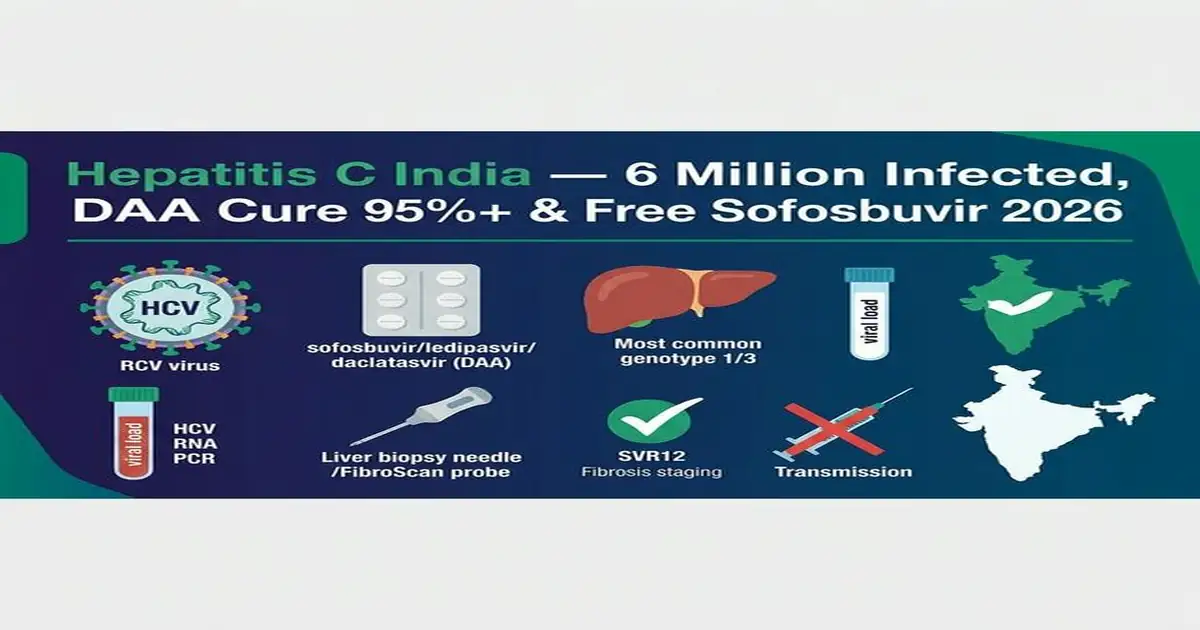
Hepatitis C — Genotypes, DAA Regimens and Treatment Outcomes
| HCV Genotype / Population | India Prevalence | Preferred DAA Regimen | SVR12 Rate | India Cost & Access |
|---|---|---|---|---|
| Genotype 3 (GT3) — most common India | GT3: 50–75% of all Indian HCV infections (North India especially — Punjab, Haryana 60–70% GT3); particularly common in injection drug users (IDU) in Punjab/NE India; GT3 historically the “difficult” genotype — poorer response to older interferon-based therapy; GT3 NOW curable with modern DAAs | Sofosbuvir (SOF) 400mg + Daclatasvir (DCV) 60mg once daily × 12 weeks (24 weeks if cirrhosis + treatment-experienced); EASL/WHO preferred GT3 non-cirrhotic: SOF+DCV 12 weeks (SVR 90–95%); GT3 cirrhotic: SOF+DCV 24 weeks OR SOF+DCV+Ribavirin 12 weeks (add Ribavirin 1000–1200mg/day if weight-based); Sofosbuvir + Velpatasvir (SOF/VEL — Epclusa: pangenotypic): single tablet × 12 weeks — excellent GT3 even-cirrhotic (SVR 95%+); preferred where available | GT3 non-cirrhotic SOF+DCV: SVR12 90–95%; GT3 cirrhotic SOF+DCV 24wk: SVR12 85–90%; GT3 SOF/VEL 12wk: SVR 95%+; GT3 most improved by modern DAAs vs historical interferon era (SVR was only 50–60% with PEG-IFN+RBV for GT3 cirrhotic) | Generic SOF 400mg: ₹80–100/tablet India (Natco Pharma, Cipla, Mylan — Indian generics under voluntary licence from Gilead); Generic DCV 60mg: ₹80–100/tablet; 12-week SOF+DCV course: approximately ₹10,000–15,000 total; NVHCP: provides free SOF+DCV for BPL card holders and enrolled patients at government hospitals; Punjab government: free HCV treatment programme (largest state-level programme — Punjab >1 lakh patients treated by 2024) |
| Genotype 1 (GT1) — second most common | GT1: 20–30% of Indian HCV cases; GT1a and GT1b subtypes; higher prevalence in South India and among non-IDU populations; GT1 was the most common genotype worldwide (Europe, USA) — most trial data from GT1 | Sofosbuvir/Ledipasvir (SOF/LDV — Harvoni equivalent): single tablet 90/400mg once daily × 8 weeks (non-cirrhotic, treatment-naive, HCV RNA <6 million IU/mL) or 12 weeks (all others); GT1 non-cirrhotic: SOF/LDV 12 weeks (SVR 97–99%); OR Glecaprevir/Pibrentasvir (G/P — Maviret): 8 weeks non-cirrhotic GT1 (pangenotypic) — SVR 97–99%; Sofosbuvir/Velpatasvir (SOF/VEL): 12 weeks (pangenotypic — GT1, 2, 3, 4, 5, 6) | GT1 SOF/LDV 12wk: SVR 97–99%; GT1 cirrhotic SOF/LDV ± Ribavirin 12–24wk: SVR 95–97%; GT1 G/P 8wk non-cirrhotic: SVR 99%; essentially ALL GT1 is curable with modern DAAs | Generic SOF/LDV (Ledipasvir 90mg + SOF 400mg) India: ₹200–300/tablet; 12-week course ≈ ₹15,000–25,000; Glecaprevir/Pibrentasvir (AbbVie Maviret) — generic India entry 2024–2025 via voluntary licensing; NVHCP free access for GT1 patients; SOF/LDV preferred GT1 in India due to generic availability and established safety profile |
| Pangenotypic Regimens (GT1–6) | Applicable all genotypes; particularly useful in India where GT testing may be unavailable at district level | Sofosbuvir/Velpatasvir (SOF/VEL — generic Epclusa): 400/100mg once daily × 12 weeks (non-cirrhotic ALL genotypes); 12 weeks + Ribavirin (GT3 cirrhotic) or 24 weeks without RBV; Glecaprevir/Pibrentasvir (G/P): 8 weeks (non-cirrhotic, treatment-naive, all GT); 12 weeks (cirrhotic or treatment-experienced); pangenotypic = treat without genotyping (simplifies India district-level treatment where genotyping labs unavailable) | SOF/VEL ALL GT non-cirrhotic: SVR 98–99%; G/P 8wk non-cirrhotic: SVR 98–100%; paradigm-shifting for resource-limited India: treat-without-genotype approach using pangenotypic DAA → frees up treatment from genotyping prerequisite | Generic SOF/VEL India: ₹200–400/tablet; 12-week course ₹15,000–30,000; increasingly preferred by India’s NVHCP for pangenotypic simplicity; Natco, Cipla, Mylan produce SOF/VEL India; G/P generic India: entering market 2024–2025; price to fall to ₹10,000–20,000 for 8-week course |
| Special Populations — Cirrhosis, HIV, CKD, Post-Transplant | HCV + cirrhosis (decompensated — Child-Pugh B/C): highest mortality risk; urgently need treatment but some regimens contraindicated; HCV + HIV: coinfection — requires drug-drug interaction check with ART; HCV + CKD (<30 mL/min): SOF renal metabolite accumulation — dose adjustment or SOF-free regimens; HCV post-liver transplant: aggressive recurrence; high-priority treatment | Decompensated cirrhosis (Child-Pugh B/C): SOF/VEL ± Ribavirin 24 weeks OR SOF+DCV ± RBV 24 weeks; CONTRAINDICATED: NS3/4A protease inhibitor-containing regimens (simeprevir, paritaprevir, glecaprevir — contraindicated in decompensated — hepatotoxicity); HCV + HIV: SOF-based DAAs generally safe with most ART; check interactions (rifampicin/efavirenz — not with SOF; TDF + SOF — monitor creatinine); HCV + CKD <30: Glecaprevir/Pibrentasvir 8–12 weeks (renal-safe — no SOF; no dose adjustment); SOF-based: use with caution/avoid if eGFR <30; Post-transplant HCV: SOF/LDV or SOF/VEL — calcineurin inhibitor levels need monitoring (cyclosporin + SOF/LDV: increase cyclosporin levels) | HCV + HIV co-infection: SVR equivalent to HCV monoinfection with same DAA regimens; HCV cirrhosis decompensated: SVR 75–85% (lower than compensated) but significant clinical stabilisation even with SVR; CKD G/P: SVR 98%+ in HCV + CKD; post-transplant DAA: SVR 95%+ prevents graft-related HCV recurrence cirrhosis | AIIMS, PGI Chandigarh, SGPGI Lucknow, Tata Memorial Mumbai — expertise in complex HCV (cirrhotic/HIV/renal); free DAAs for HIV-HCV coinfection at ART centres under NACO; NVHCP reimburses DAA for special populations; HCV + HIV = priority treatment under NACO; HIV-viral load and CD4 monitoring concurrent with HCV treatment in HIV coinfected |
| Post-SVR Monitoring & HCC Surveillance | SVR12 (sustained virologic response at 12 weeks after treatment completion = HCV RNA undetectable) = functional cure of HCV; HCV RNA will remain negative lifelong in >99% of patients; SVR12 rate across all modern DAA regimens in India: approximately 95–99% in treatment-naive non-cirrhotic; HCC risk: SVR12 dramatically reduces HCC risk but does NOT eliminate it in patients with pre-existing cirrhosis | Post-SVR monitoring: HCV RNA at 12 weeks post-treatment (SVR12 confirmation); if SVR12 confirmed: HCV is cured; NO further HCV treatment needed; Cirrhosis patients post-SVR: CONTINUE HCC surveillance indefinitely (USS + AFP every 6 months — cirrhosis-related HCC risk persists even after HCV cure; fibro regression occurs but structural cirrhosis persists); FibroScan 1 year post-SVR (may show fibrosis regression — motivating); Reinfection: possible if risk behaviour continues (IDU — ongoing needle sharing); re-treat with same DAA class if reinfected; Varices: endoscopic surveillance for oesophageal varices if cirrhosis; beta-blocker prophylaxis (propranolol/carvedilol) if large varices | SVR = cure; no residual virus; no further treatment; HCC risk at 5 years post-SVR (cirrhotic): 1–3%/year vs 5–8%/year without treatment; liver stiffness regression by FibroScan: median 30–50% improvement at 2 years post-SVR in advanced fibrosis; some patients defibroticise from F3/F4 → F1/F2 at 3–5 years post-SVR (liver regeneration capacity) | Post-SVR: minimum 2 FibroScan tests (baseline + 1 year post-SVR) at government hepatology; USS + AFP every 6 months free at NVHCP-affiliated centres; strong encouragement to stay in follow-up: many India SVR patients lost to post-treatment follow-up — this must improve; HCC surveillance compliance India district level: needs intervention |
Frequently Asked Questions
How does HCV cure with DAAs work — and what is SVR12?
The development of direct-acting antivirals (DAAs) for HCV represents one of the most remarkable pharmacological achievements of the 21st century — transforming a disease that once required 48 weeks of miserable interferon-based treatment with 40–60% success into a 8–12 week cure with >95% success and minimal side effects: How DAAs work — the three target sites: NS5B polymerase inhibitors (sofosbuvir — SOF): HCV is an RNA virus that replicates using its own RNA-dependent RNA polymerase (NS5B); sofosbuvir is a nucleotide analogue prodrug — it is incorporated into HCV RNA chain by NS5B → causes premature chain termination → viral RNA synthesis stops; sofosbuvir is the backbone of virtually all modern HCV treatment and is exquisitely specific to HCV (minimal human polymerase off-target effects); NS5A inhibitors (daclatasvir, ledipasvir, velpatasvir, pibrentasvir): NS5A is an HCV non-structural protein essential for viral replication and assembly; NS5A inhibitors block HCV genome replication and virion assembly; pan-genotypic NS5A inhibitors (velpatasvir, pibrentasvir) cover GT1–6 with high barrier to resistance; NS3/4A protease inhibitors (simeprevir, paritaprevir, glecaprevir): HCV protease (NS3/4A) processes the viral polyprotein into functional proteins; protease inhibitors block this processing → interrupted viral lifecycle; limitation: NS3/4A inhibitors contraindicated in decompensated cirrhosis (hepatotoxicity); combination DAA therapy: combining NS5B + NS5A ± NS3 inhibitors → attacks HCV at multiple simultaneous points → prevents resistance emergence → very high SVR rates. What is SVR12 and what does it mean: SVR (sustained virologic response) = HCV RNA undetectable by PCR at 12 weeks after completing treatment; SVR12 = “achieved SVR at week 12 post-treatment” = CURE; once SVR12 is confirmed: HCV RNA will remain undetectable in >99% of patients lifelong — rare relapses beyond 12 weeks occur in <1%; SVR12 ≠ HCV antibody negativity: anti-HCV antibodies remain positive for life after cure (lifelong immunological memory) — this confuses many patients; a patient with prior HCV infection + SVR12 will have: anti-HCV positive (lifelong); HCV RNA undetectable (cured); this is NOT re-infection if they were recently treated — must test HCV RNA, not anti-HCV, to confirm cure or detect reinfection; SVR12 clinical benefits: marked reduction in cirrhosis progression; 70–75% reduction in HCC incidence even in cirrhotic patients; reduction in liver-related mortality by 50–60%; improvement in extra-hepatic manifestations (HCV cryoglobulinaemia, HCV-associated glomerulonephritis, HCV-associated lymphoma — all improve with SVR). The India SVR12 testing gap: Many Indian patients complete DAA treatment but never return for SVR12 HCV RNA test; without SVR12 confirmation: cannot confirm cure; does not detect the <5% who did not achieve SVR (treatment failure needing re-treatment); NVHCP data: approximately 30–40% of treated patients in India do not return for SVR12 testing; this gap is a major priority; ASHAs and district nurses should remind patients: “Come back ONCE more, 12 weeks after your last tablet, for the blood test that confirms your cure.”
How is HCV transmitted in India — and who should be tested?
Unlike HBV (which India transmits predominantly perinatally and sexually), HCV in India is transmitted overwhelmingly through unsafe injections and blood exposure — making India’s HCV epidemic in many ways an iatrogenic (medically-caused) epidemic that could be prevented entirely: Major HCV transmission routes in India: Unsafe injections by quacks and unqualified practitioners (RMPs — rural medical practitioners): India has an estimated 2.5 million unqualified practitioners; many reuse glass syringes or improperly sterilise plastic syringes between patients; this has been the primary driver of HCV in rural Punjab, Haryana, and UP; “injection culture” — Indian patients often expect and demand injections (even for viral fevers where IV antibiotics are useless) → quack injects multiple patients with the same syringe; Blood transfusion (pre-1993): mandatory HCV donor testing was introduced in India only in the late 1990s–2004 in most states; patients transfused before this era (surgical patients, accident victims, thalassemia patients — frequent transfusions → high HCV risk) have high HCV prevalence; thalassemia patients in India: 30–60% HCV seropositive in older studies (pre-NAT screening era); Haemodialysis patients: historically high HCV transmission in Indian dialysis units due to poor infection control; current HVPCP guidelines: strict HCV isolation protocols for dialysis; Injecting drug users (IDU): Punjab, NE India (Manipur, Nagaland, Mizoram — highest IDU rates India); sharing needles/syringes in IDU communities → explosive HCV spread; NACO needle exchange programme (NSP): free sterile needles for IDU to reduce blood-borne virus transmission; Tattooing, body piercing with unsterile equipment: significant route particularly in tribal communities and young urban populations; healthcare worker occupational exposure: needle-stick injury → HCV transmission risk 0–7%; lower than HBV; post-exposure prophylaxis (PEP): no effective PEP for HCV (monitor for 6 months with HCV RNA PCR); Sexual transmission: low efficiency for HCV (unlike HBV/HIV) in heterosexual monogamous — higher in HIV-positive MSM (men who have sex with men) with co-infection. Who should be tested for HCV in India — recommended testing groups: All adults who received blood transfusions before 2004; anyone who has ever used injecting drugs (even once — “one-time experimentation” — high IDU-peer HCV transmission); patients on haemodialysis or with CKD (chronic kidney disease); healthcare workers (annual HCV testing recommended); HIV-positive individuals (all → HCV coinfection screening); patients with unexplained elevated ALT/AST; cirrhosis or liver disease of unknown cause; thalassemia major and sickle cell patients (frequent transfusions — pre-NAT testing era); sexual partners of HCV-positive persons (low risk but consider); ASHA/ANM community identification of: former injection quack patients in high-prevalence villages (Punjab, Haryana screening camps effective); General population testing: NVHCP provides free anti-HCV testing at government hospitals — no high-risk behaviour required to qualify for testing; simply ask for “Hepatitis C blood test” at any government hospital or ayushman bharat health centre.
What to Read Next
- Hepatitis B — Compare HBV vs HCV: HBV Not Curable (lifetime TDF) vs HCV Fully Curable (12-week DAA); Both Cause Cirrhosis + HCC
- Liver Cirrhosis — HCV-Cirrhosis: MELD Score; Varices Banding; TIPS; Liver Transplant Waitlist India; DAA SVR Stabilises Decompensation
- Fatty Liver — NAFLD + HCV Coinfection Accelerates Fibrosis; DAA Cures HCV Component; Weight Loss + TDF + Lifestyle for Dual Pathology
- Kidney — HCV + CKD: Glecaprevir/Pibrentasvir (G/P) Safe in eGFR<30; No SOF in Renal Failure; NVHCP Funds G/P for CKD-HCV
- TB — TB + HCV Coinfection: Rifampicin Reduces SOF/DCV Levels → Switch Anti-TB; Complete HCV Treatment After TB if Simultaneous Treatment Poses DDI
A 58-year-old woman from a village in Punjab had a blood transfusion in 1991 after a caesarean section. She was never tested. In 2023 — 32 years later — she develops ascites (abdominal fluid). Liver USS: cirrhosis. Anti-HCV: positive. HCV RNA: 1.8 million IU/mL. Genotype 3. She starts SOF + DCV (free, from the district civil hospital hepatology ward). At 12 weeks post-treatment: HCV RNA undetectable. SVR12 confirmed. She cried at the clinic. Her HCV is cured. But her cirrhosis is Real and permanent — it will not fully reverse. HCC surveillance USS will continue every 6 months for the rest of her life. She could have been cured 30 years earlier if she had been tested. The blood is on no one’s hands — but the future belongs to the 12 million still untested in India who can still be found in time.
About This Guide: Written by the StudyHub Health Editorial Team (studyhub.net.in) based on EASL HCV Clinical Practice Guidelines 2022 (updated 2024), WHO HCV Testing & Treatment Guidance 2024, India NVHCP operational report 2023, and Lancet Infectious Diseases HCV India burden data 2023. Last updated: March 2026.
✅ Hepatitis C is Curable — Free Treatment Available: If you have ever had a blood transfusion (especially before 2004), used injections from unqualified practitioners, or used injecting drugs — get a free anti-HCV test at any government hospital. If positive: free HCV RNA testing and free DAA treatment (sofosbuvir-based, 12 weeks, ₹0 under NVHCP) will cure you in >95% of cases. Come back for your SVR12 test 12 weeks after finishing.
💊 Ask for Generic Sofosbuvir if Cost Is a Barrier: Even if you are not eligible for free NVHCP treatment, generic sofosbuvir (Natco/Cipla/Mylan — same molecule as Sovaldi) costs ₹80–100/tablet in India. A full 12-week course of SOF+DCV = approximately ₹10,000–15,000. Compare this to ₹70 lakh for the branded original in the USA. India’s generic pharmaceutical industry has democratised HCV cure. Demand the generic.
⚕️ Medical Disclaimer: This article provides general educational information about Hepatitis C. All treatment decisions — HCV genotyping, DAA selection, special population management (cirrhosis, HIV, CKD), and post-SVR surveillance — require qualified hepatologist or gastroenterologist assessment. Do not self-prescribe DAA without medical supervision.