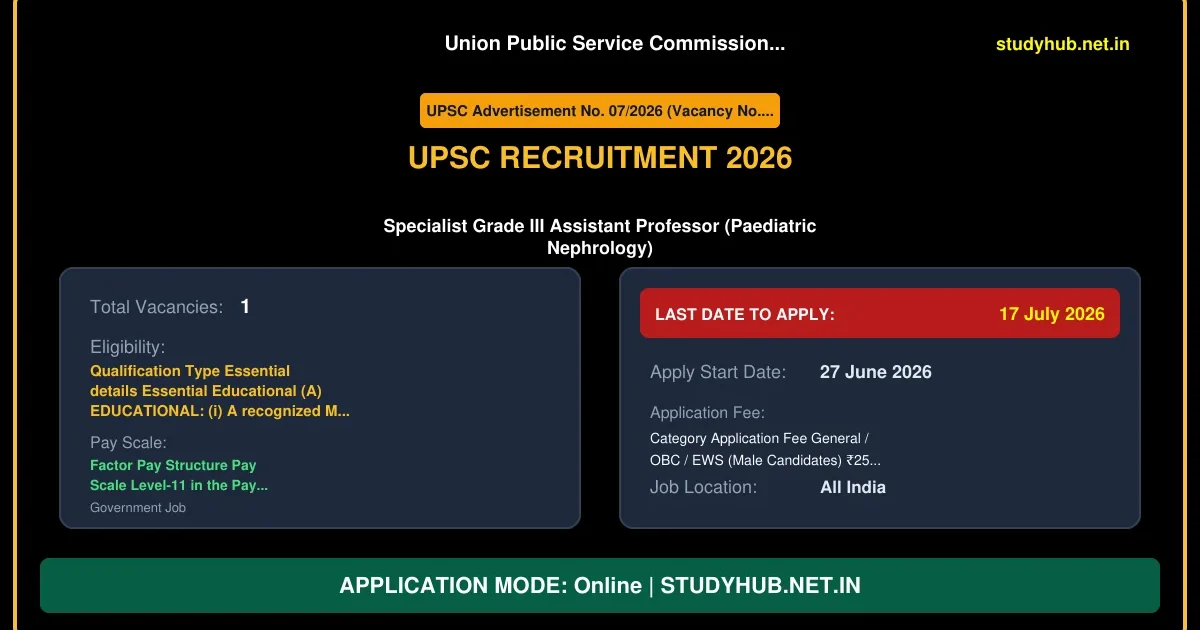
UPSC Specialist Grade III Assistant Professor (Paediatric Nephrology) Recruitment 2026 – 1 Vacancy, Apply Online 1:27 pm July 4, 2026
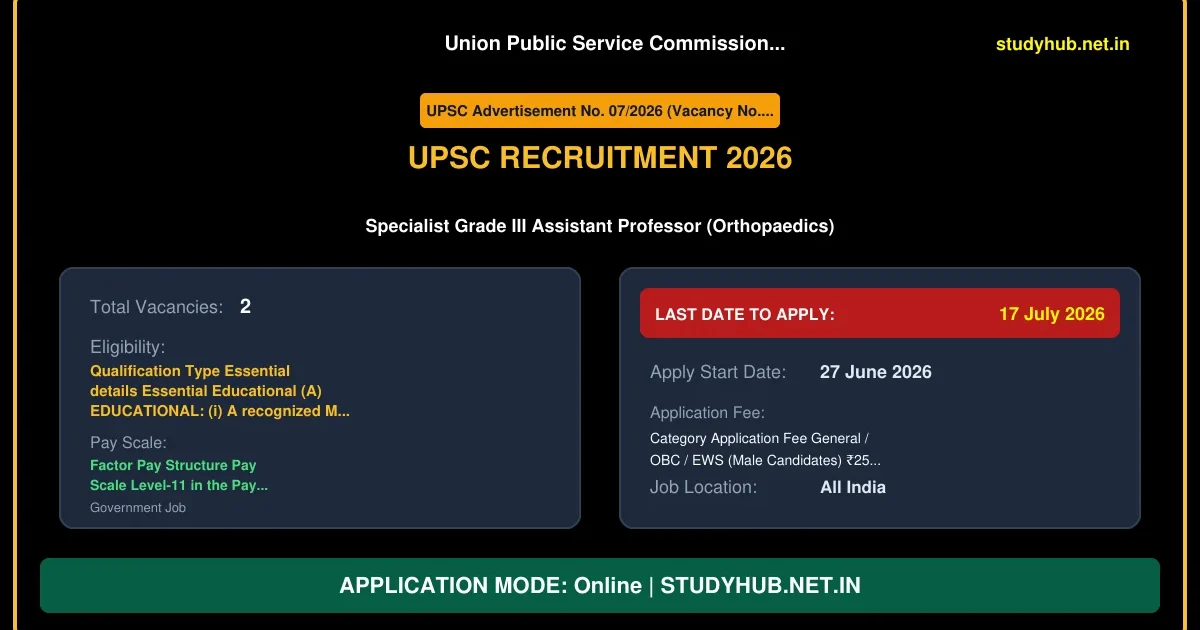
UPSC Specialist Grade III Assistant Professor (Orthopaedics) Recruitment 2026 – 2 Vacancy, Apply Online 1:23 pm July 4, 2026
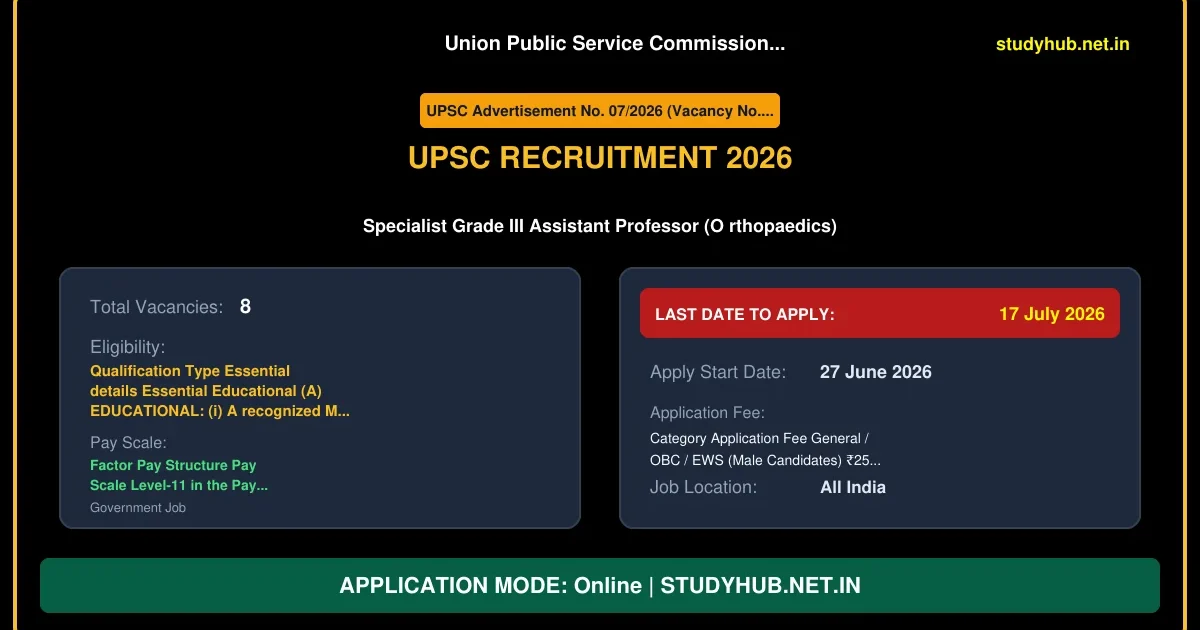
UPSC Specialist Grade III Assistant Professor (O rthopaedics) Recruitment 2026 – 8 Vacancy, Apply Online 1:18 pm July 4, 2026
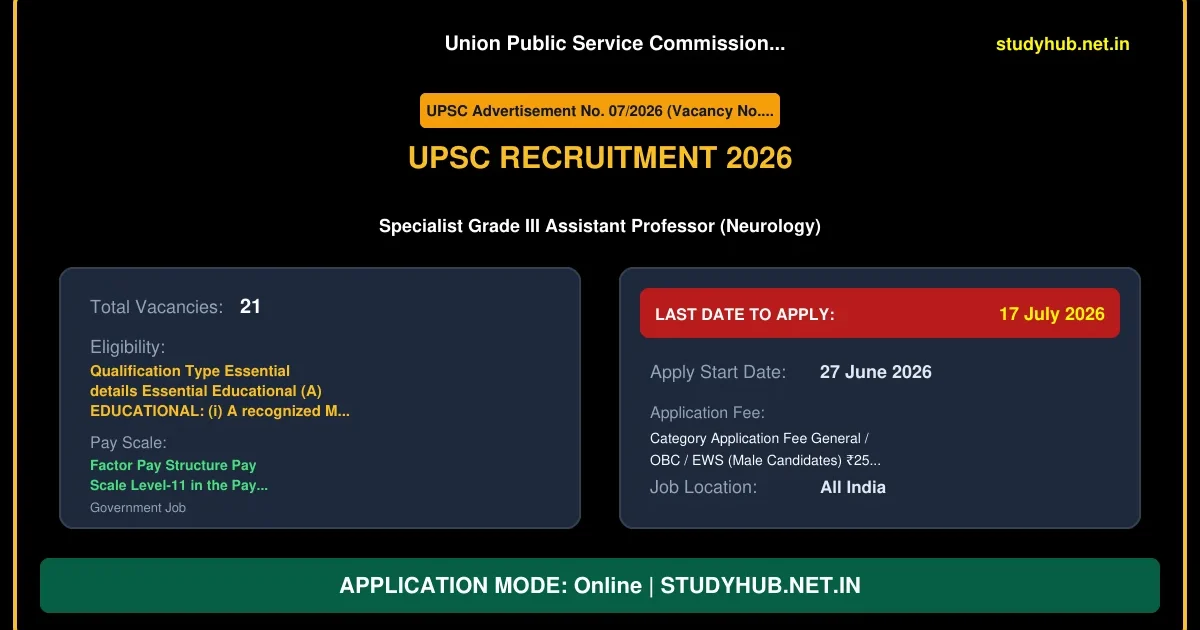
UPSC Specialist Grade III Assistant Professor (Neurology) Recruitment 2026 – 21 Vacancy, Apply Online 1:13 pm July 4, 2026
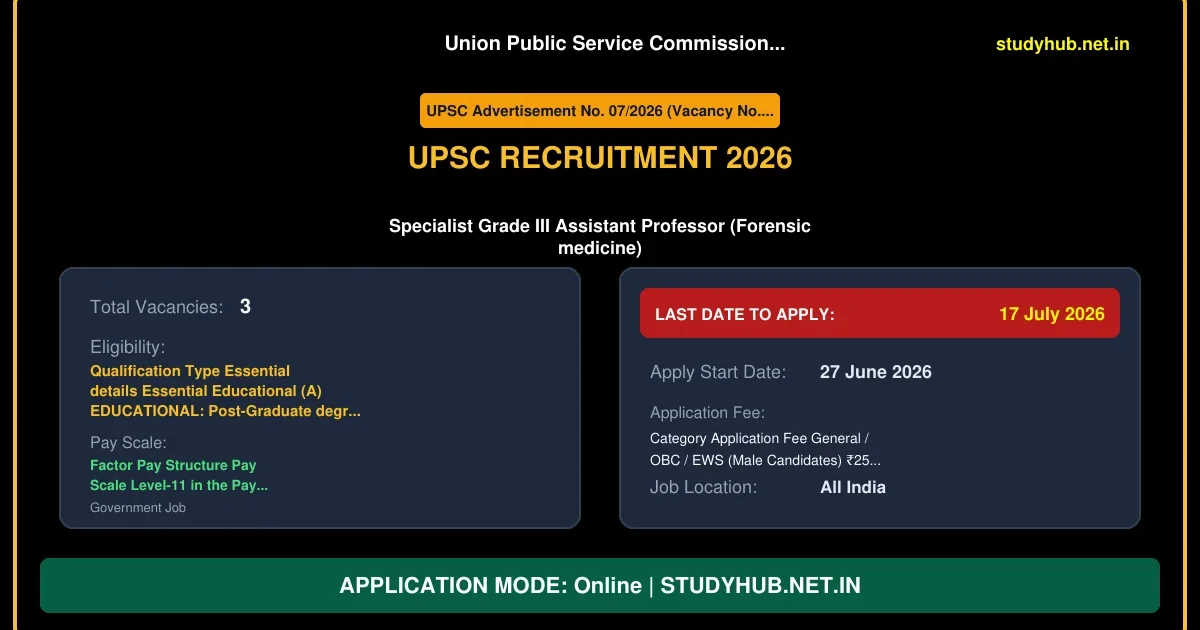
UPSC Specialist Grade III Assistant Professor (Forensic medicine) Recruitment 2026 – 3 Vacancy, Apply Online 1:08 pm July 4, 2026
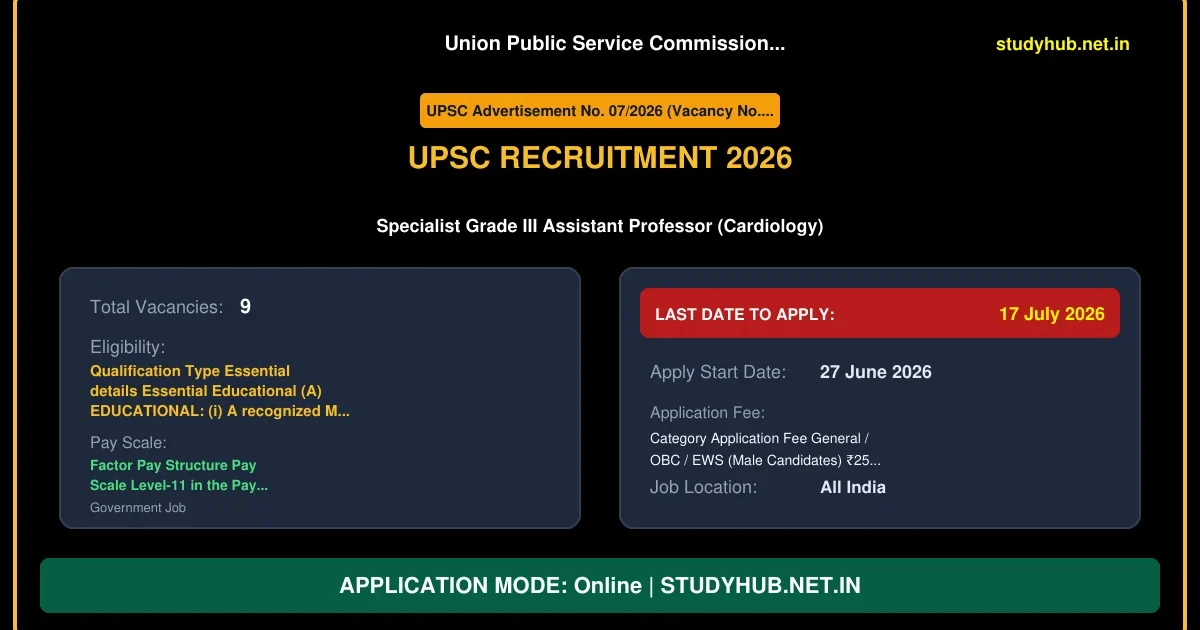
UPSC Specialist Grade III Assistant Professor (Cardiology) Recruitment 2026 – 9 Vacancy, Apply Online 1:03 pm July 4, 2026
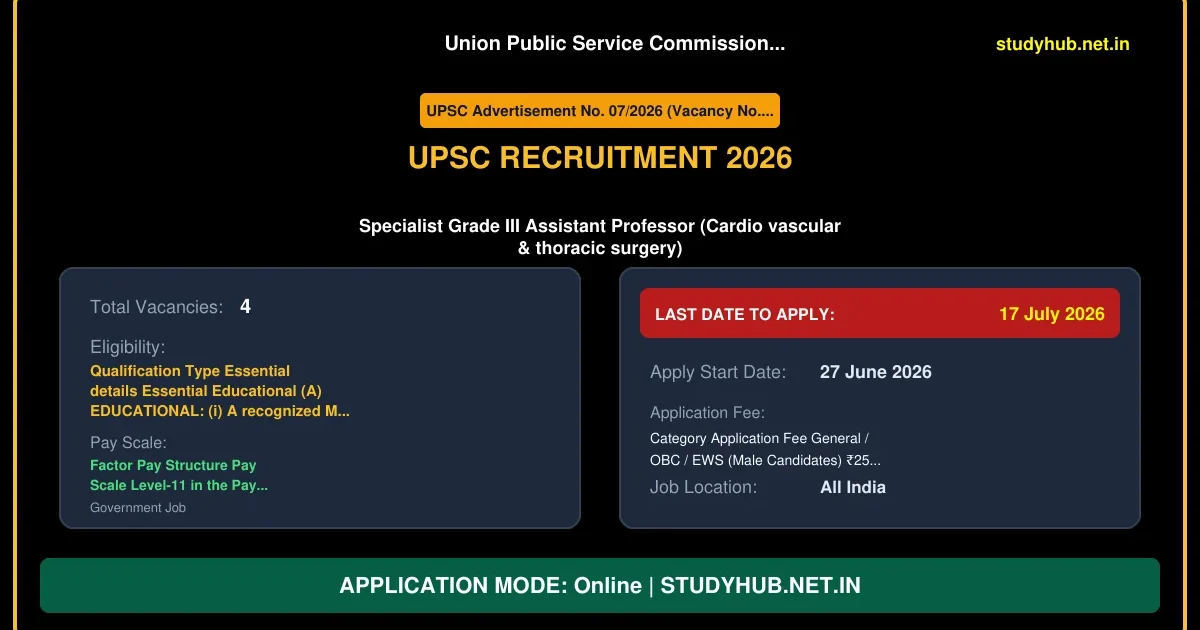
UPSC Specialist Grade III Assistant Professor (Cardio vascular & thoracic surgery) Recruitment 2026 – 4 Vacancy, Apply Online 12:58 pm July 4, 2026
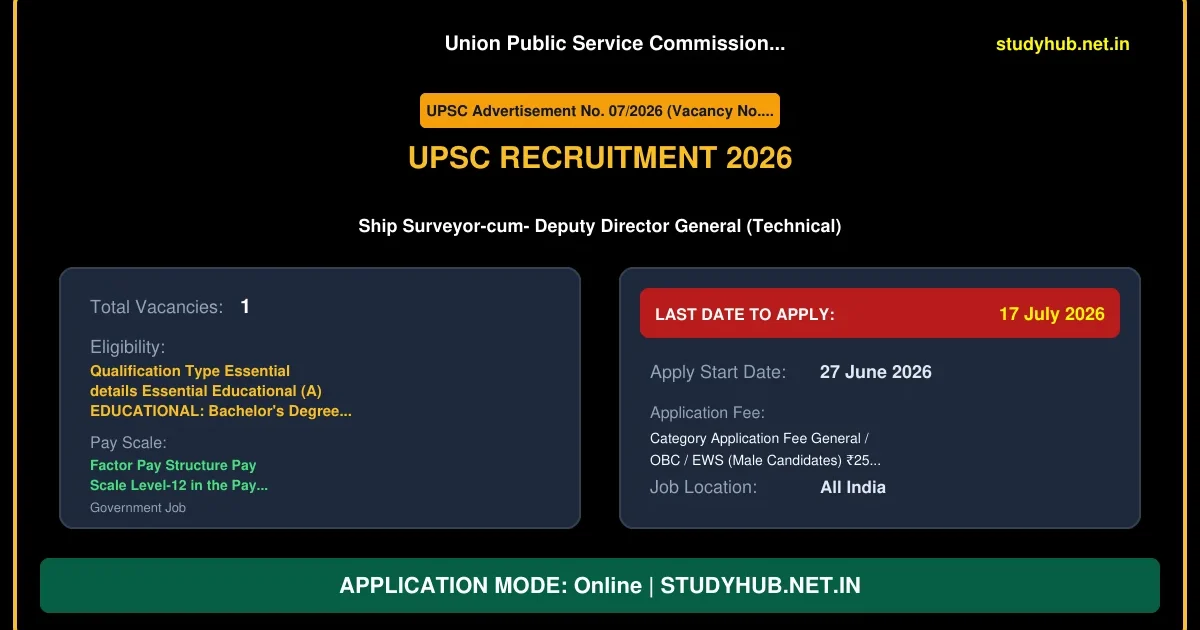
UPSC Ship Surveyor-cum- Deputy Director General (Technical) Recruitment 2026 – 1 Vacancy, Apply Online 12:54 pm July 4, 2026
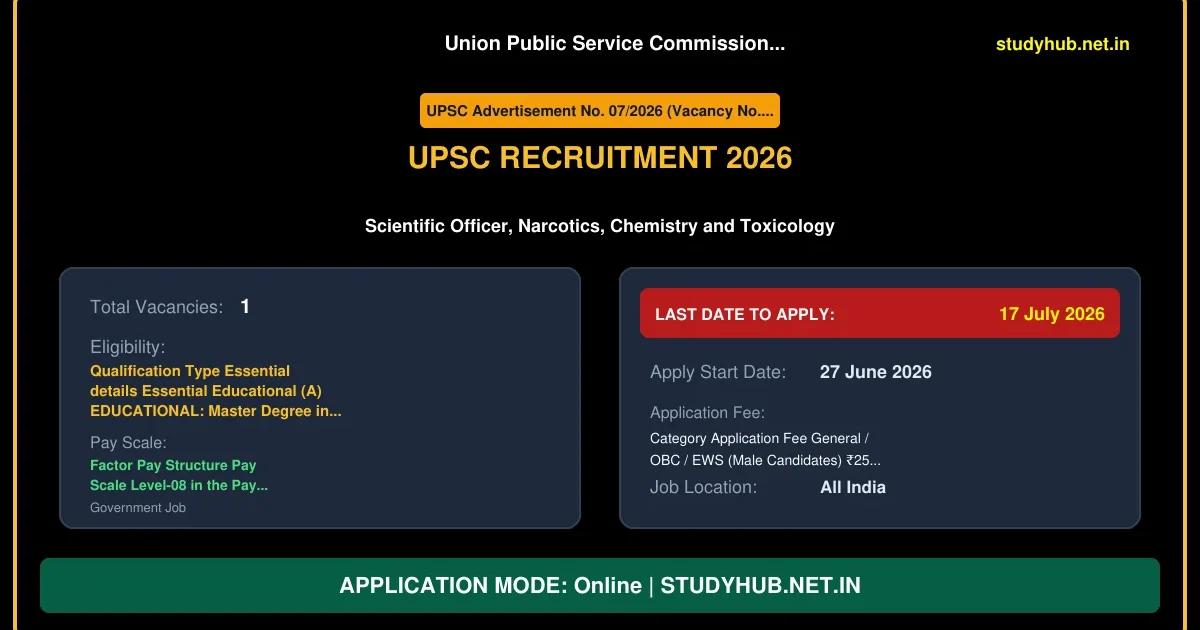
UPSC Scientific Officer, Narcotics, Chemistry and Toxicology Recruitment 2026 – 1 Vacancy, Apply Online 12:44 pm July 4, 2026