
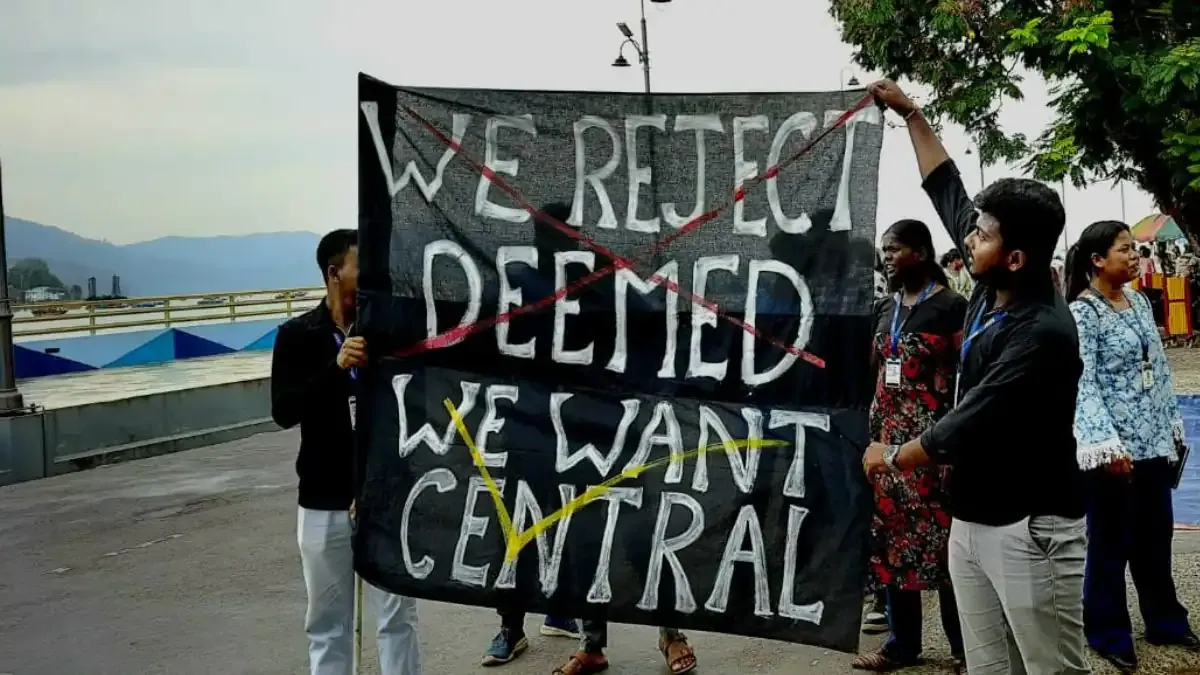
In the picturesque Andaman and Nicobar Islands, students are rallying together in a bold stand against a controversial move that could reshape their academic futures. Protests have erupted at Jawaharlal Nehru Rajkeeya Mahavidyalaya, igniting a fierce debate surrounding the proposed shift from Pondicherry University to the lesser-known Netaji Subhash Chandra Bose Institute of Higher Learning.
- Students fear educational future under new university.
- Resistance grows as protests extend across multiple campuses.
- Local administration claims no fee hikes will impact students.
The crux of the issue lies in the planned transfer of seven colleges currently affiliated with Pondicherry University to NSCBIHL. Students, who enrolled with the expectation of earning degrees from the well-regarded Pondicherry University, are suddenly facing an uncertain future. Their concerns amplify with worries about possible fee hikes and modifications to reservation policies, creating an atmosphere of turmoil among the student body.
Unfolding Crisis in Andaman Education
The wave of protests began on February 3, as students sought to voice their objection to the abrupt change. They felt blindsided by a government notification formalizing this shift, which was issued without any adequate communication with the affected students. “We took admission under Pondicherry University and completed our first semester exams. Suddenly, we found out our university affiliation had changed,” lamented an upset student.
Balancing Recognition and Affordability
Many students fear that a diploma from a deemed university may not hold the same recognition as a degree from a central university. This concern is particularly pressing for those hailing from financially constrained backgrounds, where affordability of education plays a crucial role in their academic journey. “If fees go up, many of us won’t be able to afford to continue our education,” warned another participating student.
As students continue their sit-in protests, growing apprehension about the future looms large. “We are not just fighting for ourselves but for future generations of students,” expressed one determined protester. Their resolute stance aims not only to protect their current educational framework but to create awareness about the critical implications of such developments.
Potential Consequences and the Call for Action
As discussions with officials remain unproductive, students have voiced their demands for a separate university rather than converting existing colleges. “The new university could improve our education system, but why alter what already works?” questioned a student leader. This clarion call for clarity and respect for the voices of students underlines the importance of inclusivity in educational reform.