Ocean Resources
The ocean is one of the most valuable natural resources on Earth. It gives us food — mainly fish and shellfish — roughly 200 billion pounds of it is caught every year from the seas around the world.
Ocean resources provide jobs, goods, and services to billions of people. Their economic value is massive. What do we get from the ocean? Food, fuel, renewable energy, minerals, sand, gravel, and tourism — all of this comes from the sea in one way or another.
The ocean is mined for minerals — salt, sand, gravel, and deep-sea deposits of manganese, copper, nickel, iron, and cobalt. It is drilled for crude oil and natural gas. Offshore oil and gas production makes up a significant chunk of the global energy supply.
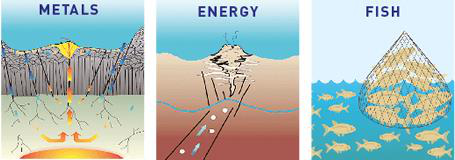
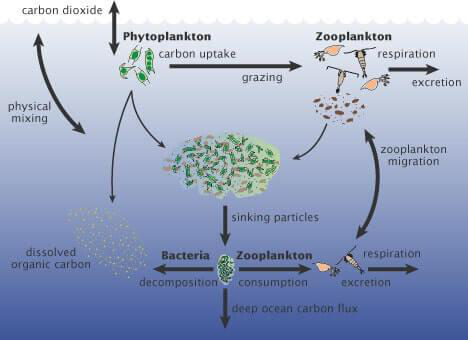
The ocean also plays a big role in removing carbon dioxide from the atmosphere and providing oxygen. Marine plants and phytoplankton produce roughly half of the world’s oxygen. The ocean regulates Earth’s climate by absorbing heat and distributing it through currents.
Ocean Resources can be broadly classified into two categories –
- Biotic Resources – Planktons, Nektons, Benthos
- Abiotic Resources – Mineral, Energy
Biotic Resources
- Biotic means living. Abiotic means non-living.
- The biotic resources of the sea include fishes, crustaceans (crabs, prawns, lobsters), molluscs (oysters, squids), corals, reptiles (sea turtles, sea snakes), and mammals (whales, dolphins, seals) etc.
- These organisms are found at different depths and in different zones of the ocean, from the sunlit surface to the dark ocean floor.
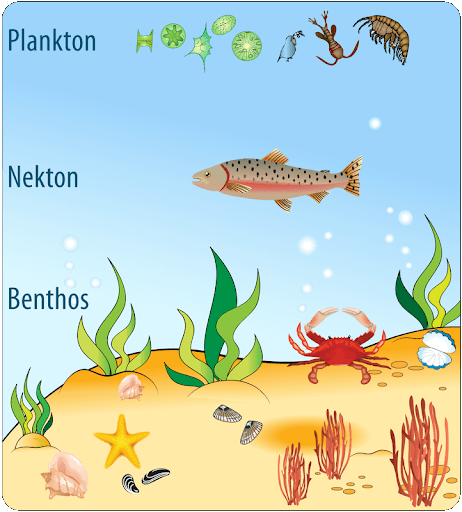
Planktons
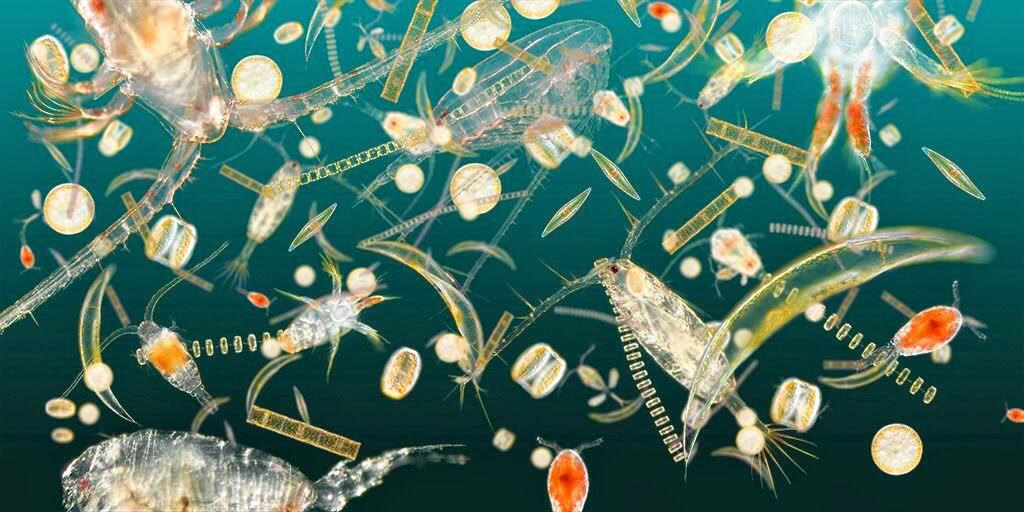
Plankton are tiny organisms found in water that cannot swim against the current on their own. They just float and drift wherever the water takes them.
- Phytoplanktons – floating and drifting micro plants. They are autotrophs (they make their own food through photosynthesis). E.g. – algae and diatoms. They are the base of the entire ocean food chain and produce a large portion of Earth’s oxygen.
- Zooplanktons – floating and drifting micro animals. They feed on phytoplankton and in turn become food for small fish. E.g. – copepods, krill, jellyfish larvae.
Nektons
Nekton (or swimmers) are organisms that can swim and move on their own, independent of currents. They move freely at various depths of the ocean.
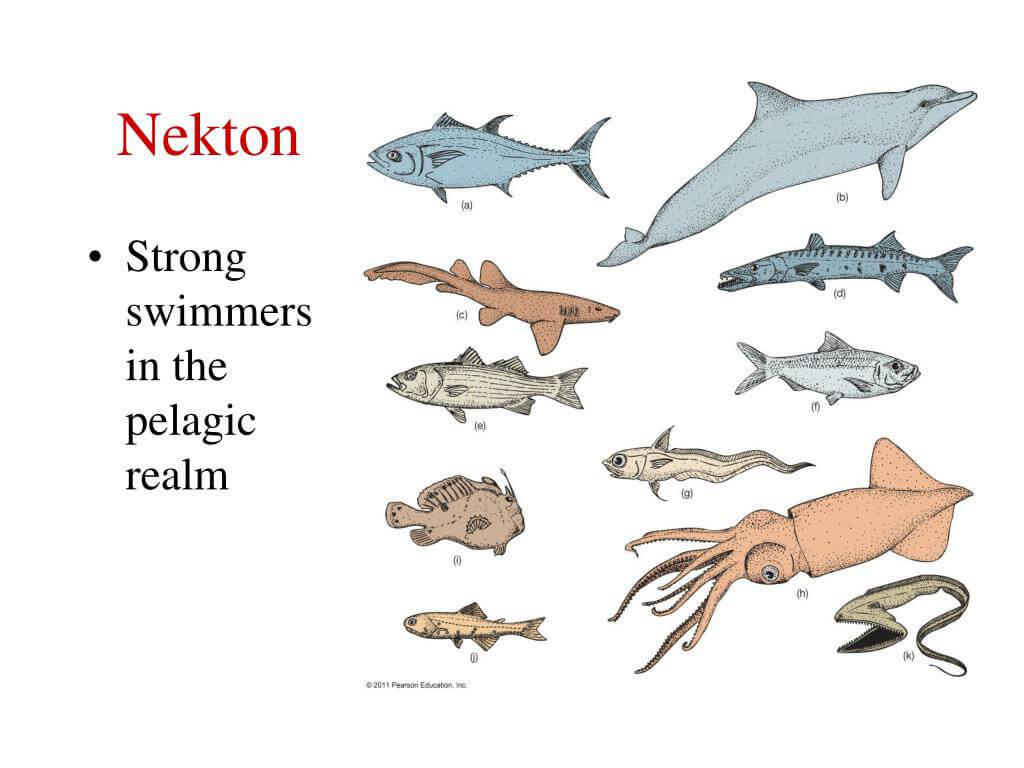
Nektons include –
- Fishes – pelagic, demersal
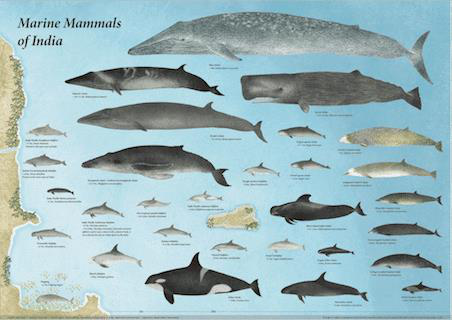
- Mammals – dolphin, blue whale, seals, sea lions
Fishes
- Pelagic fish live in the pelagic zone of the ocean — they are neither close to the bottom nor near the shore. They swim in the open water column. E.g. – tuna, mackerel, sardines, herring.
- Demersal fish live on or near the bottom of the ocean. E.g. – cod, flatfish, halibut. They are also called bottom-dwelling fish and are usually caught by trawling.
Benthos
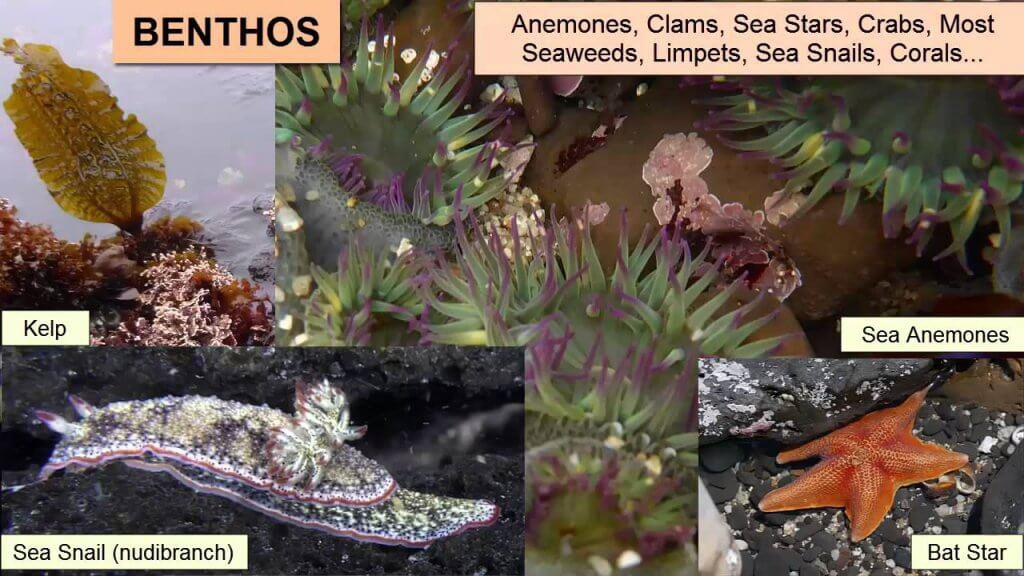
Benthos is the community of organisms that live on, in, or near the seabed (the benthic zone). This community is found everywhere — from tidal pools along the shore, out to the continental shelf, and all the way down to the abyssal depths.
Benthos are of two types –
- Mobile – organisms that can move along the seafloor. E.g. – crabs, lobsters, sea urchins, starfish.
- Immobile (sessile) – organisms fixed to one spot on the seafloor. E.g. – sponges, corals, barnacles, oysters.
Mineral Reserves
The ocean holds minerals in three forms:
- Minerals dissolved in seawater
- Continental Shelf and Slope Deposits
- Deep ocean bottom deposits
Mineral dissolved in sea-water
Seawater itself contains many dissolved minerals. The main ones are:
- Salt (sodium chloride) — the most abundant dissolved mineral
- Bromine
- Magnesium
- Gold — present in extremely tiny quantities, not economically viable to extract yet
- Zinc
- Uranium
- Thorium
Currently, only salt, bromine, and magnesium are extracted commercially from seawater on a large scale. Technologies for extracting uranium from seawater are being researched in countries like Japan and India.
Continental Shelf and Slope Deposits
- Sulfur – associated with marine volcanism. E.g. Gulf of Mexico is a rich source of sulfur.
- Magnetite reserves are found along the circum-Pacific volcanic belt.
- Monazite sand (a source of thorium) – found along the Kerala coast in India. India’s Kerala coast has one of the world’s largest deposits of monazite.
- Gold – Alaska
- Zircon – Brazil, Australia
- Diamond – South Africa (offshore diamond mining is a significant industry along the Namibian and South African coast)
- Calcium and Phosphate – rich deposits found along the Peruvian coast
- Sand and gravel – these are significant building materials and are widely found on the beds of continental shelves all over the world
- Fishes caught from continental shelves are rich in nitrate and phosphate, have high protein content, and also have medicinal use
- Pearls – formed inside oysters, harvested from continental shelf waters in the Persian Gulf, Japan, and India
Deep ocean bottom deposits
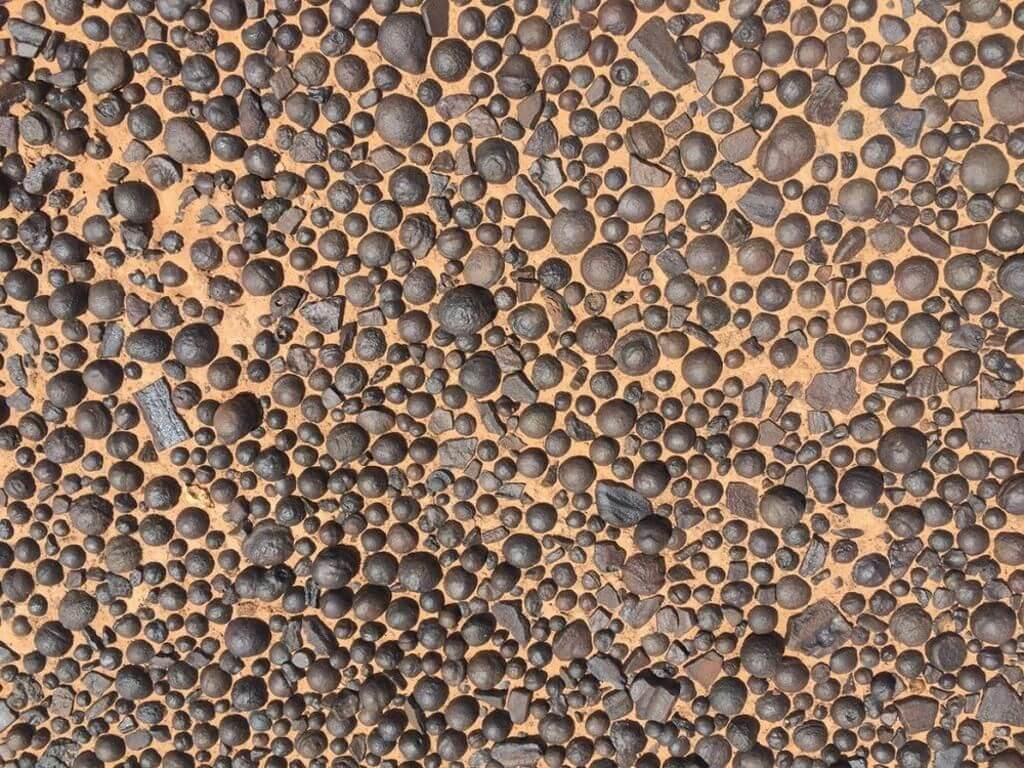
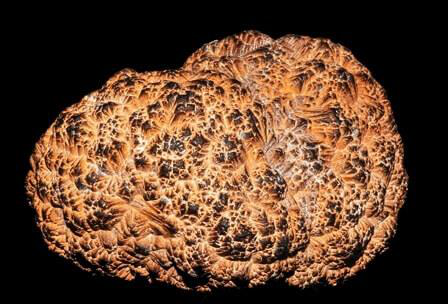
- Manganese nodules – these contain several minerals like nickel, copper, cobalt, lead, zinc etc. The maximum percentage of iron and manganese is found in them. They are scattered across vast areas of the deep ocean floor.
- Cobalt-rich crusts – marine deposits associated with seamounts and guyots (flat-topped seamounts).
- Phosphorite nodules – found in the form of phosphoritic modules on shallow seabeds.
- Polymetallic nodules – these are rounded lumps of manganese and iron hydroxides that cover large areas of the seafloor. They are most abundant on abyssal plains. Each nodule takes millions of years to form — they grow at a rate of just a few millimetres per million years.
- The Clarion-Clipperton Zone (CCZ) in the central Pacific Ocean has the densest concentration of polymetallic nodules on earth and is the main target for deep-sea mining companies.
- India holds exploration contracts with the International Seabed Authority (ISA) for polymetallic nodule exploration in the Central Indian Ocean Basin. Under the Deep Ocean Mission, India’s National Institute of Ocean Technology (NIOT) conducted successful exploratory mining trials using the ‘Varaha-3’ machine in the Andaman Sea in 2024.
Energy reserves
The ocean holds both renewable and non-renewable energy sources:
- Renewable – OTEC, Wave energy, Tidal energy, Offshore Wind energy
- Non-Renewable – Gas hydrates, Mineral oil, Natural gas
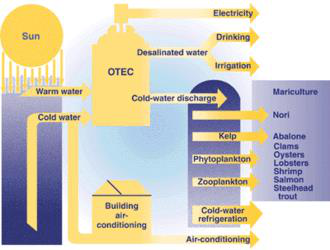
Ocean thermal energy conversion (OTEC) –
- OTEC uses the temperature difference between the cooler deep water and the warmer surface water to run a heat engine and produce electricity.
- The surface water in tropical areas is usually around 25-28°C while water at 1000 metres depth is about 4-5°C. This temperature gap is what drives the system.
- The problem with OTEC is that the temperature difference is small (around 20°C), so the thermal efficiency is low. This makes it expensive compared to other energy sources.
- Research is ongoing in Japan, South Korea, and India. Apart from electricity, OTEC plants can also be used for desalination and cold-water aquaculture.
Wave Energy –
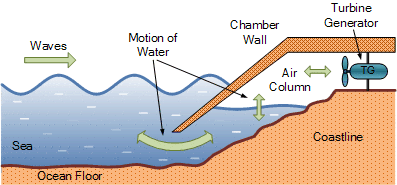
- Wave energy is produced when electricity generators are placed on the ocean surface. The energy captured is mostly used for desalination plants, power plants, and water pumps.
- How much energy you get depends on wave height, wave speed, wavelength, and water density.
- Wave energy is still in the development stage compared to tidal energy, but pilot projects are running in the US, Europe, and Australia. Commercial-scale deployment is expected after 2028.
Tidal energy –
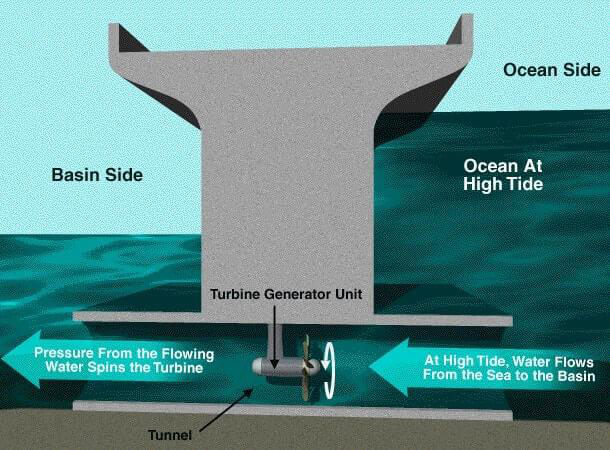
- Tidal energy is produced using tidal energy generators. Large underwater turbines are placed in areas with strong tidal movements. These turbines capture the kinetic energy of the tides to produce electricity.
- Tidal energy is the most mature ocean energy technology right now. The MeyGen project in Scotland (UK) is the world’s largest tidal stream project and has been setting production records.
- A big advantage of tidal energy is predictability — unlike wind and solar, tides follow a fixed schedule and can be predicted years in advance.
Offshore Wind energy –
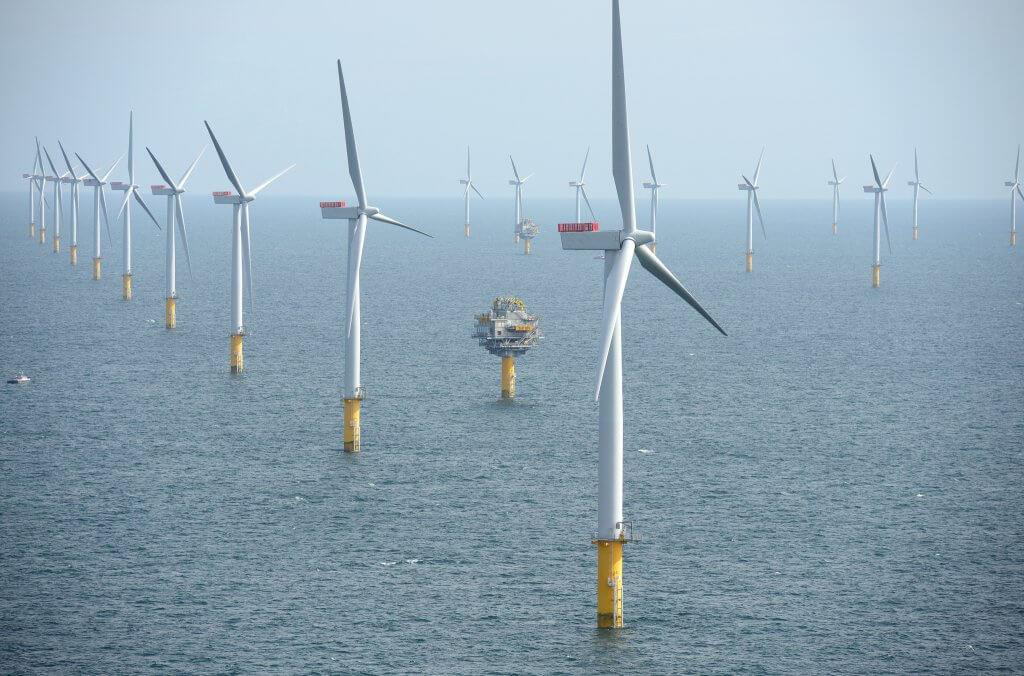
- Offshore wind power means building wind farms in bodies of water to generate electricity from wind.
- Wind speeds over the open ocean are stronger and more consistent compared to on land. So offshore wind farms produce more electricity per turbine.
- Offshore wind has grown rapidly in Europe, China, and the US. As of 2025, global offshore wind capacity has crossed 75 GW, with China leading in new installations. India has started exploring offshore wind potential along the coasts of Gujarat and Tamil Nadu.
Blue Economy
- The concept of Blue Economy was introduced by Gunter Pauli in his 2010 book — “The Blue Economy: 10 years, 100 innovations, 100 million jobs”.
- In simple terms, it means sustainable use of ocean resources for economic growth, better livelihoods and jobs, while keeping the ocean ecosystem healthy.
- The idea is to green the ocean development strategies — get higher productivity out of the oceans but also conserve the ocean’s health at the same time. Don’t just exploit, use it wisely.
Blue Economy covers several sectors –
- Renewable Energy: Sustainable marine energy (tidal, wave, OTEC, offshore wind) can play a big role in social and economic development.
- Fisheries: If done sustainably, fisheries can generate more revenue, produce more fish in the long run, and help restore depleted fish stocks.
- Maritime Transport: Over 80% of international goods traded globally are transported by sea. Shipping is the backbone of global trade.
- Tourism: Ocean and coastal tourism brings jobs and economic growth to coastal communities.
- Climate Change: Oceans are an important carbon sink (blue carbon) and help in fighting climate change by absorbing CO2.
- Waste Management: Better waste management on land directly helps the oceans recover from pollution.
- Blue Economy puts emphasis on combining ocean economic development with social inclusion, environmental sustainability, and innovative business models.
- This is reflected in Sustainable Development Goal 14 (SDG 14), which calls on countries to conserve and sustainably use the oceans, seas, and marine resources.
Need for Blue Economy
- Oceans cover three-quarters of the Earth’s surface, hold 97% of the Earth’s water, and represent 99% of the living space on the planet by volume.
- They protect biodiversity, keep the planet cool, and absorb about 30% of global CO2 emissions. Without the oceans absorbing this CO2, the atmosphere would be far warmer than it is today.
- At least 3-5% of global GDP comes from the oceans. Some estimates put this figure even higher when you include coastal tourism and maritime transport.
- Blue economy, through sustainable use of the oceans, has huge potential for boosting economic growth — providing opportunities for income, jobs, food security, and energy diversification.
- It can support new resources for energy, new drugs and valuable chemicals, protein-rich food, deep-sea minerals, and national security.
- It is being called the next sunrise sector — one of the fastest growing areas of the global economy.
Challenges
- Sea-borne threats – piracy, armed robbery, maritime terrorism, illegal trade in crude oil, arms trafficking, drug trafficking, human trafficking, and smuggling of contraband goods.
- Natural Disasters – tsunamis, cyclones, hurricanes, and typhoons leave thousands of people stranded and destroy property worth millions every year.
- Man-Made problems – oil spills, climate change, and industrial dumping continue to threaten the stability of the maritime environment. The Deepwater Horizon oil spill (2010) in the Gulf of Mexico was one of the worst environmental disasters in history.
- Impact of climate change – changes in sea temperature, rising acidity of ocean water, and sea-level rise threaten marine life, habitats, and the coastal communities that depend on them.
- Marine pollution – excess nutrients from untreated sewage, agricultural runoff, and marine debris such as plastics. Every year, an estimated 8-12 million tonnes of plastic enters the ocean.
- Overexploitation of marine resources – illegal, unreported, and unregulated (IUU) fishing is one of the biggest threats. According to the FAO, about one-third of the world’s fish stocks are already overfished.
Blue Economy for India
- Blue economy presents India with a massive opportunity to meet its national socio-economic goals as well as strengthen connectivity with its neighbours.
- It can help in generating livelihoods, achieving energy security, building ecological resilience, and improving health and living standards of coastal communities.
- Blue economy would support the Indian government’s efforts to achieve the SDGs of hunger and poverty eradication along with sustainable use of marine resources by 2030.
- India has a long coastline of 7,517 km covering nine states and two union territories — with an Exclusive Economic Zone (EEZ) of 2.02 million sq. km. This gives India one of the largest maritime zones in the world.
- The marine services sector could serve as the backbone of India’s blue economy.
- The Indian Ocean is a major conduit of trade — as much as 80% of global oil trade passes through it. Whoever controls the Indian Ocean’s sea lanes controls a significant chunk of global energy supply.
- Better connectivity in the Indian Ocean region will cut transport costs and reduce maritime wastage of resources, making trade more sustainable and cost-effective.
- India is now positioning the Blue Economy as a core pillar of its Viksit Bharat 2047 vision, targeting a $100 billion blue economy.
Developments Initiated by India
Sagarmala Project
- The Sagarmala project is the strategic initiative for port-led development through the use of IT-enabled services for modernization of ports.
- The project aims at developing inland waterways and coastal shipping to revolutionize maritime logistics, create millions of new jobs, and reduce logistics costs.
- It focuses on the development of coastal communities and people in the sustainable use of ocean resources, modern fishing techniques, and coastal tourism.
- Latest update: As of 2025-26, 845 projects worth about ₹6.06 lakh crore have been identified under Sagarmala. Of these, 315 projects (worth ₹1.57 lakh crore) have been completed. The average vessel turnaround time at Indian ports has come down from 96 hours (2014) to about 49.5 hours (2025).
- Sagarmala 2.0 has been launched with a budget of ₹85,482 crore to further modernize ports, improve connectivity, and expand inland waterways. In FY 2025-26, India’s major ports handled a record 915 million tonnes of cargo.
Other Key Initiatives
- O-SMART (Ocean Services, Modelling, Application, Resources and Technology) — India’s umbrella scheme for the regulated use of oceans and marine resources for sustainable development.
- Integrated Coastal Zone Management (ICZM) — focuses on conservation of coastal and marine resources and improving livelihood opportunities for coastal communities.
- Development of Coastal Economic Zones (CEZ) under Sagarmala — these would become centres of the blue economy, where industries and townships that depend on the sea will contribute to global trade.
- India has a National Fisheries Policy for promoting the ‘Blue Growth Initiative’ which focuses on the sustainable use of fisheries wealth from marine and other aquatic resources.
Deep Ocean Mission
- India’s Deep Ocean Mission (DOM) is the main programme for exploring and using deep-sea resources. It was launched by the Ministry of Earth Sciences.
- A flagship project under this mission is MATSYA-6000 — an indigenous manned submersible designed to carry three people to a depth of 6,000 metres. The design and system engineering is complete, and wet tests were successfully done in early 2025.
- India holds contracts with the International Seabed Authority (ISA) for polymetallic nodule exploration in the Central Indian Ocean Basin and polymetallic sulphide exploration along the Carlsberg Ridge in the Indian Ocean.
- In 2025, the government introduced the Merchant Shipping Bill 2025 and the Indian Ports Bill 2025 to modernize old colonial-era maritime laws and bring India’s maritime sector in line with global standards.
FAQs
What are ocean resources?
Ocean resources are the materials and services that humans obtain from the ocean. They include food (fish, shellfish), minerals (salt, manganese, copper, nickel), energy (oil, gas, tidal, wave, wind), and ecological services (carbon absorption, climate regulation). They are classified into biotic (living) and abiotic (non-living) resources.
What are biotic and abiotic resources of the ocean?
Biotic resources are the living organisms of the ocean — plankton (phytoplankton, zooplankton), nekton (fish, dolphins, whales), and benthos (crabs, corals, sponges). Abiotic resources are the non-living components — minerals dissolved in seawater, continental shelf deposits, deep-sea polymetallic nodules, and energy sources like oil, gas, and renewable marine energy.
What are polymetallic nodules?
Polymetallic nodules are rounded lumps of manganese and iron hydroxides found on the deep ocean floor, mostly on abyssal plains. They contain valuable minerals like nickel, copper, cobalt, and manganese. The Clarion-Clipperton Zone in the Pacific has the densest concentration. India holds exploration contracts for polymetallic nodules in the Central Indian Ocean Basin.
What is the Blue Economy?
Blue Economy is the sustainable use of ocean resources for economic growth, improved livelihoods, and ocean ecosystem health. The concept was introduced by Gunter Pauli in 2010. It covers fisheries, maritime transport, tourism, renewable energy, climate change mitigation, and waste management. It is linked to SDG 14 which focuses on conserving marine resources.
What is the Sagarmala Project?
Sagarmala is India’s strategic initiative for port-led development. It aims to modernize ports, develop inland waterways and coastal shipping, reduce logistics costs, and create new jobs. As of 2025-26, 845 projects worth ₹6.06 lakh crore have been identified, with 315 completed. Sagarmala 2.0 has been launched with ₹85,482 crore budget.
What is India’s Deep Ocean Mission?
India’s Deep Ocean Mission (DOM) is a programme to explore and harness deep-sea resources. Its flagship project is MATSYA-6000, an indigenous manned submersible that can dive to 6,000 metres depth. India also holds contracts with the International Seabed Authority for deep-sea mineral exploration in the Indian Ocean. Successful mining trials were conducted in the Andaman Sea in 2024 using the Varaha-3 machine.
Reference: All images and content are taken from Essentials of Oceanography by Alan P. Trujillo and Harold V. Thurman, 12th Edition.