



About Our Indian Constitution Section
Welcome to the Indian Constitution Hub at StudyHub.net.in – your comprehensive guide to understanding the supreme law of India.
🇮🇳 What Is the Constitution of India?
The Constitution of India is the supreme law of the land, laying down the framework that defines the political principles, establishes the structure, procedures, powers, and duties of government institutions, and sets out fundamental rights, directive principles, and duties of citizens.
It was adopted on 26th November 1949 and came into effect on 26th January 1950, a date now celebrated annually as Republic Day.

📚 Structure of the Constitution
The Constitution of India is divided into 25 Parts, comprising 448 Articles and 12 Schedules.
Preamble
Declares India as a Sovereign, Socialist, Secular, Democratic Republic. Outlines the objectives: Justice, Liberty, Equality, and Fraternity.
Parts I-IVA: The Foundation
- Part I – The Union and its Territory (Articles 1–4): Defines the territory of India.
- Part II – Citizenship (Articles 5–11): Specifies who are citizens of India.
- Part III – Fundamental Rights (Articles 12–35): Guarantees individual rights.
- Part IV – Directive Principles of State Policy (Articles 36–51): Guidelines for a just society.
- Part IVA – Fundamental Duties (Article 51A): Moral obligations of all citizens.
Parts V-VIII: Governance Structure
- Part V – The Union (Articles 52–151): Covers the Executive, Parliament, and Supreme Court.
- Part VI – The States (Articles 152–237): Covers Governors, State Legislatures, and High Courts.
- Part VIII – The Union Territories (Articles 239–242): Governance of UTs.
Parts IX-XI: Local Government & Relations
- Part IX, IXA, IXB: Establishes Panchayats, Municipalities, and Co-operative Societies.
- Part X – The Scheduled and Tribal Areas: Special administration provisions.
- Part XI – Relations between the Union and the States: Distribution of legislative and administrative powers.
Other Key Parts
Includes parts on Finance (XII), Trade (XIII), Services (XIV), Elections (XV), Official Language (XVII), Emergency Provisions (XVIII), and Amendment procedures (XX).
📘 Schedules of the Constitution
The 12 Schedules provide detailed provisions and lists on various administrative subjects.
1st-4th Schedules: States/UTs, Salaries, Oaths, Rajya Sabha Seats.
5th-6th Schedules: Administration of Scheduled & Tribal Areas.
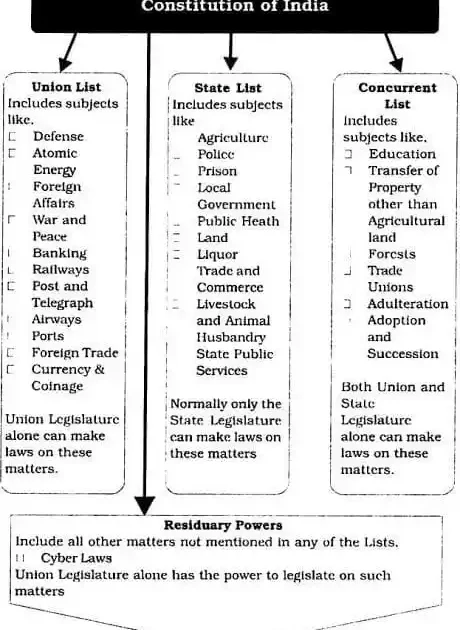
7th Schedule: Union, State, and Concurrent Lists for legislation.
8th Schedule: Officially recognized languages.
9th-10th Schedules: Laws exempt from review, Anti-defection laws.
11th-12th Schedules: Powers of Panchayats & Municipalities.
🎯 Why This Section Matters
Understanding the Constitution is essential for students preparing for exams (UPSC, SSC), educators, professionals, and all informed citizens.
हमारे भारतीय संविधान अनुभाग के बारे में
स्टडीहब.नेट.इन पर भारतीय संविधान हब में आपका स्वागत है - भारत के सर्वोच्च कानून को समझने के लिए आपका व्यापक गाइड।
🇮🇳 भारत का संविधान क्या है?
भारत का संविधान देश का सर्वोच्च कानून है, जो राजनीतिक सिद्धांतों को परिभाषित करने वाली रूपरेखा तैयार करता है, सरकारी संस्थानों की संरचना, प्रक्रियाओं, शक्तियों और कर्तव्यों को स्थापित करता है, और मौलिक अधिकारों, निर्देशक सिद्धांतों और नागरिकों के कर्तव्यों को निर्धारित करता है।
इसे 26 नवंबर 1949 को अपनाया गया था और 26 जनवरी 1950 को लागू हुआ, जिसे अब हर साल गणतंत्र दिवस के रूप में मनाया जाता है।
📚 संविधान की संरचना
भारत का संविधान 25 भागों में विभाजित है, जिसमें 448 अनुच्छेद और 12 अनुसूचियाँ शामिल हैं।
प्रस्तावना
भारत को एक संप्रभु, समाजवादी, पंथनिरपेक्ष, लोकतांत्रिक गणराज्य घोषित करती है। उद्देश्य: न्याय, स्वतंत्रता, समानता और बंधुत्व।
भाग I-IVA: नींव
- भाग I – संघ और उसका राज्यक्षेत्र (अनुच्छेद 1-4): भारत के क्षेत्र को परिभाषित करता है।
- भाग II – नागरिकता (अनुच्छेद 5-11): यह निर्दिष्ट करता है कि भारत के नागरिक कौन हैं।
- भाग III – मौलिक अधिकार (अनुच्छेद 12-35): व्यक्तिगत अधिकारों की गारंटी देता है।
- भाग IV – राज्य की नीति के निदेशक सिद्धांत (अनुच्छेद 36-51): एक न्यायपूर्ण समाज के लिए दिशानिर्देश।
- भाग IVA – मौलिक कर्तव्य (अनुच्छेद 51A): सभी नागरिकों के नैतिक दायित्व।
भाग V-VIII: शासन संरचना
- भाग V – संघ (अनुच्छेद 52-151): कार्यपालिका, संसद और सर्वोच्च न्यायालय को शामिल करता है।
- भाग VI – राज्य (अनुच्छेद 152-237): राज्यपालों, राज्य विधानसभाओं और उच्च न्यायालयों को शामिल करता है।
- भाग VIII – केंद्र शासित प्रदेश (अनुच्छेद 239-242): केंद्र शासित प्रदेशों का शासन।
भाग IX-XI: स्थानीय सरकार और संबंध
- भाग IX, IXA, IXB: पंचायतें, नगरपालिकाएं और सहकारी समितियां स्थापित करता है।
- भाग X – अनुसूचित और जनजातीय क्षेत्र: विशेष प्रशासन प्रावधान।
- भाग XI – संघ और राज्यों के बीच संबंध: विधायी और प्रशासनिक शक्तियों का वितरण।
अन्य प्रमुख भाग
वित्त (XII), व्यापार (XIII), सेवाएं (XIV), चुनाव (XV), राजभाषा (XVII), आपातकालीन प्रावधान (XVIII), और संशोधन प्रक्रिया (XX) पर भाग शामिल हैं।
📘 संविधान की अनुसूचियाँ
12 अनुसूचियाँ विभिन्न प्रशासनिक विषयों पर विस्तृत प्रावधान और सूचियाँ प्रदान करती हैं।
1-4 अनुसूचियाँ: राज्य/केंद्र शासित प्रदेश, वेतन, शपथ, राज्यसभा सीटें।
5-6 अनुसूचियाँ: अनुसूचित और जनजातीय क्षेत्रों का प्रशासन।
7वीं अनुसूची: संघ, राज्य और समवर्ती सूचियाँ।
8वीं अनुसूची: आधिकारिक रूप से मान्यता प्राप्त भाषाएँ।
9-10 अनुसूचियाँ: समीक्षा से छूट प्राप्त कानून, दल-बदल विरोधी कानून।
11-12 अनुसूचियाँ: पंचायतों और नगरपालिकाओं की शक्तियाँ।
🎯 यह अनुभाग क्यों महत्वपूर्ण है
संविधान को समझना छात्रों (UPSC, SSC), शिक्षकों, पेशेवरों और सभी सूचित नागरिकों के लिए आवश्यक है।